The Kimberley II: Mount Elizabeth to Broome

This is the fourth blog post on our round the world trip August – November 2016. It covers the second half of our drive through the Kimberley in north-west Australia.

Go here for a picture gallery.

Bell Gorge

After getting back on the Gibb River Road from Mount Elizabeth we continued south-west. We stopped at Mount Barnett roadhouse which had a good choice of food and very expensive diesel which we needed. I noticed that their shop had a whole row of freezers presumably with food for campers.

There was no water in the Barnett River crossing and we were soon at the turning for Bell Gorge which is 30km off the Gibb. The walk to the gorge was quite tough, downhill to begin with then along a rocky trail. It was 38C and on the way down we met an elderly group struggling up.

Bell Gorge was another beautiful small lake surrounded by coloured cliffs. People were swimming in the water but you had to go across to the other side of the water and then walk up and then down to get to where you could get into the water.
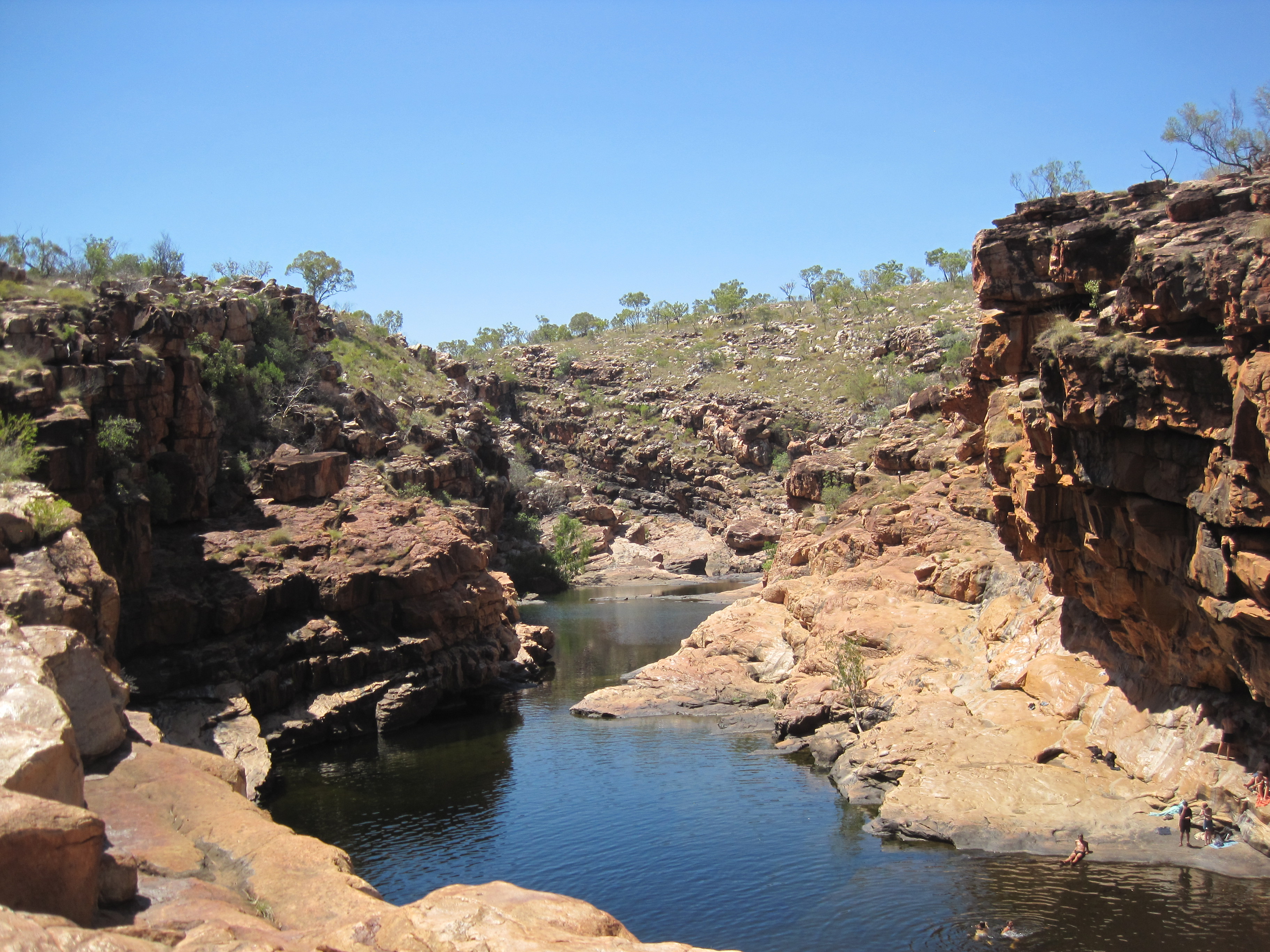
Bell Gorge

Bell Gorge

Mount Hart

Further on the Gibb the scenery changed to a few hills and there were more jump-ups. Our next two nights were at Mount Hart station which is 50kms off the Gibb. At Mount Elizabeth Pat Lacy had told us that this road would take 90 minutes, but it had been graded recently and was one of the best bits of gravel we drove on. It took only about 45 minutes. We arrived to find all very quiet.

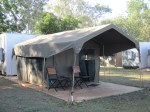
We were in a safari tent The ensuite bathroom was a metal box about 2.5 ft away at the back. It had a smart shower, loo and washbasin. It was very hot in the bathroom and in the tent. The other accommodation at Mount Hart was in an air-conditioned building but the bathrooms were a 20m walk away outside.
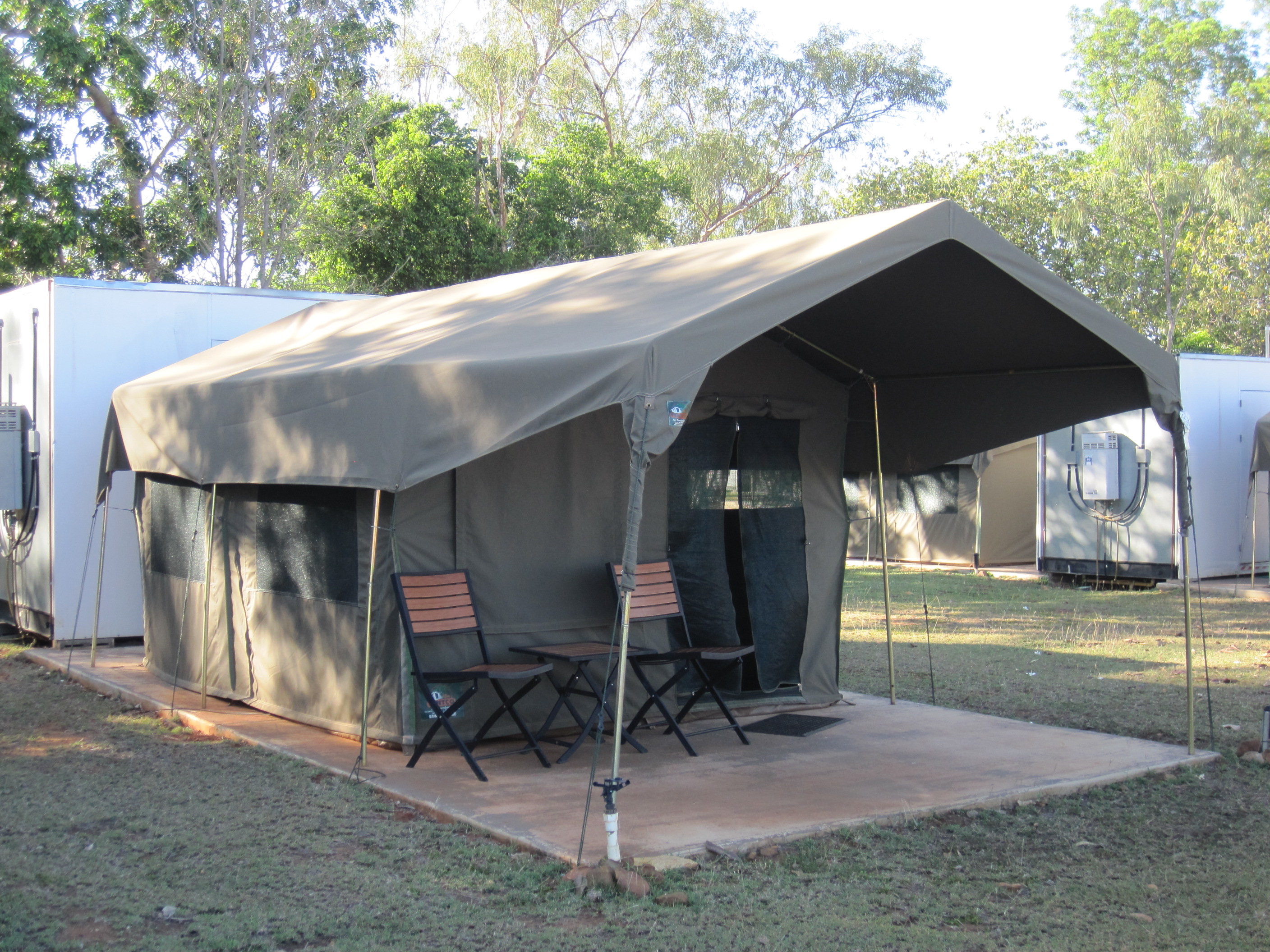
Our tent at Mt Hart

Our tent at Mt Hart

The two dinners we had here were the best on the whole trip. Only 5 people were there for dinner on the first night but the chef had taken great care in preparing a starter of whiting in batter with cabbage and sauce, then steak cooked to order, mash and mixed veg and, to finish, sticky date pudding with ice cream. We also had fresh fruit for breakfast and some of the best bread we had in Australia.

Mount Hart is a good place for a rest but there is not too much to see. The South African
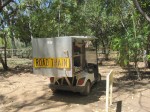
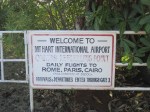
manager agreed with me that a lot of the scenery looks like Africa but without the giraffes. Somebody had a sense of humour. The golf cart he used to get around the site had a road train notice on the back of it. There was also a faded sign for Mount Hart International Airport by the airstrip.
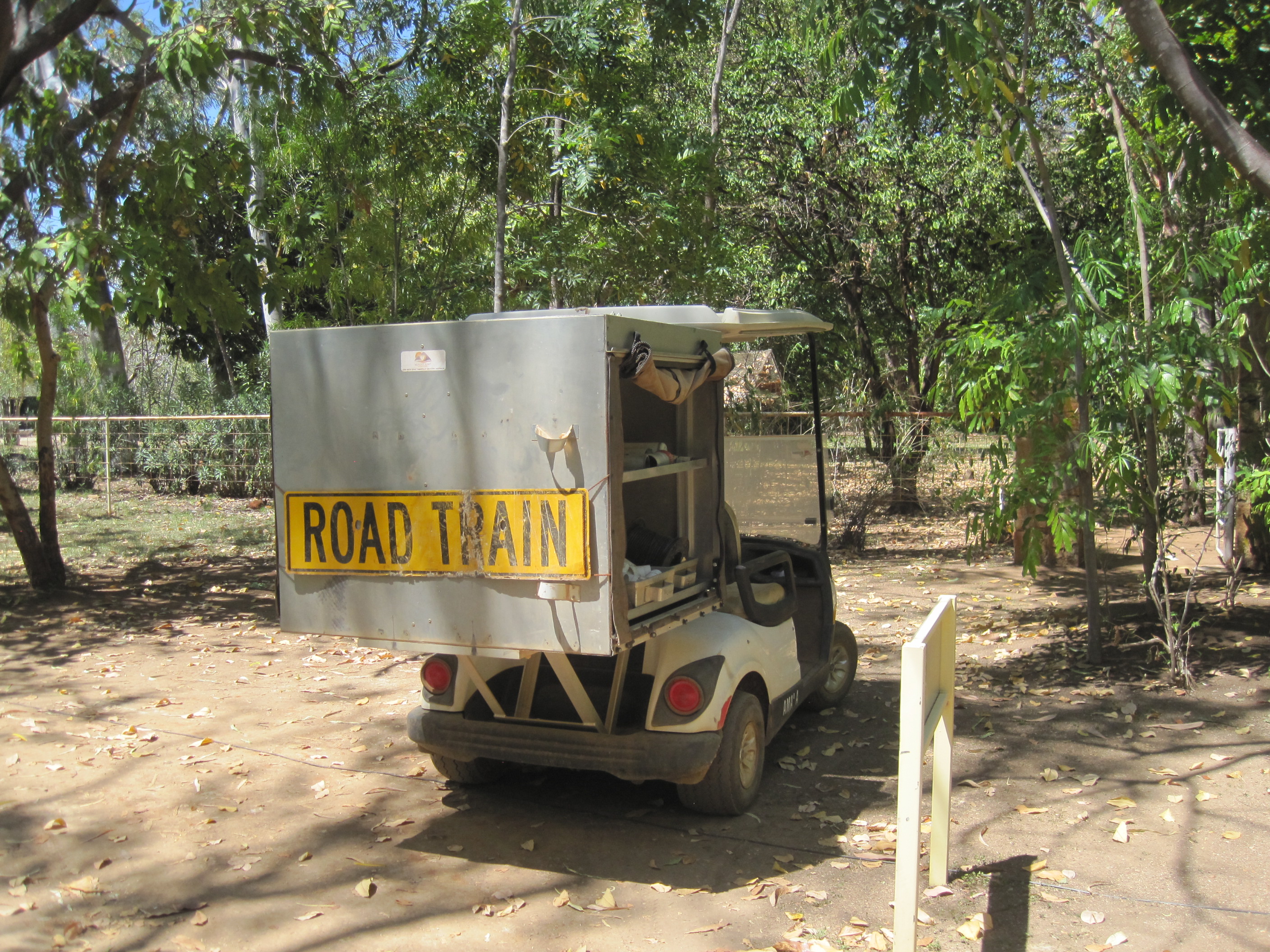
Road train at Mt Hart

Road train at Mt Hart

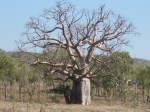
We attempted to drive to a big baobab tree, but came to a deep creek. Martin waded across (no snakes) and took some photos.

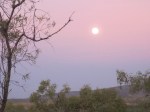
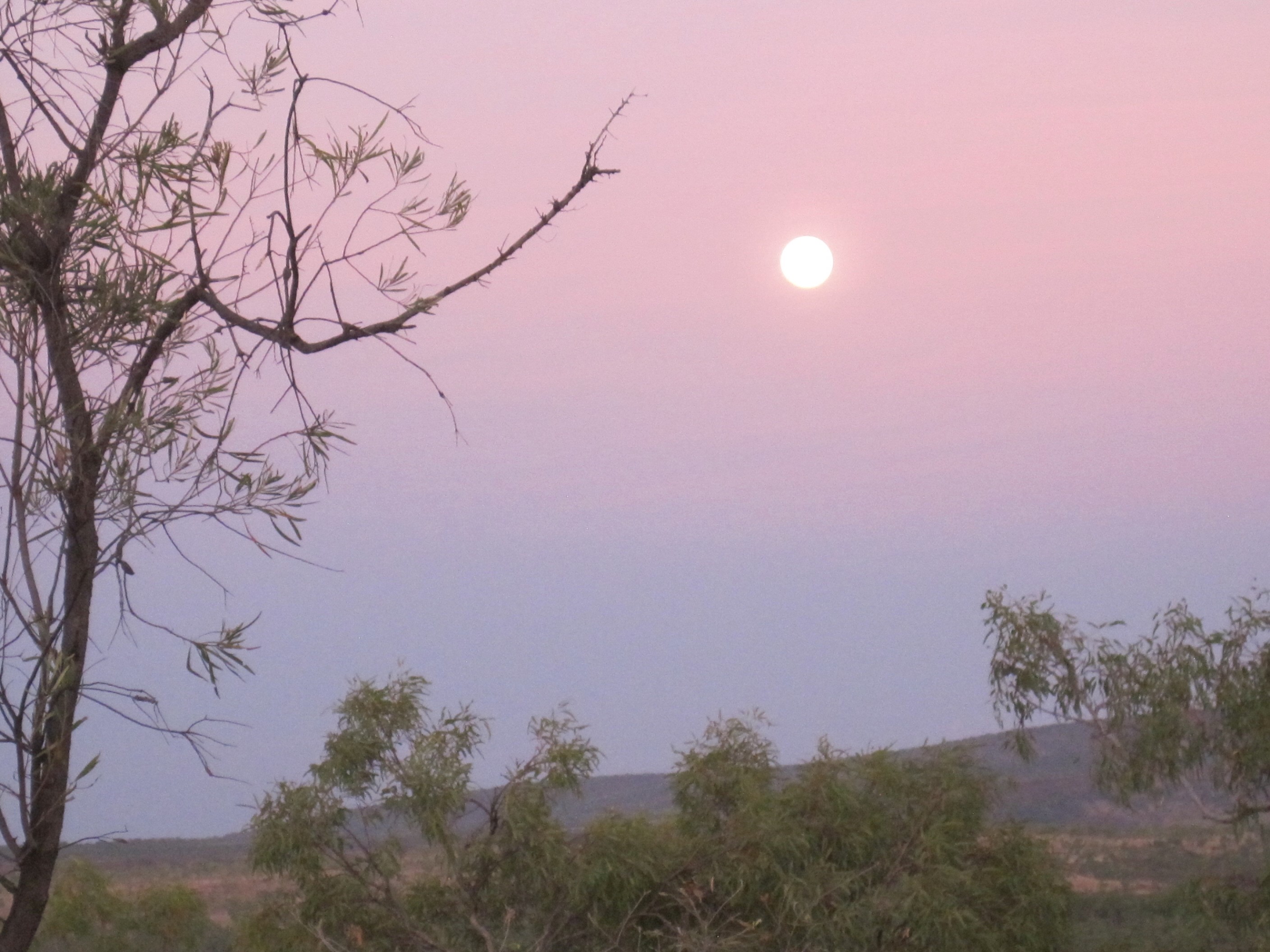
In the late afternoon we drove up to a viewpoint for the sunset, but spent more time watching a full moon rise.
Moon rise at Mt Hart

Moon rise at Mt Hart

In the afternoon I had a conversation with the wet season caretaker who had just arrived. He would be the only person there for six months to look after the site when it is closed. All the tents are taken down and everything is packed up. The road accesses and the airstrip are all flooded and so his only lifeline was a helicopter with a 4 figure callout charge.

A rather noisy but fairly small group arrived for our second night. We had another excellent dinner finishing with individual mango crème brulées. Fancy preparing that for 20 people hundreds of miles from civilisation?

Windjana Gorge and Tunnel Creek to Derby

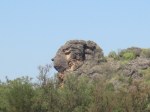
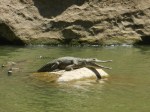
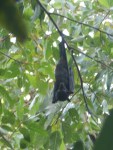
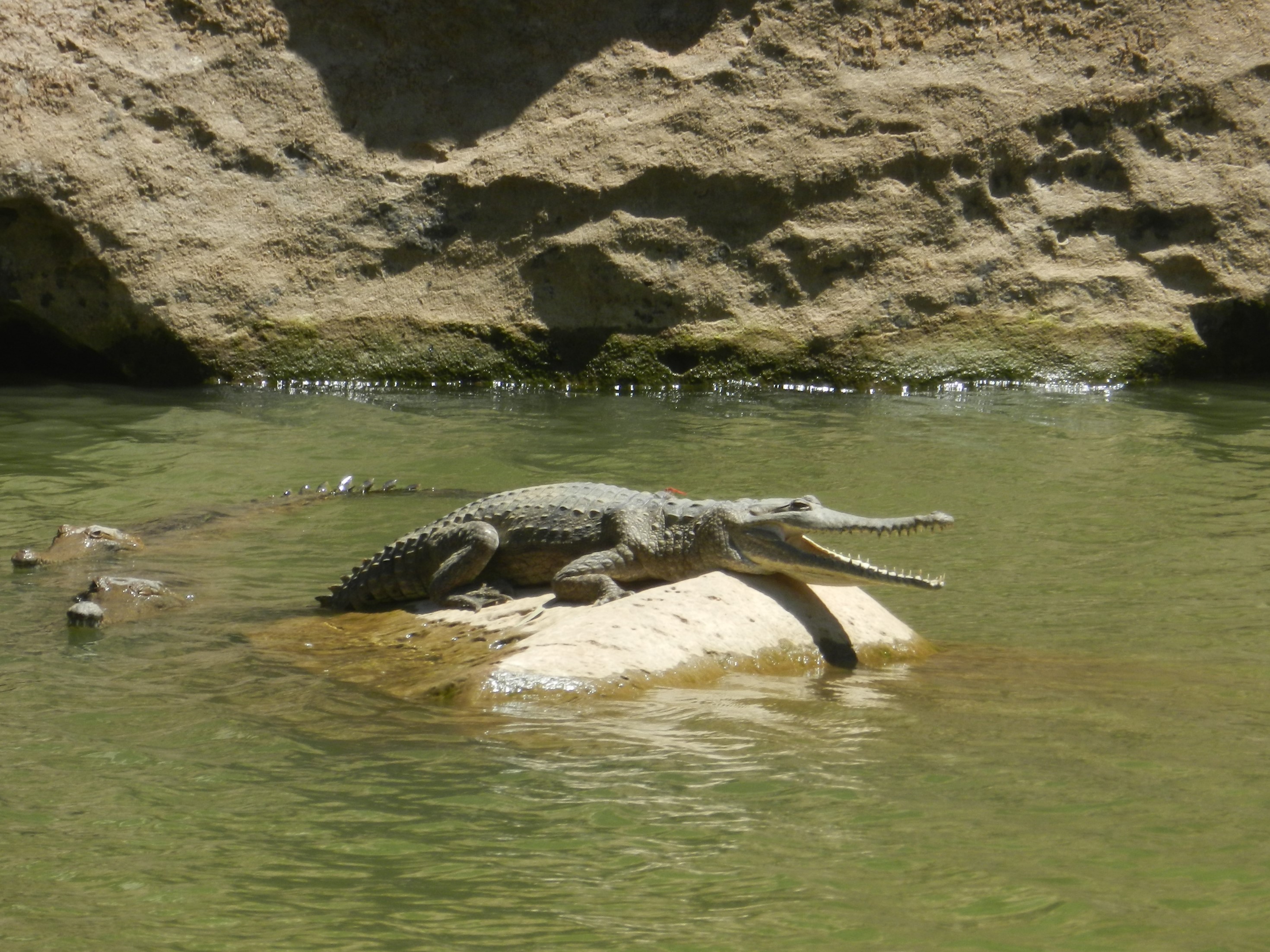
Further south on the Gibb we drove through more hills with more jump-ups passing a large rock called Queen Victoria’s Head for obvious reasons. We then turned off along 23km on a better road to Windjana Gorge. This was a real gem. A very short walk through a tunnel brings you to a gorge with a lot of little freshwater crocodiles. They are about 3-4ft long and most were snoozing. We were assured that they are not dangerous like the saltwater ones. There were also some flying foxes (fruit bats) which mostly sleep during the day.
Freshwater crocodile in Windjana Gorge

Freshwater crocodile in Windjana Gorge

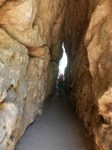
We carried on another 37km to Tunnel Creek where Martin did the 45 minute walk through the tunnel and back again through some water. You have to clamber over some rocks to get into the tunnel and so I decided to pass.

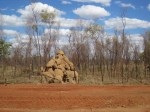
Not long after we got back to the Gibb, miracles, we got to the end of the gravel road. As we drove further south the scenery became flatter with less vegetation. There were a lot of termite mounds and we came across Graham and Prue photographing them and some large baobab trees. It was well over 1000 km since we first met them.

We finished the Gibb and spent a night in luxury in an apartment in the town of Derby (rhymes with herby) where, miracles again, there was a washing machine. It was time for another TV dinner and an evening in. We just got to Woolworths before it closed at 6.

Cape Leveque

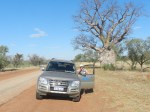
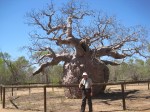
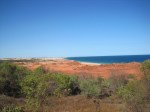
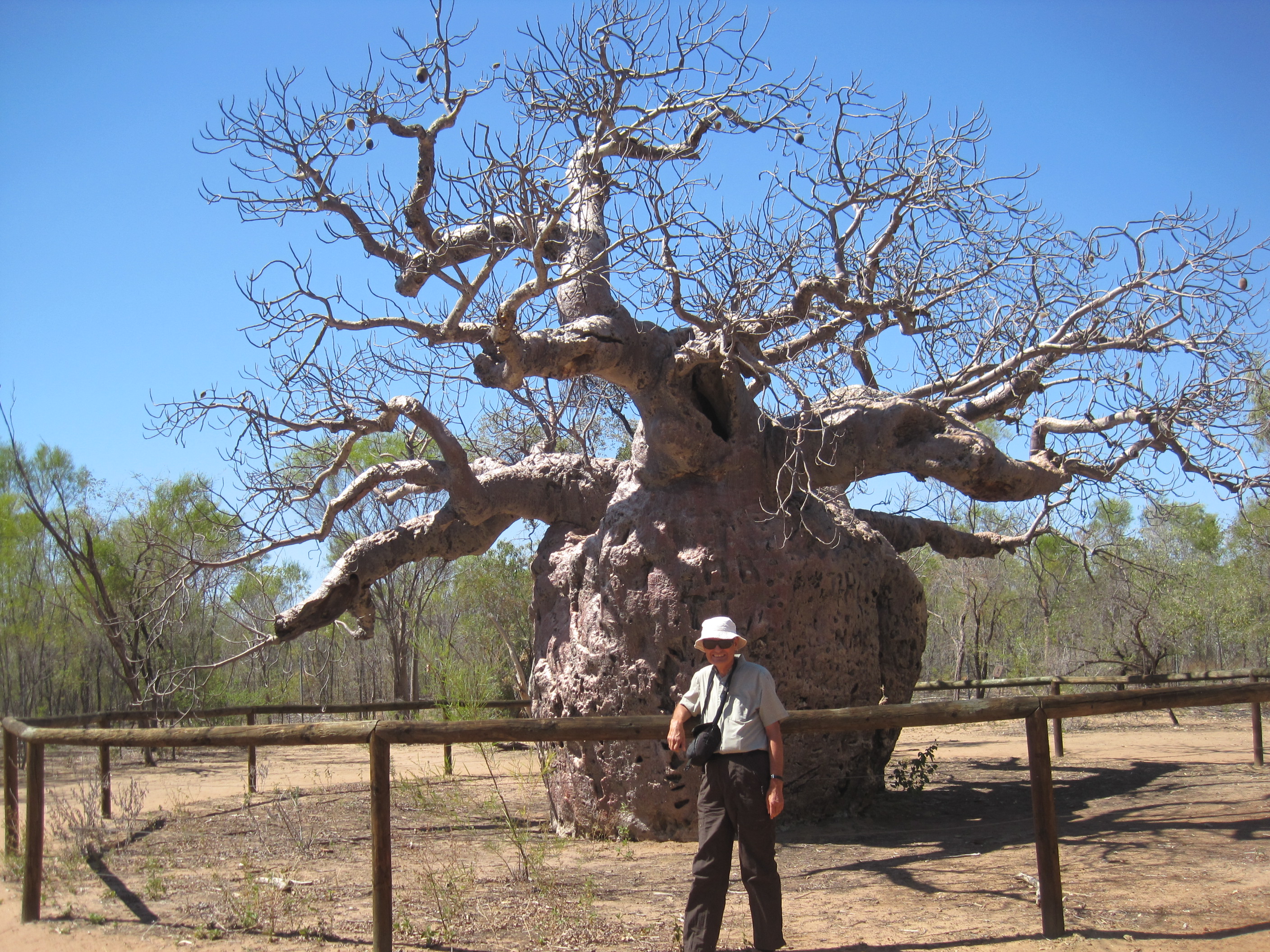
Most people who do the Gibb carry on straight to Broome but we had decided to detour to Cape Leveque which is at the tip of the Dampier peninsula north of Derby and Broome. We had to go almost to Broome to get to the turnoff. Just outside Derby there was a huge baobab tree which had been a prison tree. A display board showed awful pictures of aboriginals, some of them in chains.
The prison tree at Derby

The prison tree at Derby

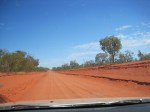
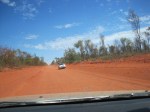
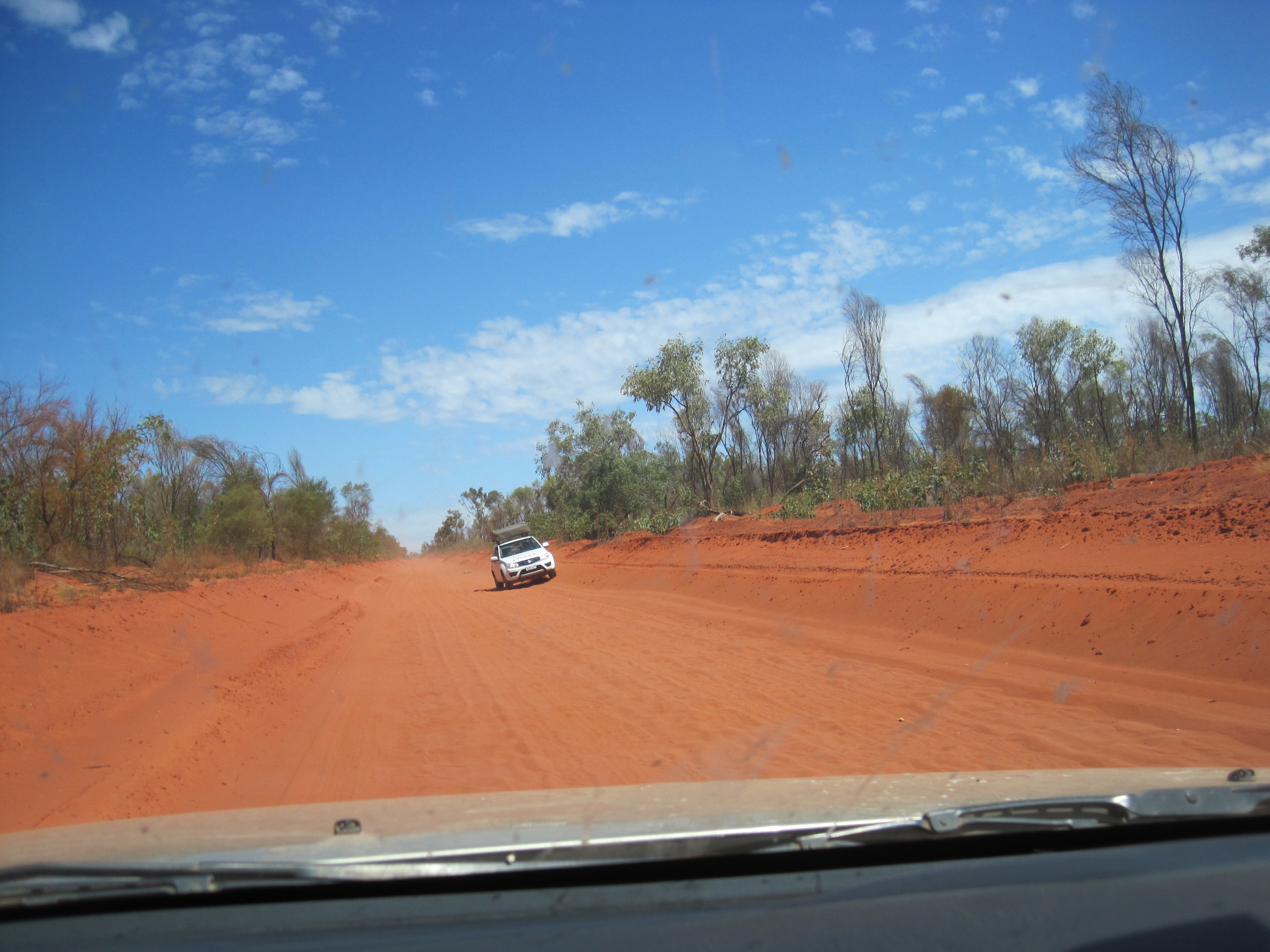
The road to Cape Leveque was worse than that to the Bungle Bungles. It was not corrugated so badly but we were in a sandy dip trying to avoid obstacles and vehicles coming the other way. In some places it was really only wide enough for one vehicle and we had to drive up the slope at the side to get past. It took 1 hour 45 minutes to drive 90km of bad road.
Concave road to Cape Leveque

Concave road to Cape Leveque

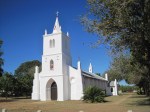
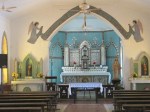
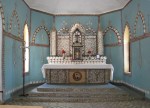
The entire trip is about 200km and suddenly the road became paved and in very good condition. We were now on aboriginal land. We took a short detour to the village of Beagle Bay where there is a lovely church with 3 altars each decorated with mother of pearl. The rest of the village seemed deserted, perhaps because it was a Sunday.
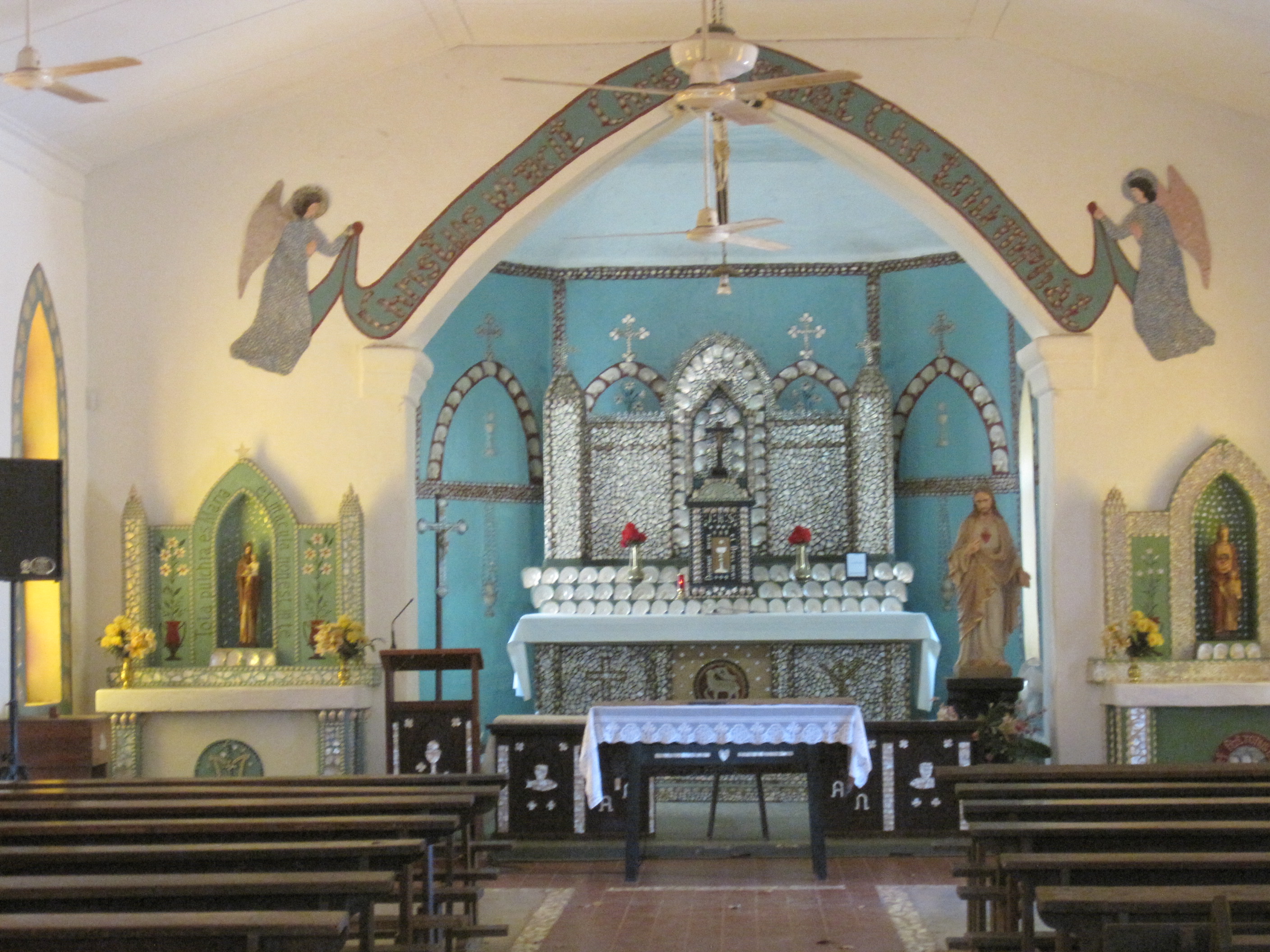
Inside the church at Beagle Bay

Inside the church at Beagle Bay

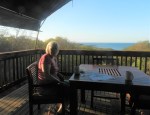
At Cape Leveque we found ourselves in Kooljaman which is a sizeable resort with tents, cabins, a camping area and shop. We were in a safari tent which was on an elevated platform looking out to sea. There was a deck with a barbecue and a tin building behind the tent housing a proper kitchen and a bathroom, although we had to boil water for tea on a gas ring by the barbecue.

Martin went out for a walk and met Graham and Prue again and so we had a drink with them before dinner watching the sunset. It was Graham who described the road as ‘concave’.

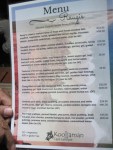
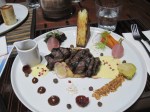
We had booked dinner in the restaurant where a Michelin trained chef attempts to use local food. I had a kangaroo-based main course with local fruits, carrot, nice potatoes and assorted other items all presented elegantly. Martin had a similar meal based on spatchcock. It was the most expensive main course we had in Australia.
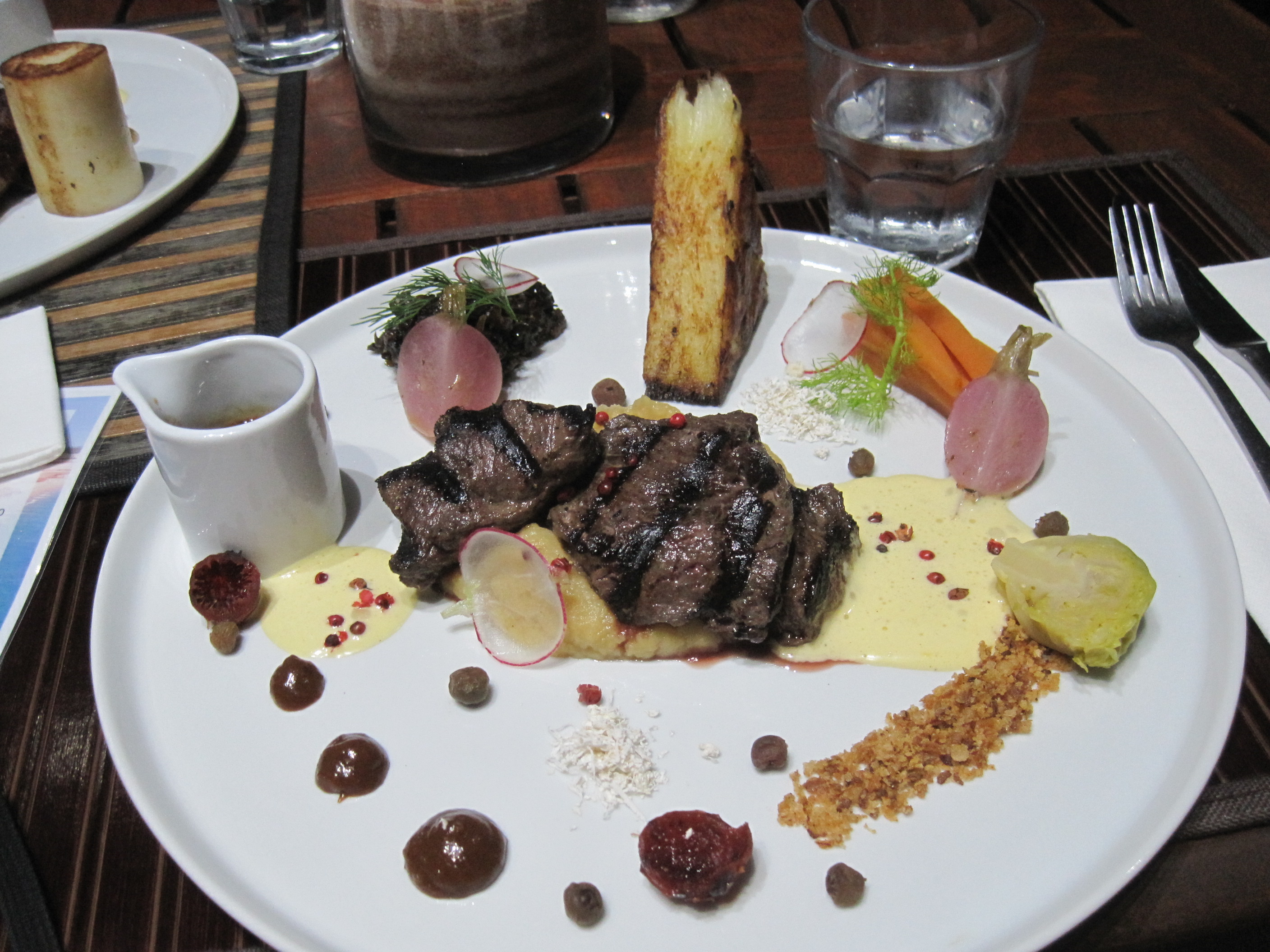
My dinner at Kooljaman  - kangaroo meat

My dinner at Kooljaman – kangaroo meat

Two nights would have been better at Kooljaman especially as they also have a pizza bar for cheaper food, but we needed to get to Broome.

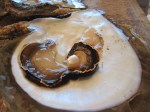
Before leaving the area we visited Cygnet Bay Pearl Farm where there was an excellent tour. The farm is still run by the family who established it and our tour guide was third generation working there. We watched a video of the farm’s history and then went to the hatchery where the guide opened an oyster and found a pearl. The oyster shells are about 6 inches across. The oyster flesh looked very unappetising but they sell that as well.
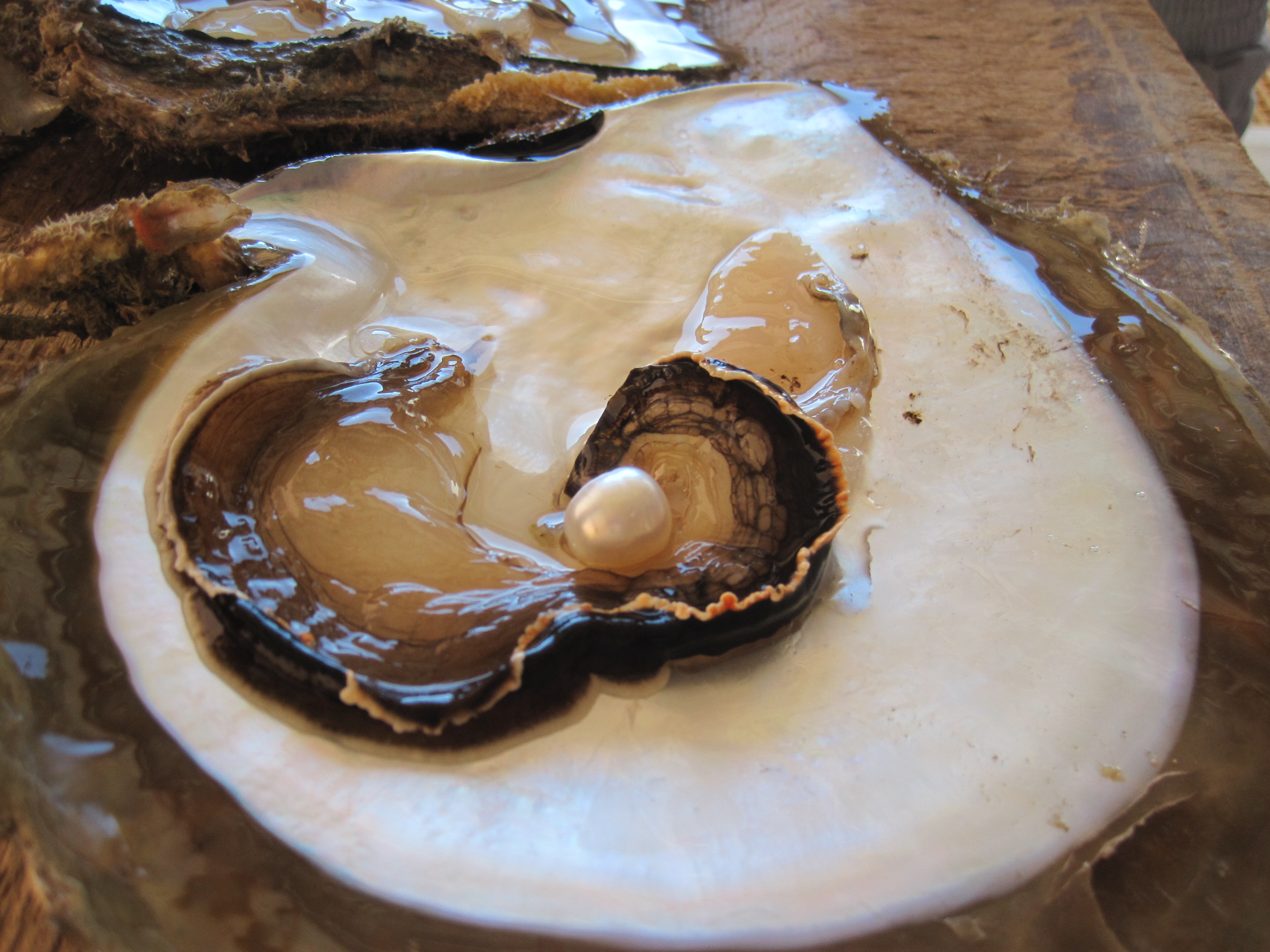
Here's the pearl, Cygnet Bay

Here’s the pearl, Cygnet Bay

In the jewellery shop we were shown how they grade the pearls by size, shape and lustre. The one we saw being opened was grade B1 size 12mm which they said would fetch about $75.

Broome

It took a bit less time to drive back on the terrible road and we arrived at Ochre Moon bed and breakfast in Broome in the early afternoon. This was a wonderful place, especially after a fairly gruelling road trip. Nothing was too much trouble for the owners and even getting more washing done was great as it dried outside in 45 minutes in the hot air and wind. This B&B has a large area with sofas, a well-stocked kitchen for guests and plenty of things to read.

Ochre Moon is in a residential area. We had seen from the map that Broome is quite spread out and so after we took back the expensive Pajero we rented a smaller regular car for two days. There are buses but we would have had to walk and then wait in temperatures of the high 30sC and bright sun.

Broome is on a peninsula and on the one full day we had there we drove to a couple of
places at the end of the peninsula. In the afternoon we also went to Cable Beach which is considered to be one of the world’s best beaches, but the tide was in and we wondered what all the fuss was about. At least there were no high rise buildings.

Broome road sign

Broome road sign

We went back to Cable Beach for the sunset when it was much better. You can drive on the beach and also have an (expensive) ride on a camel as the sun sets. We did neither but had a nice meal close to the beach and watched the camel trains walking back in the dark. They had red warning lights at the front and back.

Camels on Cable Beach, Broome

Camels on Cable Beach, Broome

Another couple were staying at Ochre Moon for our second night. We talked to them for a while over another imaginative breakfast. They have friends and relatives in Britain and were very upset about the Brexit vote.

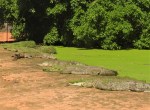
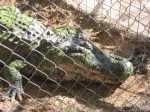
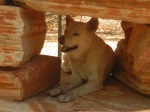
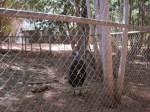
Before going to the airport that afternoon we drove out to the Malcolm Douglas Crocodile Park where we were sure to see a crocodile. There were plenty in a large lake, well fenced-off, also a number of other particularly aggressive ones in individual cages. We learned that one of these had been rescued after attacking a horse. There were a few other animals and birds including a dingo and a cassowary.

Crocodiles at the Crocodile Park, Broome
Crocodiles at the Crocodile Park, Broome

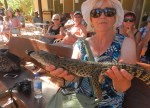
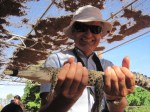
We were able to stay for most of the presentation which started with a talk and then a little crocodile about 18 inches was passed round. Its mouth was taped up and I braved holding it. A feeding demonstration, or rather frenzy, followed at the big lake when the crocs were fed chickens and barramundi. They can certainly jump up.

Then it was time to take the plane. We had driven 3300km from Darwin and had travelled overland from Kuala Lumpur to Broome by train, boat and road.
Picture gallery: The Kimberley II: Mount Elizabeth to Broome
Posted in Uncategorized | Tagged , , , , , , , , , , , , , | Leave a comment

The Kimberley I: Darwin to Mount Elizabeth

This is the third blog post on our round the world trip August – November 2016. It covers the first half of our drive through the Kimberley in north-west Australia.

Go here for a picture gallery.

Organizing the drive

We had long wanted to drive from Darwin to Broome on the legendary Gibb River Road in the Kimberley and finally we were to achieve our aim. Our initial researches on the Internet pointed to either joining a tour group, which we did not want to do, or renting a 4WD camper which did not appeal either.

Places to stay on the Gibb are few and far between and we also found that renting a vehicle on our own was prohibitively expensive. Finally, via a very complimentary mention on tripadvisor, we came across Bluey Travel who specialize in self-drive trips in the north of Australia. This fitted the bill exactly and we had absolutely excellent service from them. They organized a vehicle with unlimited kilometres, accommodation in lodges and also provided a comprehensive handbook of what to see and do en route. They willingly rescheduled the trip by a few days after we found the cruise.

There are only two seasons in northern Australia, the dry (May to October), and the wet (November to April) when most things are closed. The area is also inhabited by the saltwater crocodile, one of the world’s more dangerous animals.

Darwin

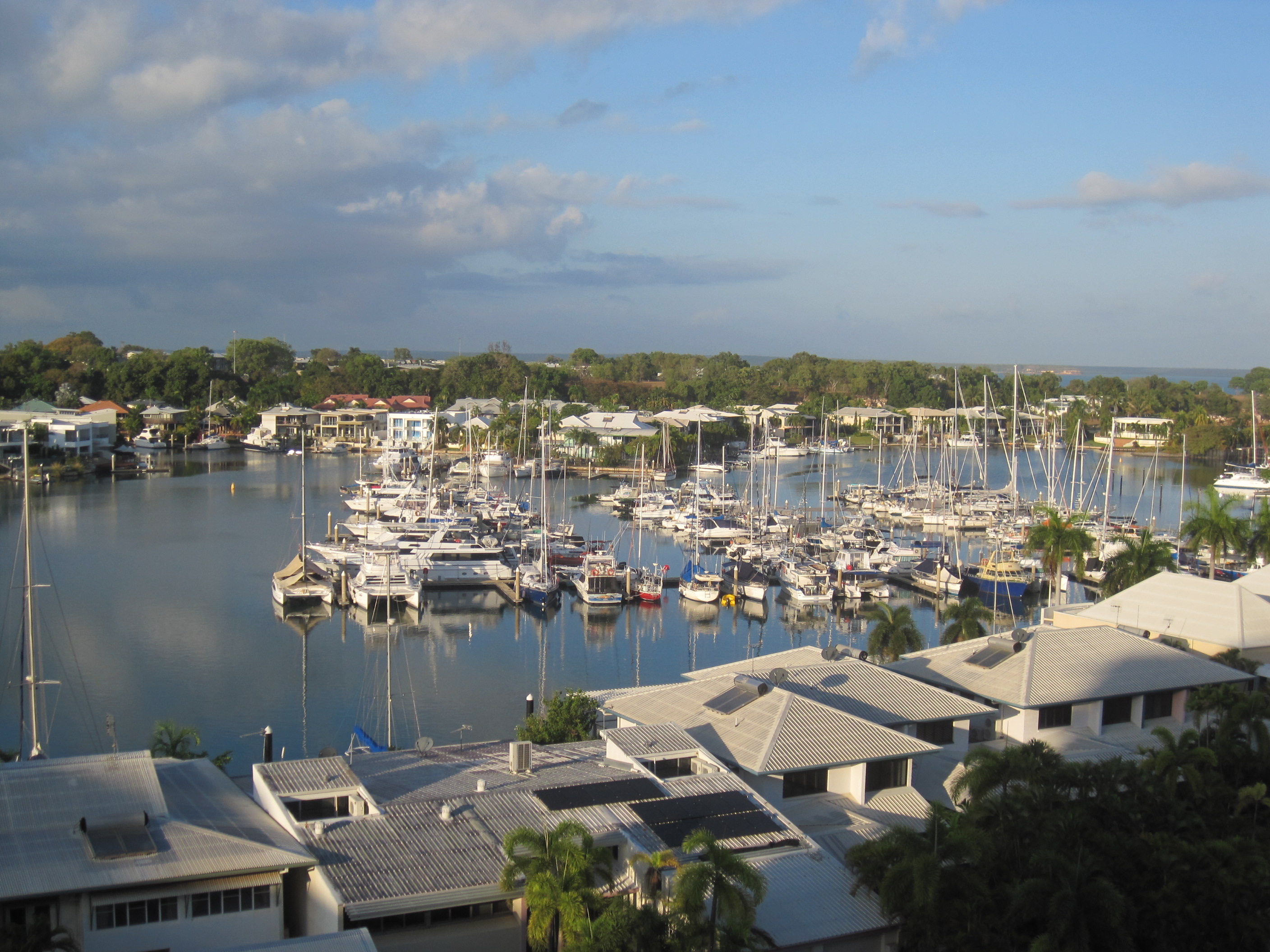
This was our second visit to Darwin, 15 years after our first. This time we were in an apartment hotel a bus ride from the town centre, but overlooking the marina. It was a short (but long enough in 37C) walk down to some shops, restaurants and, fortunately, a laundromat which was our first priority.
View from our hotel, Darwin

View from our hotel, Darwin

Here we got another taste (no pun intended) of Australian food. Quiche and salad for lunch were very good but the coffee shop where we ate it closed at 2.30. We walked down to the same area again for dinner to a fish and chip cafe. There we were confronted with choice of fish, hardly any of which we had heard of. Barramundi and snapper turned out fine. We were glad we had taken the server’s advice and ordered one half portion of chips between us. There was no vinegar – no Yorkshire people here. The next night we ate in a Greek restaurant where I was served the largest portion of moussaka I have ever seen.
We did manage some sightseeing on the one whole day we had in Darwin. We took the bus to town and caught up with e-mail in a square with free wifi. Parts of the town did look rather like Edmonton (where I lived for 3 years) in the tropics.
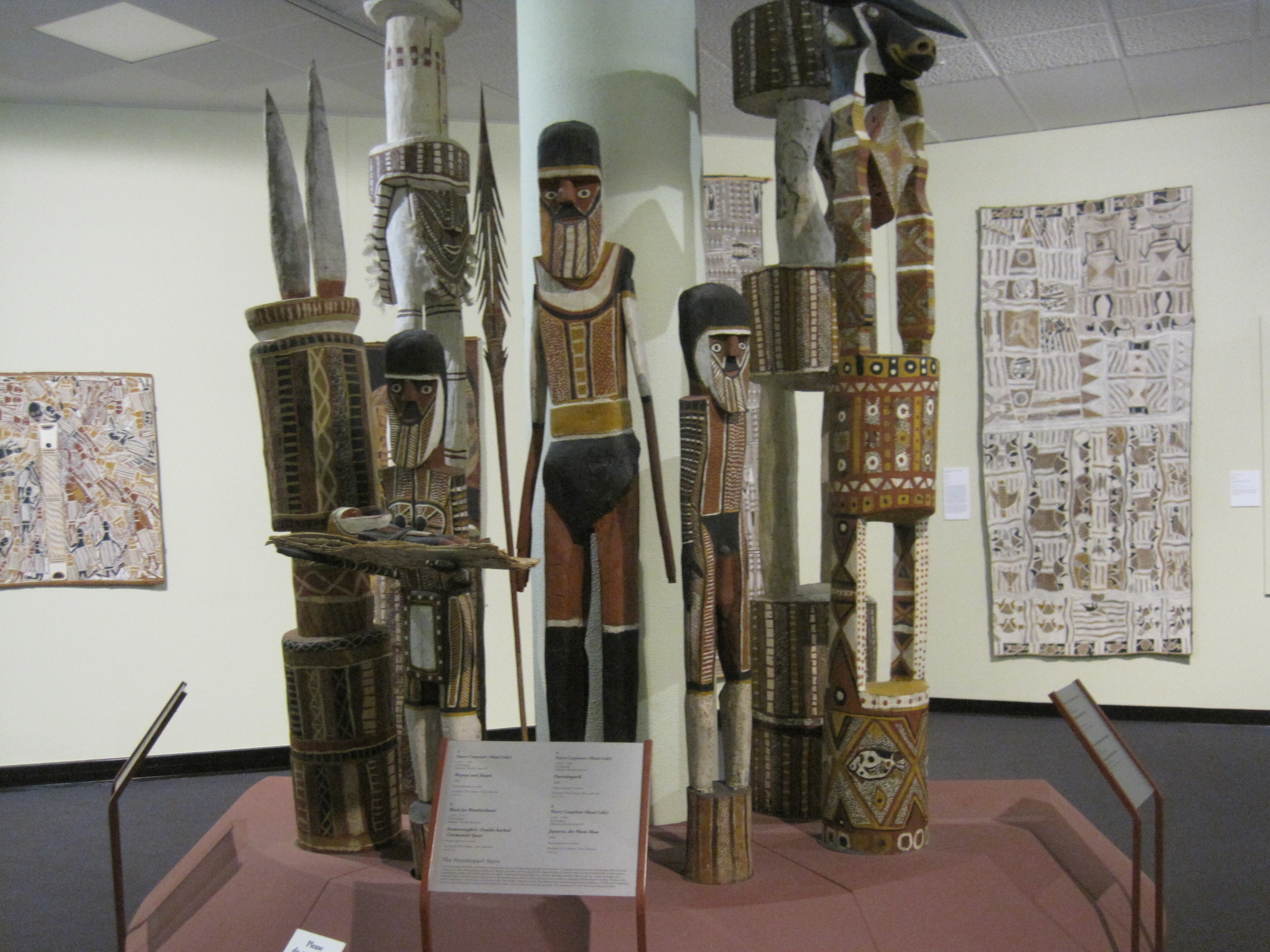
Then we took another bus to the Museum and Art Gallery of the Northern Territory which was another excellent museum. There was some wonderful aboriginal art, natural history exhibits (including some of the many nasties that live in Australia), and a huge warehouse-like building full of ships.
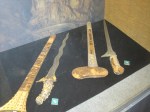
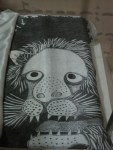
Aboriginal art, Darwin Museum

Aboriginal art, Darwin Museum

There was also a room devoted to Cyclone Tracy which severely damaged Darwin on Christmas Day in 1974. Some of the people looking at it must have lived through it. An exhibition of political cartoons would have been very amusing if we knew more about Australian politics and history – we did find that the Australian sense of humour is very like ours. We had another large but imaginative lunch in the museum cafe where I supplemented my five-a-day with watermelon juice.

At the end of our visit to the museum we had our first sight of some aboriginals. Two came into the museum entrance shouting and swearing at each other. Another two got on the bus. One had no money for the fare and the driver immediately radioed his base. She eventually got off. All of this was totally ignored by all the white people around.

Darwin to Katherine

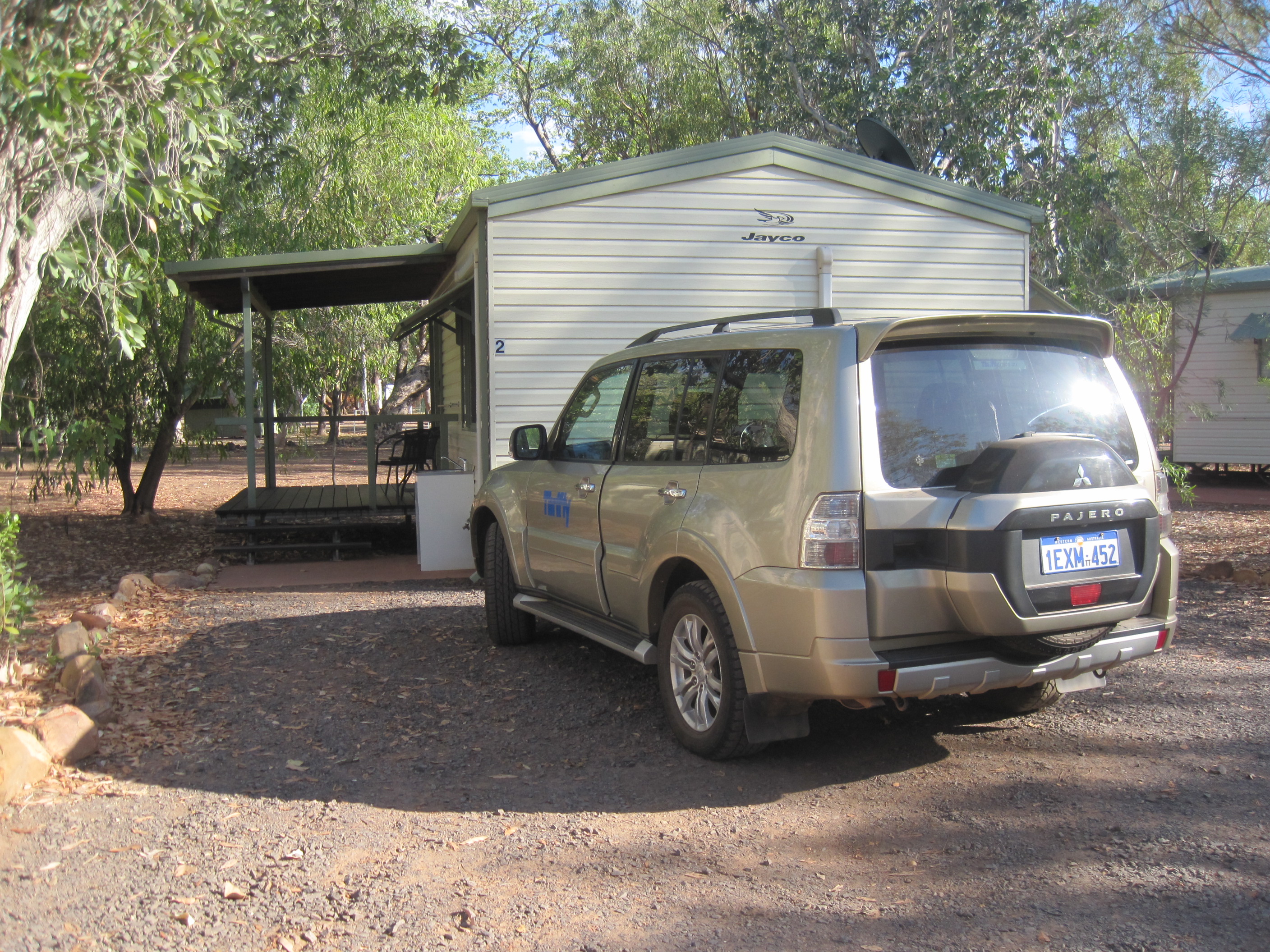
We picked up a large 4WD (a Mitsubishi Pajero, Shogun in the UK) from Thrifty on our second morning in Darwin and found a mall for a few purchases including a very useful coolbox which the Austrlians call an esky. We couldn’t buy too much food as you can’t take some items of fresh food into Western Australia.

Just after lunch we set off on the Stuart Highway south to Katherine, a road that we drove in 2001. It was a dual carriageway for some of the way, but not for too long. We had our first encounter with Australian road trains where they have 3 or 4 full-size trailers. The scenery was more like bush with just a few small hills.

We were booked into Nitmiluk which is a tourist site with campers and chalets some 30km from Katherine. Our chalet was huge, with a big living area, well-equipped kitchen and bathroom. We ate another rather large meal outdoors by the swimming pool. Little wallabies were wandering around.

Our chalet at Nitmiluk

Our chalet at Nitmiluk

Nitmiluk is the tourist base for the Katherine Gorge where you can take a boat trip and perhaps see crocodiles. However we didn’t stay long on the next day as we had done the boat trip in 2001.

Katherine to Kununurra

Next day we began to get a sense of the distances. It was over 500km of paved road west to Kununurra. I think it was today that the temperature reached 41C. The scenery was much the same for most of the way with bush and small trees and hardly any habitation. Occasionally we saw cattle, mostly the white ones with long floppy ears.

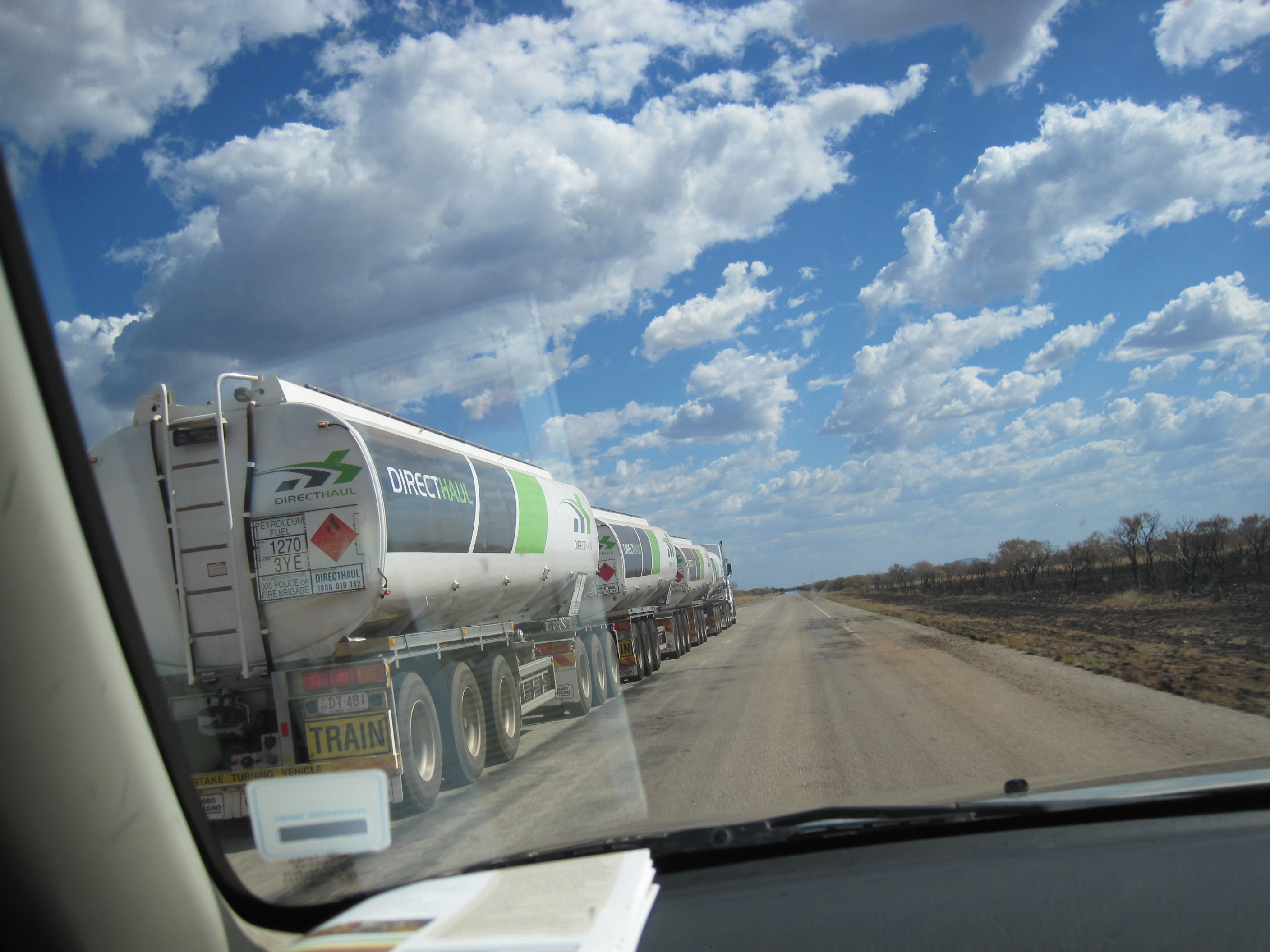
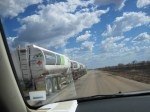
There was barely anything at Timber Creek, the one possible overnight stopping place we had seen on the map. We took a small detour to Joe Creek for a picnic lunch (and a change of scenery). At one place we passed a fire by the side of the road which looked like it might get nasty. We managed to overtake a road train which consisted of 4 fuel tankers.

Over taking a road train

Over taking a road train

We also stopped briefly to walk on the bridge over the Victoria River in the hope of seeing some crocodiles but there weren’t any.

We crossed into Western Australia (with a 90 minute time change), eating our one remaining apple to satisfy the quarantine officer. We arrived at a nice apartment motel (Lakeview) in Kununurra in the late afternoon. By now I had acquired a nasty cough (soon fixed with some Australian cough medicine), I think because it was so cold inside the museum in Darwin, and so this was the first of several evenings when we bought a couple of TV dinners and used the kitchen facilities to eat in.

As we were now definitely going out into the wilderess we did more shopping for food in Kununurra, which, with a population of well under 10,000 is the largest place for hundreds of miles around. Groups of aboriginals, not wearing the best of clothes, were lounging around in the shade, ignored by everybody else.

Bungle Bungles

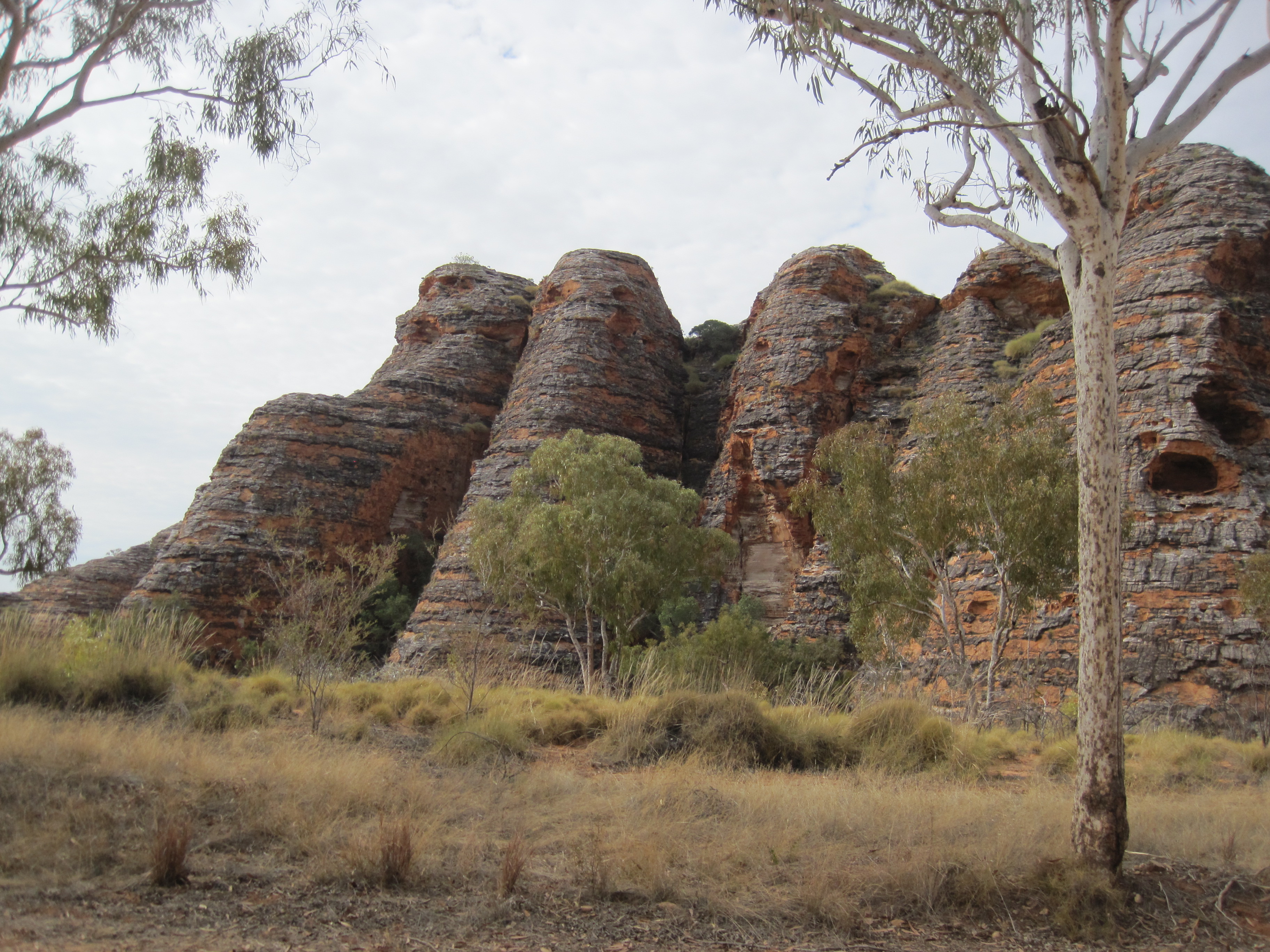
The next day was a lot more driving. We were on the main highway for about another 3.5 hours, passing just 2 roadhouses. Finally we turned off on to a bone-shaking very corrugated road. It took 2.5 hours to drive the 53km to the visitor centre for the Purnululu National Park which contains the Bungle Bungles, a series of red striped dome-shaped hills covering a huge area. The visitor centre was as good as the American ones and we got an excellent map.

On the way into the Bungle Bungles

On the way into the Bungle Bungles

It was another 20 minutes to the Bungle Bungles Wilderness Lodge. There we were in a safari tent on a raised platform with a bathroom in the rear of the tent and a nice deck at the front. The lodge had a big open plan communal area and tea was available all the time.

Our tent at the Bungle Bungle Wilderness Lodge

Our tent at the Bungle Bungle Wilderness Lodge

A large group arrived in a 4WD bus just after us. We learned that they had had to change their itinerary because it had rained the week before – not good for unsealed roads. There were a few other ‘self-drivers’ and we had a good conversation with them over a nice dinner. As in other places we came to, several of the kitchen staff were young people on working visas. On the way back to our tent we saw two frog-like things which looked like cane toads, although we had seen notices about keeping them out of Western Australia.

Next day we got to breakfast before the big group then drove to Piccanniny, the parking place for the sights at southern end of the park. There were a lot of people there, presumably campers although the camp site is just off the main road 60km away.

We did a short walk round the domes. It was another 1km into Cathedral Gorge. Here we got our first taste of the dramatic scenery in the Kimberley. Most of the time you are driving through a landscape of small and thin eucalyptus trees which looks fairly dull, but the terrain is interspersed with spectacular gorges. Their sides are rocks coloured from yellow to deep red and ochre and they mostly contain pools or lakes of water.

The trail to Cathedral Gorge was mostly on a dried river bed but there was one easy ladder and some railings on a ledge. The gorge is really a huge amphitheatre with a small pool. It made the people inside it look very small. We eventually found the rock art near the entrance.

Cathedral Gorge; spot the person

Cathedral Gorge; spot the person

We then drove up over more corrugated road to the northern end of the park. Martin did another 45 minute walk in Echidna Chasm which was more like the slot canyons in Arizona. I had an interesting talk with Graham and Prue from Melbourne who explained to me how their 4WD tent camper worked. They said that when they set off they had intended to go to Cape York, which is the northernmost point of Queensland, but the weather forecast was bad so they had decided to go to the north-west instead, this in a country almost the size of the lower 48 states of the USA. They also had a smart GPS which could send e-mails telling their family and friends where they were.

Back at the wilderness lodge, and after chatting to some of the group, we decided to bite the bullet and to book a 30 minute helicopter trip for the next day.

A cow walked past our tent during the evening and two more in the night.

We heard that the group was leaving at 6.30 and so had our breakfast in peace at 6.45. It was a short drive to the airstrip where we were weighed and told not to have anything loose in our pockets.

Our helicopter had seats for 3 passengers. Martin sat in the front next to Bridget the pilot and I was in the back. It was open-sided and we were strapped in only by what seemed to be car seat belts. I was terrified about losing my camera, as we had to leave camera cases behind, and I had it fastened to my wrist all the time.

Getting into the helicopter at Bungle Bungles

Getting into the helicopter at Bungle Bungles

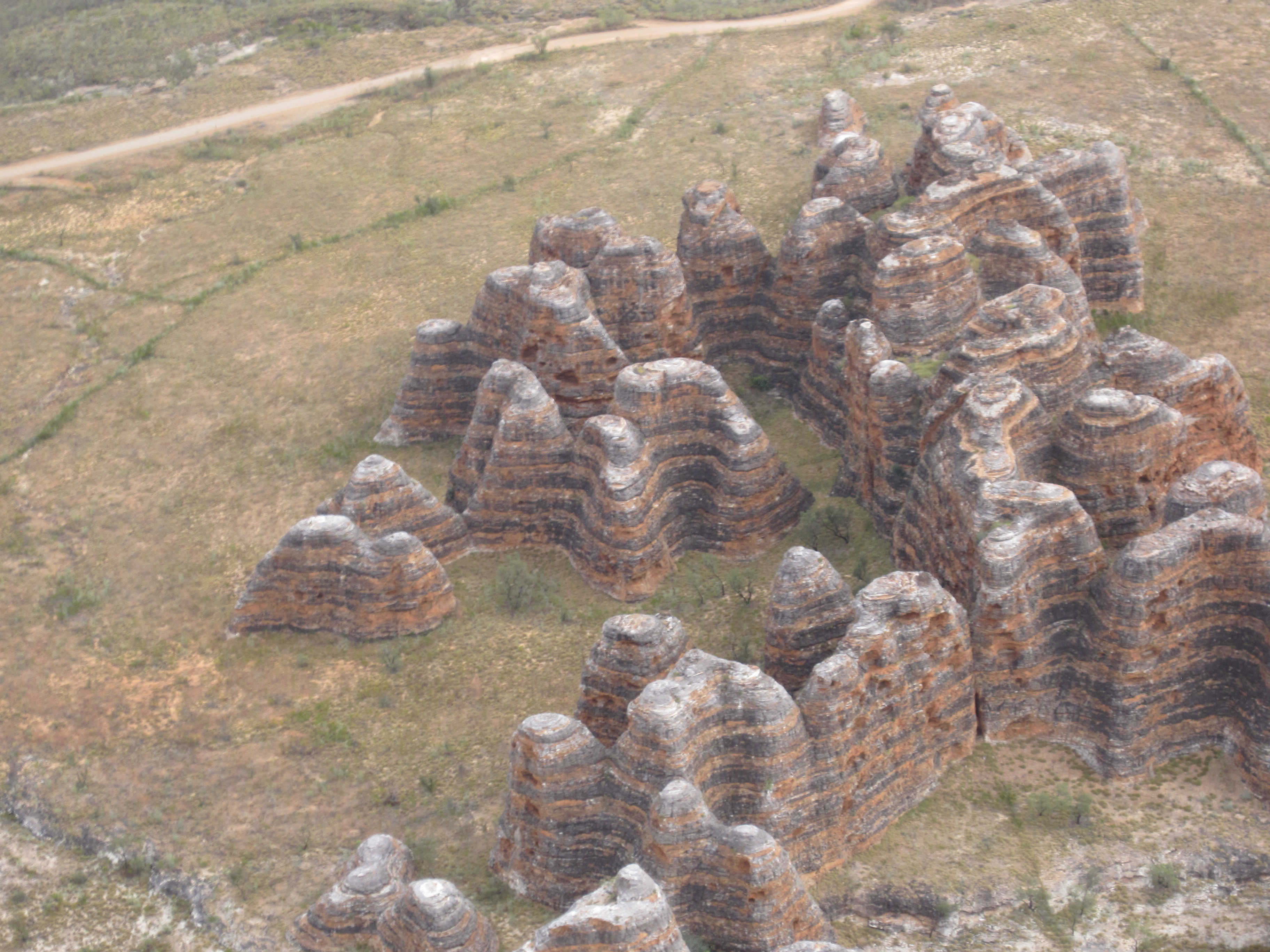
We had 30 minutes of flying over amazing scenery including where we had walked the day before. There are hundreds of red striped domes and the best view was definitely from above them.

Bungle Bungles from the air

Bungle Bungles from the air

El Questro

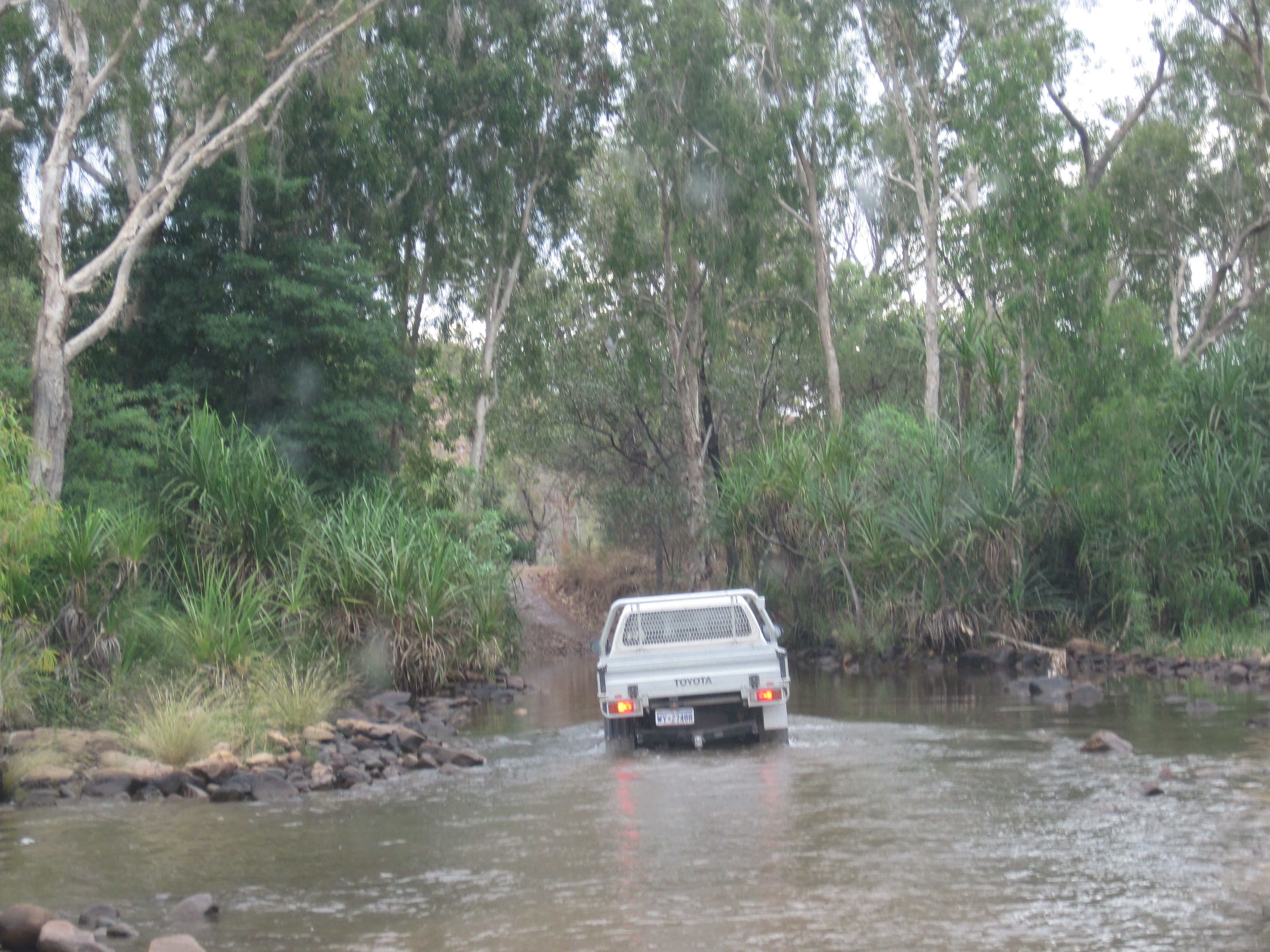
It took less time to drive back from the Bungle Bungles over the corrugated road to the main road. We stopped at a roadhouse where the choice for lunch seemed to be only meat pies. We had to retrace our steps almost all the way back to Kununurra then turned off on another gravel road to El Questro. There were more corrugations. We turned a corner and suddenly found that the road crossed a river which seemed fairly deep. We just waited for another vehicle to drve through to check the depth and found that the Pajero was absolutely fine.

The road to El Questro

The road to El Questro

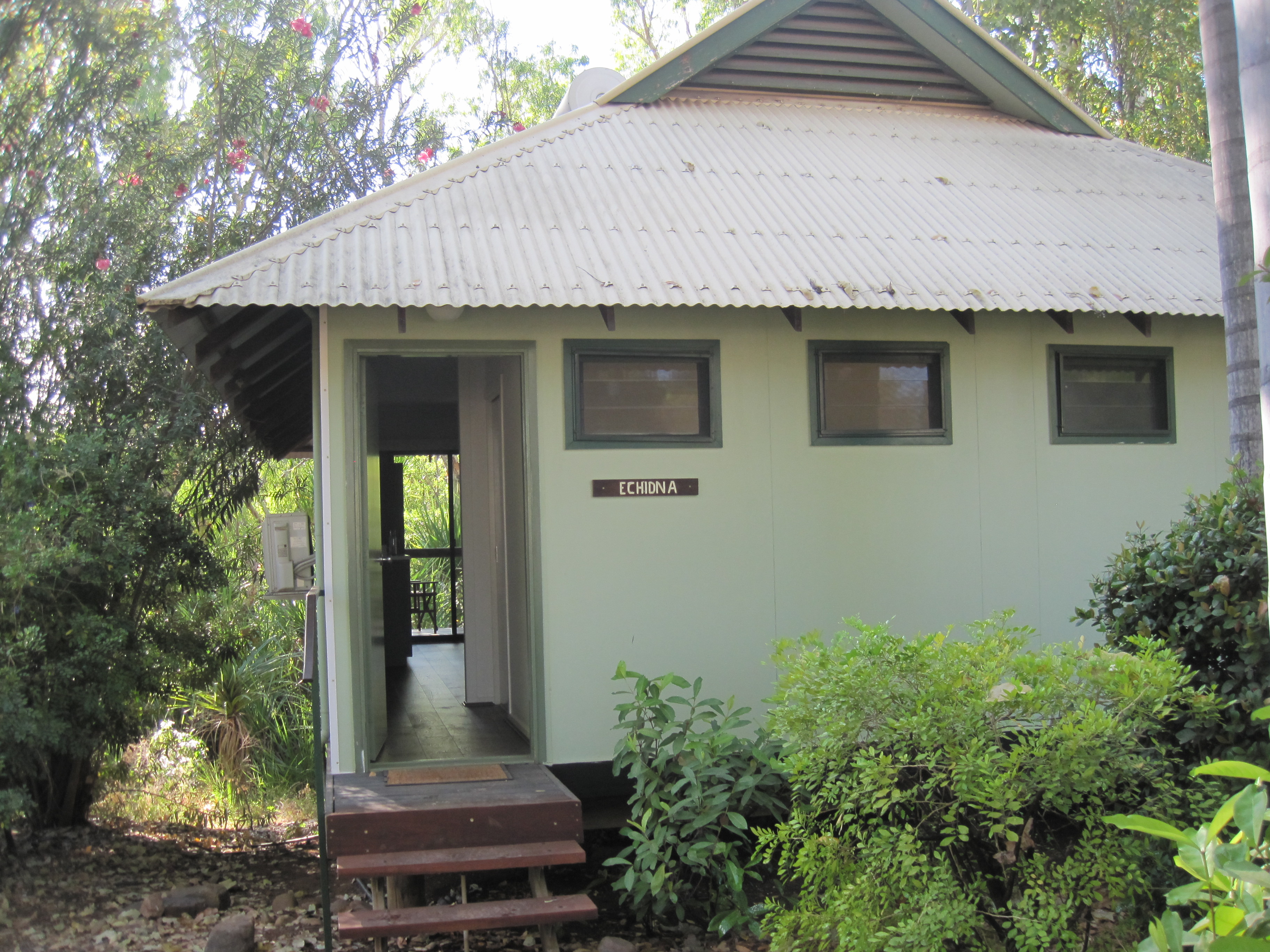
El Questro is perhaps best described as a kind of holiday camp in the Kimberley. There is a shop, a restaurant, bar, camp site, petrol station and chalet accommodation. They actually have more than one site but we were in the main one called The Station and housed in a semi-detached chalet bungalow called Echidna. It looked fairly nondescript on the outside but inside it was very modern and it had a nice deck at the back looking down on to a narrow river. There were some lovely Kimberley prints on the wall.

Our bungalow at El Questro

Our bungalow at El Questro

Our first dinner there was only so-so probably because the restaurant was called ‘Steakhouse’ and we did not have steak. We discovered that the Australians use the term ‘entrée’ for starter and ‘main’ for the main course which is confusingly called an ‘entrée’ in North America. I managed to negotiate a salad for a starter instead of the protein-heavy offerings on the menu. Dinner on the second night was much better.

In the morning of our one full day there Martin went on a sweaty hike into El Questro Gorge and came back saying he had had to take a detour and had been spooked by a big snake under a palm leaf.

In the afternoon we did the boat trip in Chamberlain Gorge and the reflections of the cliffs in the water were superb.

Reflections in Chanberlain Gorge

Reflections in Chanberlain Gorge

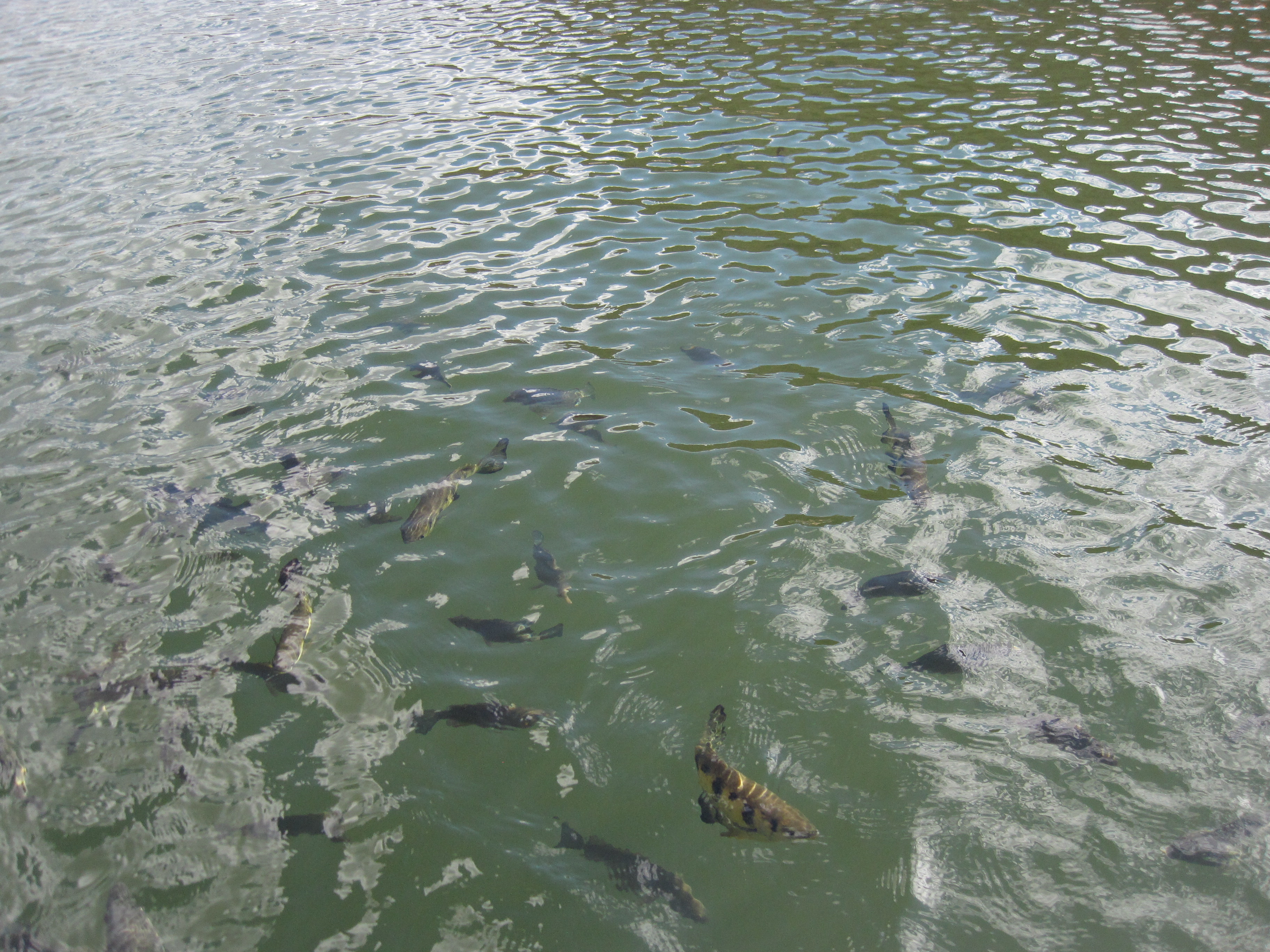
We were entertained by feeding some spotted archer fish. When they see food in your hands they spit water 5-6ft up at you to try to dislodge it. We met Graham and Prue on the boat again. There were no crocodiles.

Archer fish in Chamberlain Gorge

Archer fish in Chamberlain Gorge

The next day we set off early, first to visit Zebedee Springs near El Questro station. This was an easy walk through palm vegetation to some thermal pools. Some people were bathing in it.

Zebedee Springs: somebody felt like a paddle

Zebedee Springs: somebody felt like a paddle

Starting on the Gibb River Road

Then we were about to start tackling the Gibb River Road proper and the infamous Pentecost River crossing where there are known to be crocodiles. When we got there we saw that there was no water in it. We later learned that most of the locals had never seen it like this before – the last two wet seasons had not been very wet. We just drove across a stony marked-out causeway. There was a little bit of water to the side but no crocodiles.

The only water in the Pentecost River

The only water in the Pentecost River

The Gibb turned out to be a better road than we had been led to believe. It’s wide enough for two vehicles and the gravel was quite well maintained with not many corrugations. The road is paved on the steeper bits which are called ‘jump-ups’. It was almost the end of the season and there wasn’t much traffic, but we felt quite comfortable on our own. We were still driving through light eucalyptus trees and bush.

Mount Elizabeth

Our destination that day was Mount Elizabeth station which is one of the better known working cattle stations. It was 30km off the Gibb over a wide gravel road and we arrived there in time to take a short trip over the worst bit of road we had seen (ruts and rocks) to Wunumurra Gorge, another beautiful spot with a sandy beach by some water. By now we were out of the area for crocodiles (I hope) and just enjoyed the peaceful scenery in the early evening. We nearly hit a cow on the way back.

Wunumurra Gorge

Wunumurra Gorge

Some other clients of Bluey travel were staying there as well as some Germans who had had plenty of problems with tyres. We had another interesting conversation over dinner. One of the girls who served us thought that the snake Martin saw at El Questro sounded like a king brown. Very poisonous.

Mount Elizabeth was established by the Lacy family. We found a book about them and their history. Next morning we asked to meet them. Peter was away but Pat was happy to talk about life on the station. Their children had done the school of the air and then finished schooling at Perth, over 2500km away. Pat told us that she has a medicine cabinet with numbered items. If she needs the doctor she calls and they tell her which numbered pills to use. She also told us that a month ago a guest had had a heart attack at the gorge and the flying doctor came to their airstrip at 9pm.

Picture gallery: The Kimberley I: Darwin to Mount Elizabeth

Posted in Uncategorized | Tagged , , , , , , , , , , | 2 Comments

Ships and Dragons: Singapore to Darwin

This is the second post on our round the world trip August – November 2016.

Go here for a picture gallery.

Deciding to take the cruise

Booking the cruise from Singapore to Darwin on P&O Australia’s Pacific Eden was something of a hassle. Martin found it on the Internet after we had booked our flights to KL and a trip through the Kimberley in NW Australia. The days fitted well except that the cruise terminated at Cairns. It took several weeks of e-mails to and fro, an initial refusal (after we had paid in full), and finally a fax to the Managing Director of P&O Australia before we were told that we would be able to disembark at Darwin.

We really wanted to visit some of the ports of call, but this hassle and uncertainty did not endear us to P&O Australia. Neither did the reviews of this cruise which we had read on the cruise critic forums on the Internet. However this was mostly dispelled once the ship sailed.

The Pacific Eden

The Pacific Eden previously belonged to Holland America and it is about half the size of the previous cruise ships we have been on. It can take some 1200 passengers and has a crew of about 550. The captain and some of the other senior officers were British.

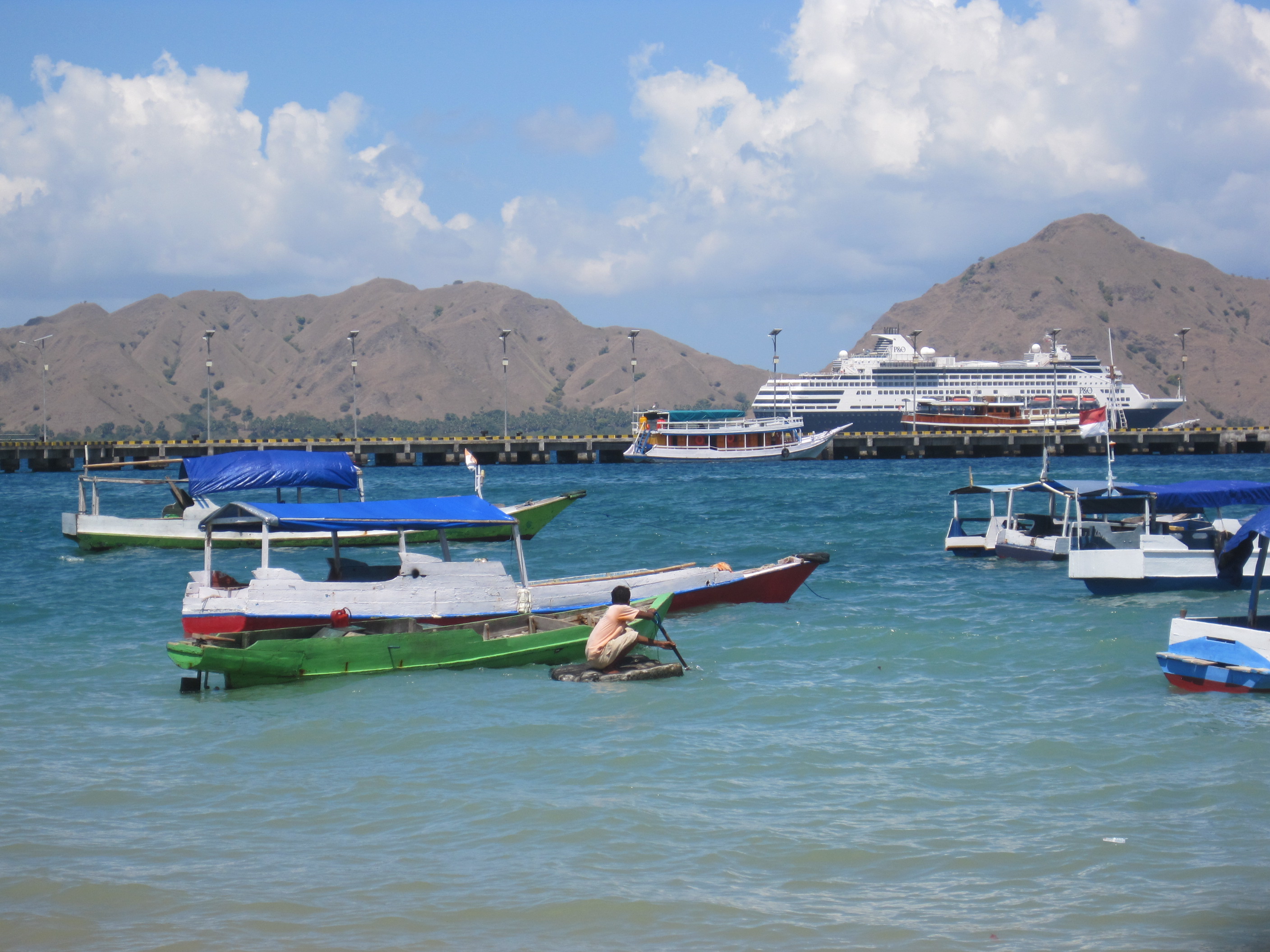
The Pacific Eden anchored at Komodo Island

The Pacific Eden anchored at Komodo Island

We had a balcony cabin which was big enough for a king bed, and a sofa and desk area.
A real bonus was that the TV had BBC World.

The public areas had recently been renovated and, if you wanted to drink all day (we didn’t), there were plenty of bars to choose from. The ship also had a huge theatre at the front which was used for lectures as well as evening entertainment.

Eating and drinking on board

Except for breakfast and lunch on shore excursion days, we ate most of our meals in the more formal Waterfront restaurant where most of the dinners were themed. The lunch menu in the Waterfront had a variety of dishes but it did not change at all.

Most of the other passengers were Australians with a sprinkling of New Zealanders. The food reflected what we later found in Australia with large meat portions and not so many vegetables. There was plenty of variety and some of the dishes were quite imaginative. Huge meals were served at lunchtime in the self-service Pantry and it was a bit more difficult to assemble a light lunch. Curiously there was no cheese. We were told by the Food and Beverage Director (an Irishman) that the menus came from Head Office but in any case the Australians don’t eat much cheese. A visit to any supermarket in Australia will confirm that this was an entirely spurious reason.

We also soon discovered that if you order muesli in Australia, it is soggy with milk already on it. And the bread was mostly sliced and not very exciting. Tea and coffee were available round the clock and made UK not US-style. We noted that Australians seem to drink more tea than the Brits.

There was no fixed seating and we ate at shared tables whenever we could. We met plenty of interesting people including many who had cruised around south-east Asia and the South Pacific. Several asked us about the Brexit vote which had mostly shocked them. We met only one other British couple.

On board

As on the previous cruises we have been on, the time passed quickly on sea days. The lecture on the ports of call was informative without being too much of a hard sell. The latter concentrated on the ship’s zip line and similar activities none of which interested us. I went to a session in the fitness centre which claimed to be about posture but was really a hard sell for goodfeet.com. Their insoles felt good but they needed to be at 199 Australian dollars a pair. Otherwise I read a lot on my new Kindle – there was no library on the ship.

We went in one of the jacuzzis early evening on most days – this was also a good place to meet people and it was warm enough after dark.

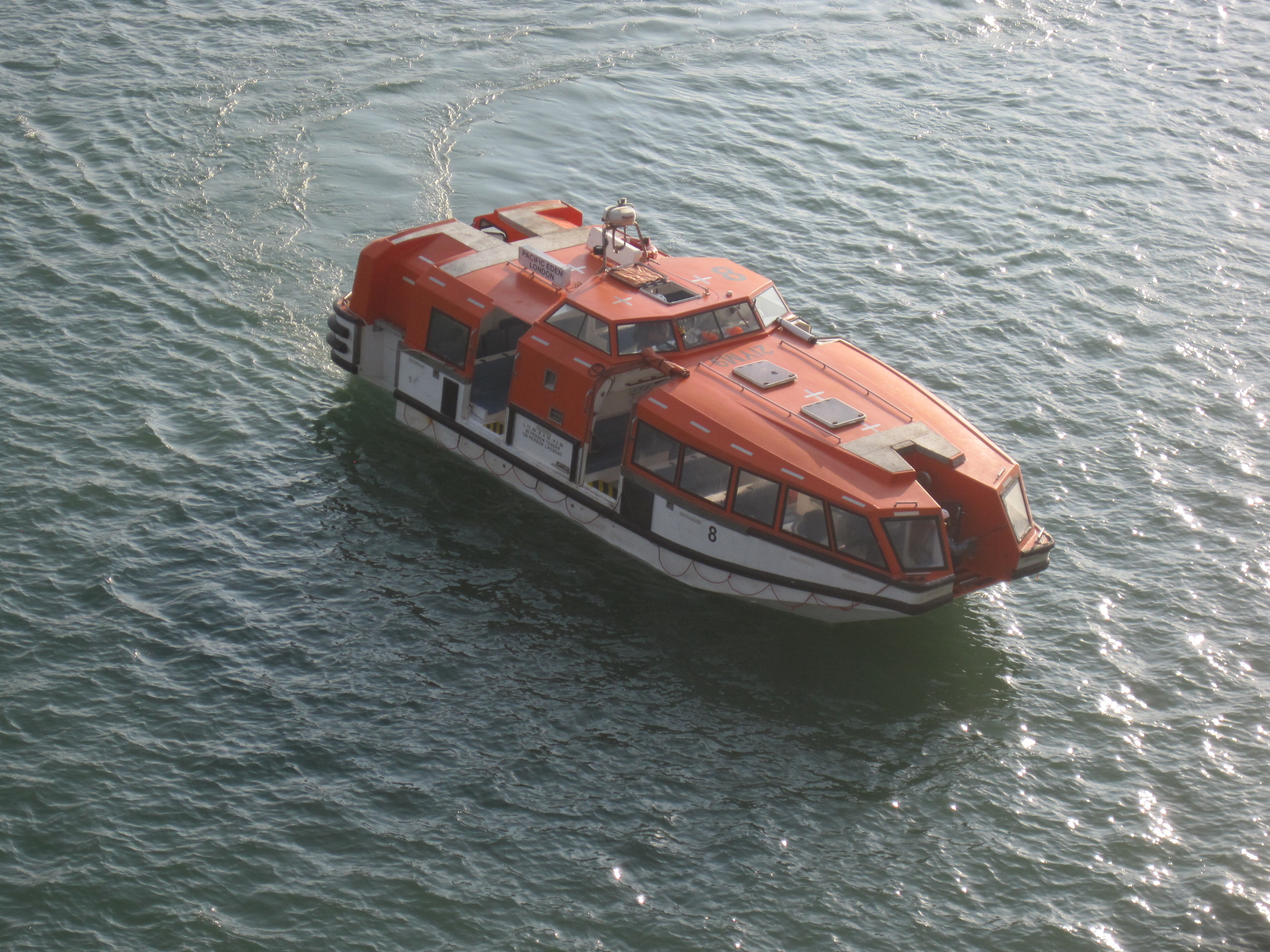
Disembarkation at some of the ports was by tender for which they were using the ship’s lifeboats. I wondered what would happen if there was an emergency when the ship was anchored as plenty of people stayed on board at the ports.

One of the ship's lifeboats as a tender

One of the ship’s lifeboats as a tender

Lombok

The first port of call was supposed to be Bali but the captain announced 2 days before that we would not anchor at Bali because of the swell. The sea was calm. We had already read on the cruisecritic forum that this ship never makes its scheduled stop at Bali, it seems because of a dispute between P&O and the Bali port authorities. This did not bother us because we saw a lot of Bali in 1980, but some people were annoyed.

Instead, some the tours to the next island Lombok were arranged. We actually went to Lombok for 2 days in 1980 but we had no record with us of where we went then. A quick look at the Lonely Planet guidebook and the map told us that we were not going to arrive at a big town where there might be plenty of taxis and so we decided to take the ship’s tour which had the most sightseeing.

Disembarkation at Lombok was by tender. When we got ashore we were glad we had decided to take the ship’s tour as there was almost nothing there except a small musical reception committee. Then we were on the bus with an excellent guide who told us a lot about the lifestyle in Lombok as well as drawing attention to places that we passed. His English was very good except that almost every sentence was punctuated with ‘ladies and gentlemen’ which he pronounced ‘gentlement’.

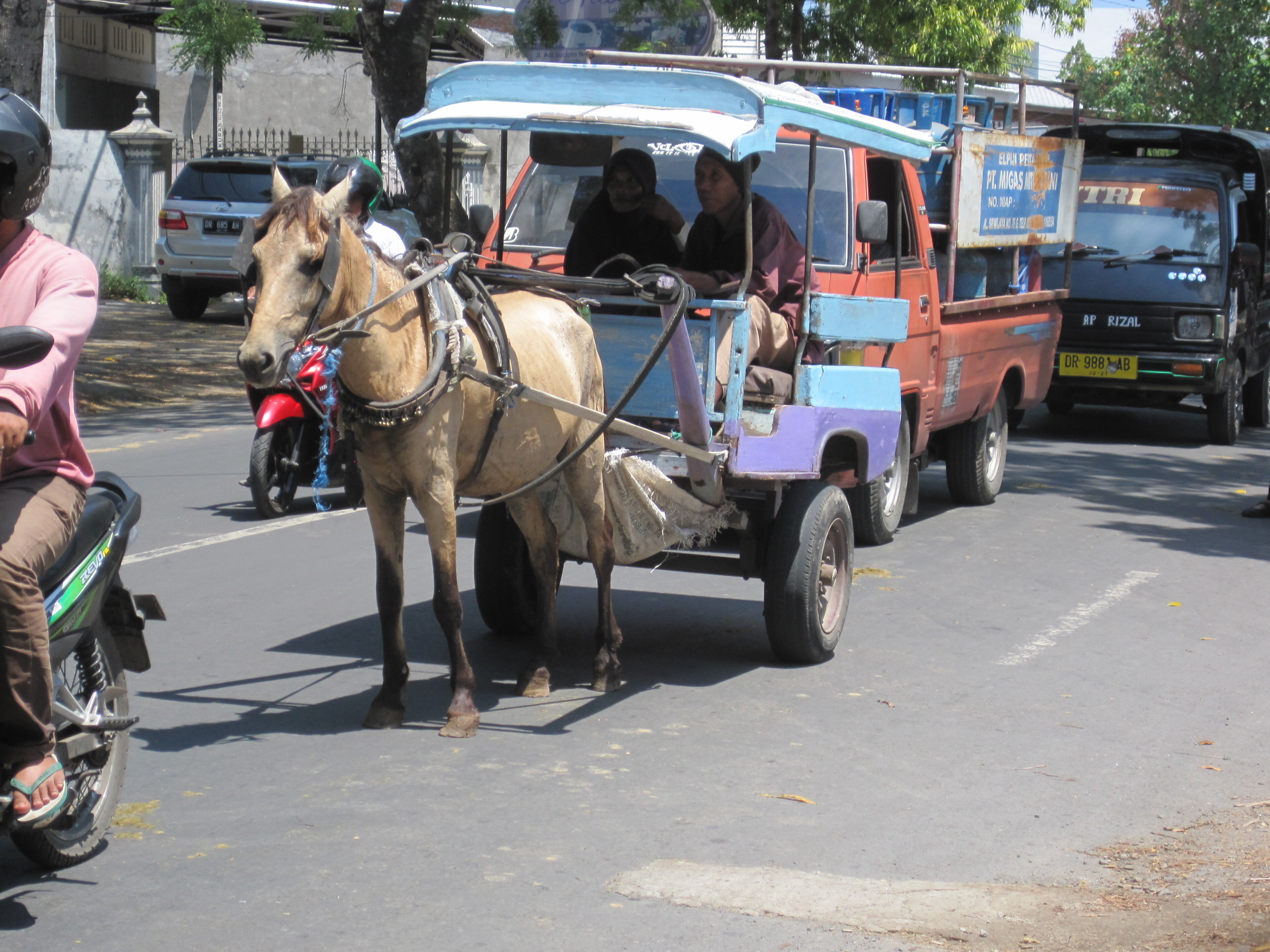
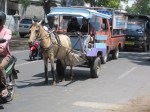
We went first through the main town Mataram which was very crowded. There were a lot of motorbikes and some horses and carts which the guide called ‘one horse power’.

Street scene on Lombok

Street scene on Lombok

Our first stop was at Lingsar Temple, a large complex built in 1714. It looked very much like a Hindu temple but it is multi-faith and also used by Muslims, although there was no sign of it being a mosque. We all had to put a yellow ribbon round our waists. A different guide took us round the complex but he didn’t wait for everybody to reach him before he started talking and so I didn’t find out why we had the yellow ribbons. We were told that 60% of the people in Lombok are Muslims but there has been a recent influx from Hindu Bali.

A gateway at the Lingsar Temple, Lombok

A gateway at the Lingsar Temple, Lombok

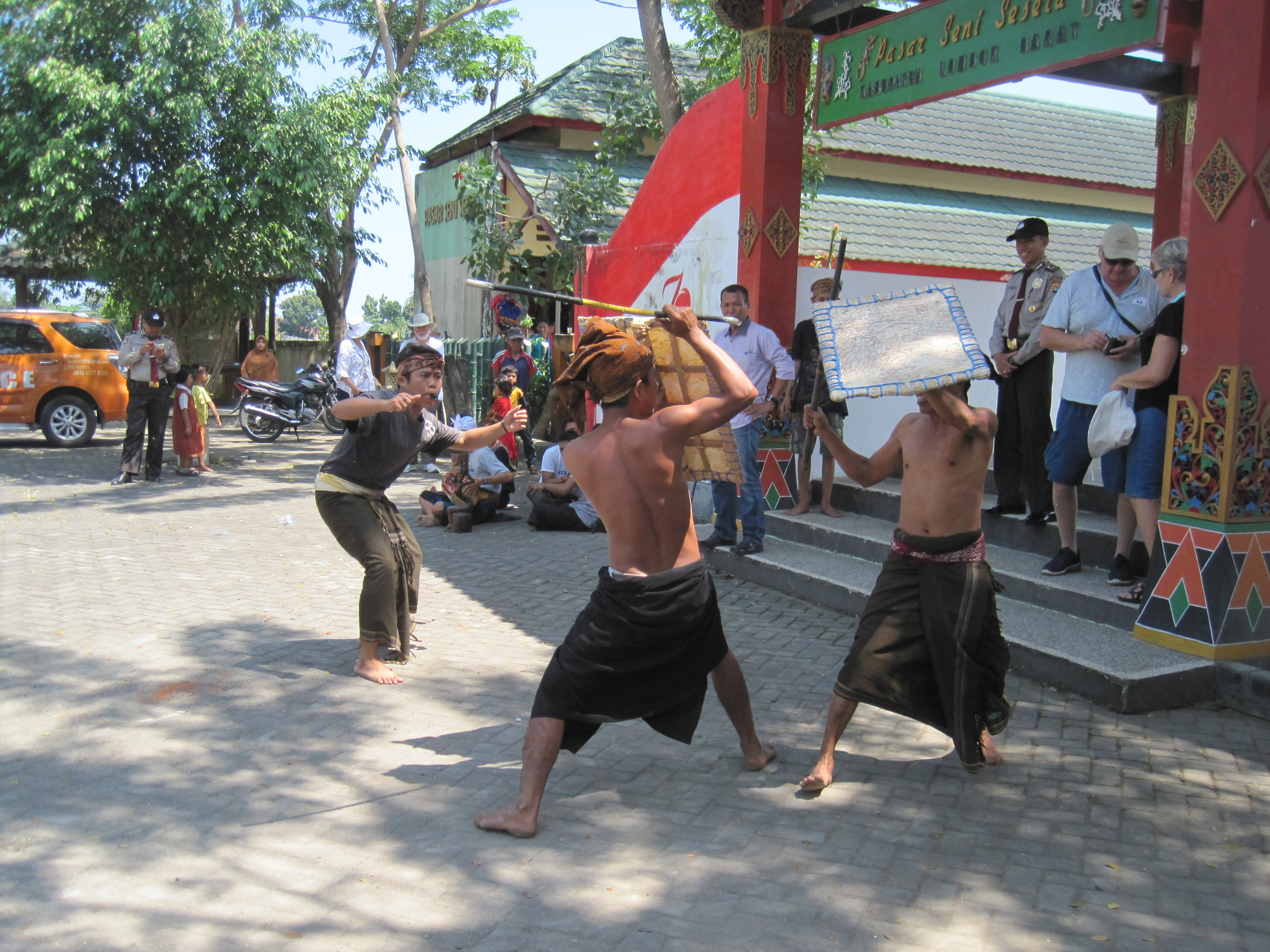
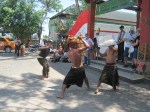
The next stop was an open air market called Sayang-Sayang. There we were entertained by some rather feeble music and some men fighting with sticks and holding rectangular shields. There was also a kind of referee with a whistle who was dancing about.

Entertainment at the market in Lombok

Entertainment at the market in Lombok

The market contained some nice things but another passenger told us that you cannot import wood or shells into Australia and so they weren’t making many sales.

The bus then drove on to a posh pearl shop which was nicely airconditioned, although I spent most of the time there outside trying to photograph passing horses and carts.

'One horse power' transport on Lombok

‘One horse power’ transport on Lombok

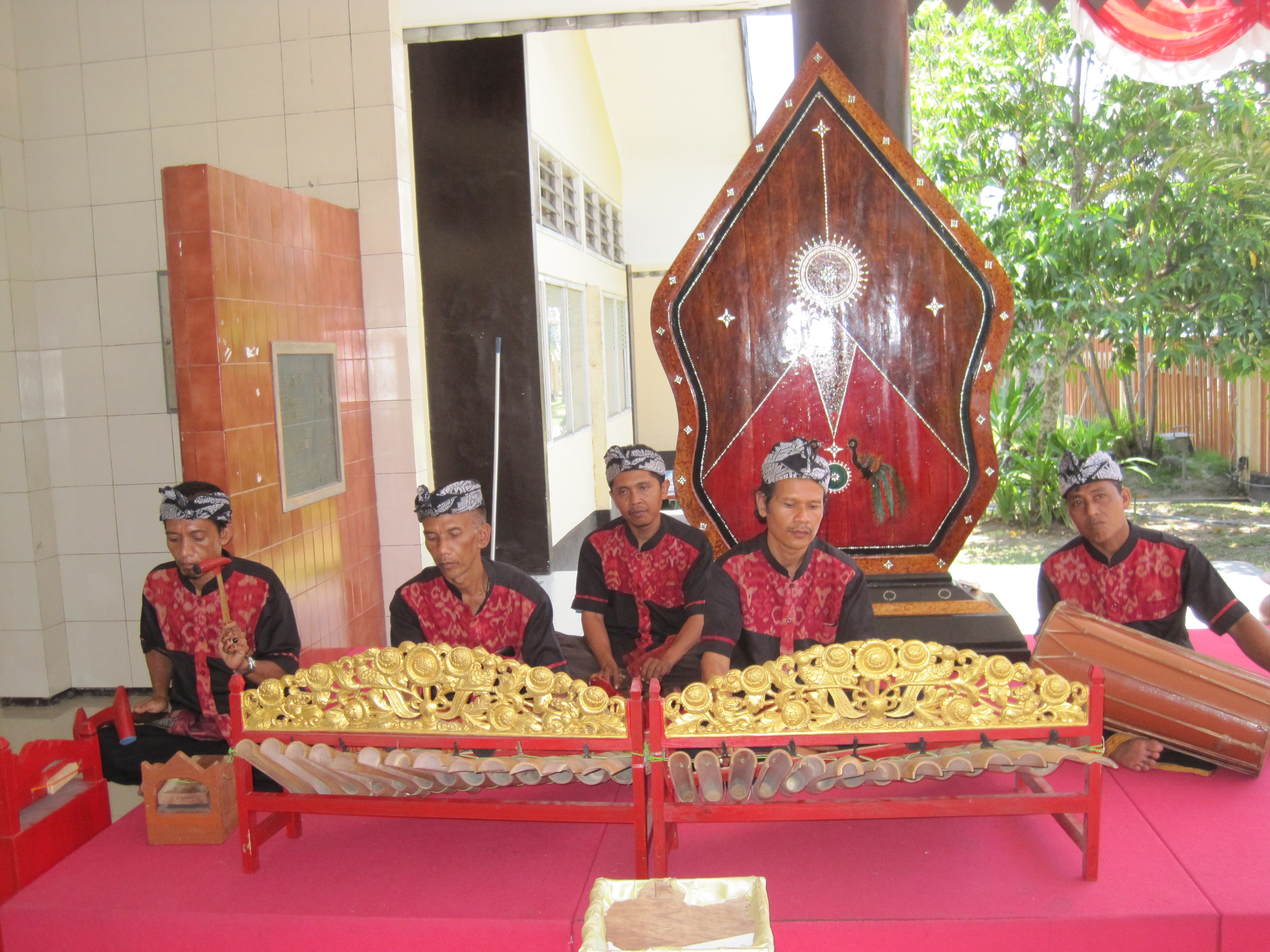
Our final stop was at a museum which was very good. The visit started with more gamelan music, which was much better than the previous groups, and we were also given a drink and some nice little cakes.

Musical reception committee at the museum on Lombok

Musical reception committee at the museum on Lombok

I noted that the tentacles of Starbucks have reached Lombok as they appeared to be one of the sponsors of the museum. We saw exhibits on geology, religion, things for their way of life, a good collection of gold daggers and some life-size models wearing various styles of wedding dress. There were some comic-like painted murals around the entrance to the museum.

We passed many mosques in Lombok, some of which were fairly large. It seemed quite densely populated. The scenery we passed through was mostly fairly flat and agricultural, but with some mountains in the distance.

Makassar (Ujung Pandang)

Makassar, our second port, is also known as Ujung Pandang. It is a big city with a population of over 1,000,000, in the south-west of Sulawesi. The ship docked right by the centre of town where a very helpful policeman pointed us to an ATM as we needed some cash in order to explore on our own. We took a taxi to the old port to see the old sailing ships. On the way there we passed through crowded streets with a lot of shops where the goods where spilling on to the street.

The taxi driver didn’t really know the way into the port and we had to be moved on
by a policeman. Neither did the taxi driver know any English and there was some altercation over the fare when he wanted 3 times what was on the meter. It was so cheap that we paid him what he wanted anyway.

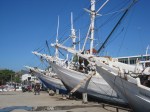
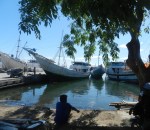
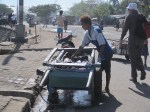
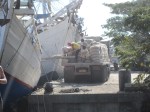
At the port we saw very many colourful sailing ships which didn’t look like they had changed much for a long time. We also saw some men loading cement bags on to one ship by hand, and hand carts including one with fresh fish. There were plenty of piles of rubbish. The locals ignored us and didn’t seem to mind having their photos taken.

Sailing ships at the old port, Makassar

Sailing ships at the old port, Makassar

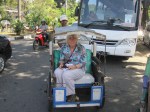
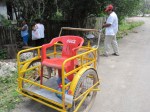
The taxi driver left and the only transport we could find when we left the port was a bicycle rickshaw. This was a scary ride among a lot of traffic (and some bad fumes). The rickshawman just headed for where he wanted to go, weaving in and out of cars while we hoped that the traffic would go round us. We were glad to get to Fort Rotterdam safe and sound after 20 frightening minutes.

Rickshaw in Makassar. Both of us squeezed in it

Rickshaw in Makassar. Both of us squeezed in it

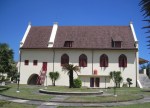
Fort Rotterdam is the main sight in Makassar. It was built by the Dutch in the 17th century and consists of several rather tall and rather nice buildings with cream walls and red paint on windows etc. There were a lot of tour groups from the ship but it seemed like an oasis of calm after the chaotic traffic.

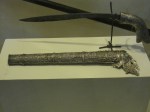
Two of the buildings are museums with history and ethnology exhibits. I was most interested in a book where I was unable to tell whether the signs on it were writing or music. We got into conversation with one of the museum guides who told us that it was a very long epic poem called “La Galigo”. I didn’t catch the name of the script, but the guide said an Englishman called Ian Caldwell had written about it. Wikipedia came to the rescue later. The poem is a creation myth written in a language called Bugis and in a script called Lontara. I thought it looked very elegant.

La Galigo, poem in the Bugis language in lontara script

La Galigo, poem in the Bugis language in lontara script

Thank goodness it was easy to find a taxi back to the port. We tried without much success to do some e-mail in the (unfinished) new terminal. A local female security guard nipped behind us to take a selfie. Were we such a novelty? I suppose they don’t have too many cruise ships in Makassar.

Komodo Island

Today was a our big day. As soon as we booked this cruise, we forked out for an expensive, but not to be missed, tour of Komodo Island in the hope of seeing the dragon. We had to tender off the ship here again and arrived at a nice beach. There were some deer lounging on the beach (were they dragon food?)

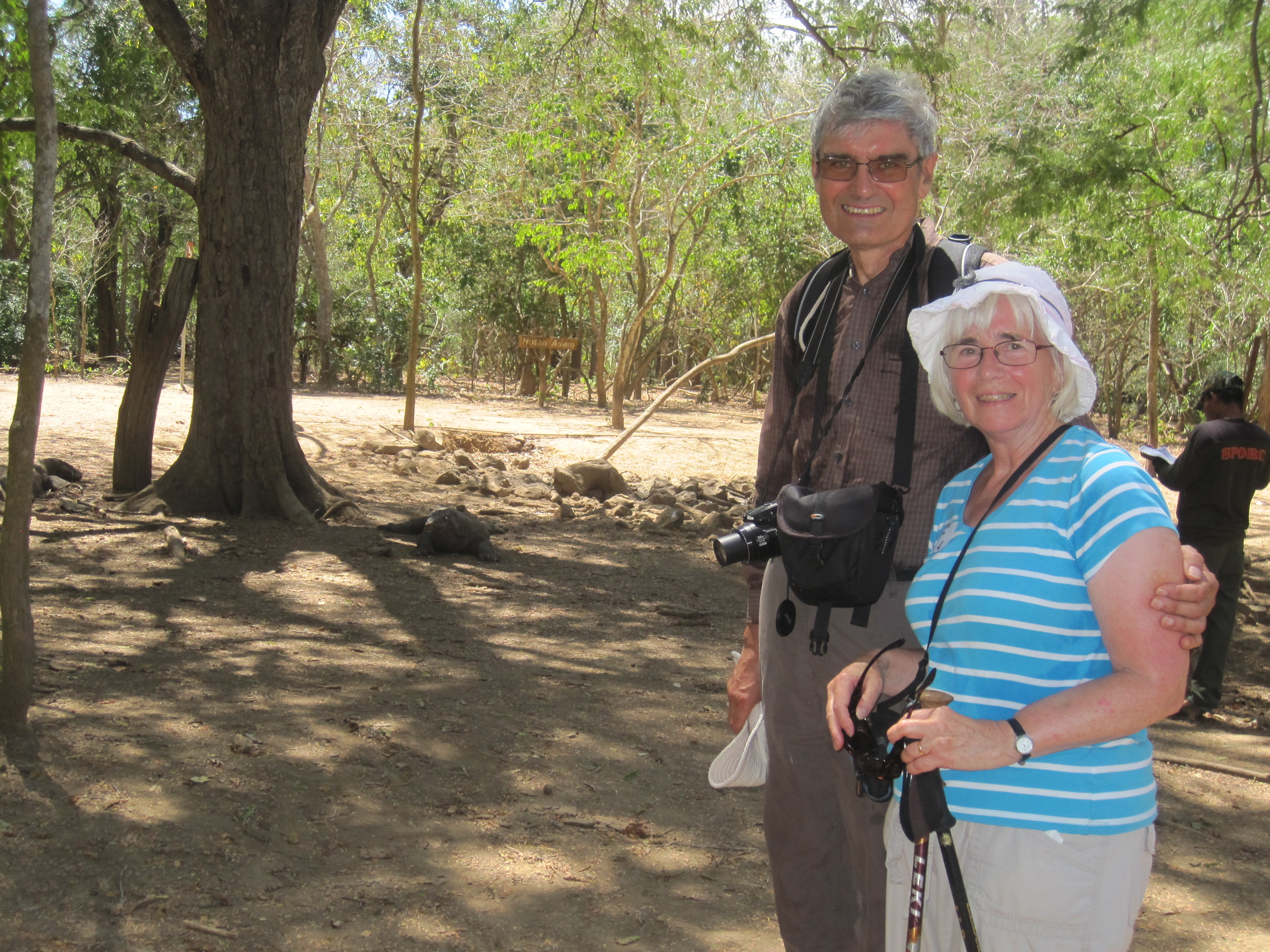
We were in groups of about 20 people. Our group had 4 guides, all carrying forked sticks. We set off on a 2km walk around a bit of the island. It was very dry and the vegetation was mostly small trees. We went uphill for a short time to a viewpoint, then I sensed we were turning back towards the jetty. All we had seen of the dragon so far was what the guide described as a nest which looked like a very large alligator nest.

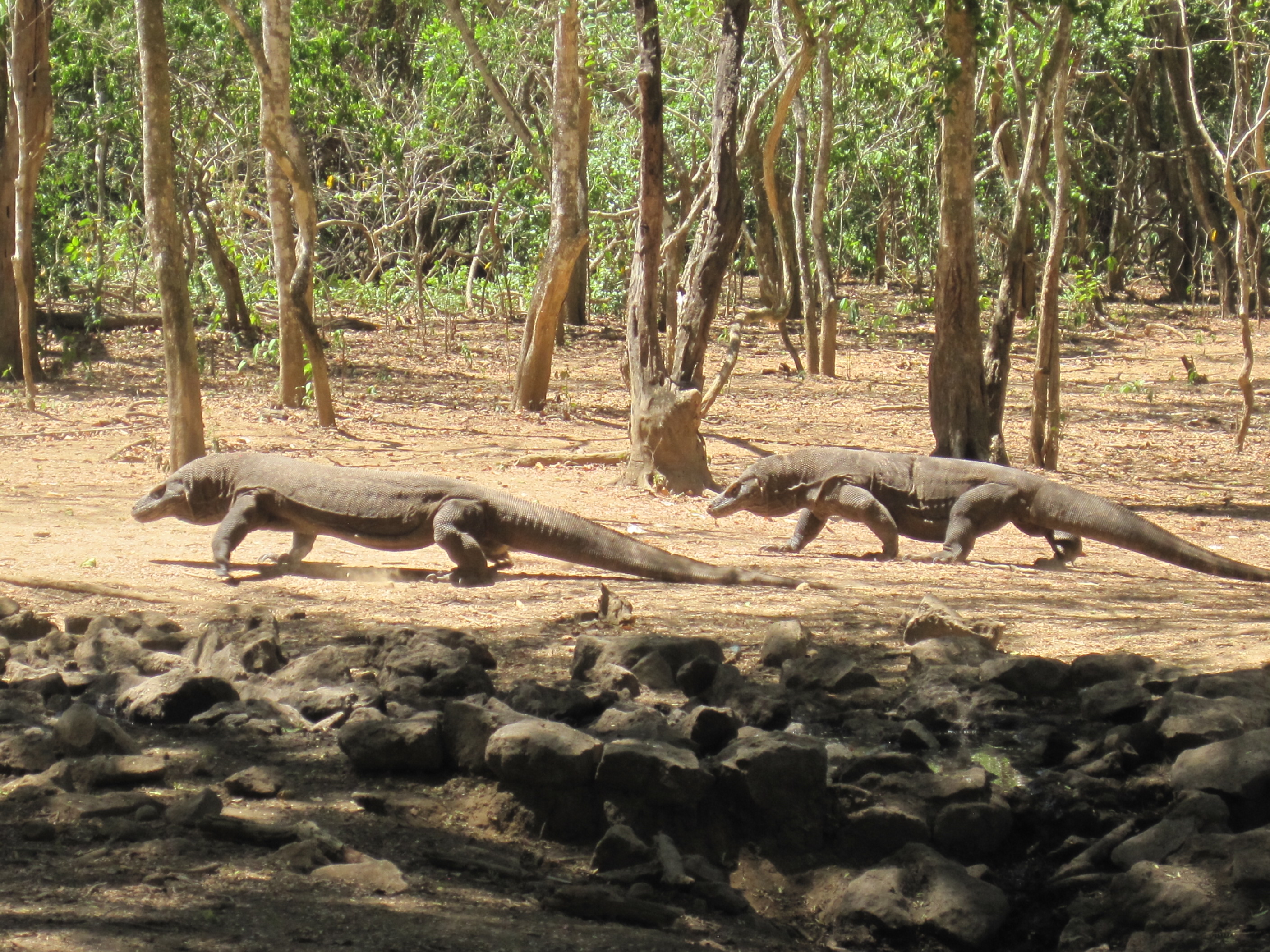
By now I was of course at the back of the group and in conversation with Harry the rear guide. He assured me that we would see a dragon and sure enough we came to a rather dry waterhole and four of them were lounging around.

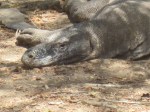
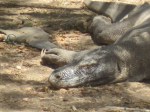
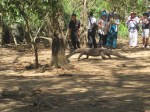
Two Komodo dragons

Two Komodo dragons

They are about 3 metres long including their tails and have a nasty forked tongue which flicks around all the time. Opinions seem to vary about whether they can poison you. The guides threw things at the dragons to make them get up for the obligatory photos and Harry took some photos for me.

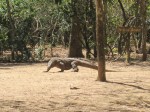
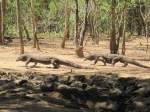
Visiting the dragons on Komodo Island

Visiting the dragons on Komodo Island

It seems that only about half the passengers on the ship did the tour, but in groups of 20 or so we were only able to watch the dragons for about 10-15 minutes.

Back near the beach there was a local market selling T-shirts etc. We were hassled a lot but then learned that there would not be another cruise ship until November – we were there in early September. We weren’t sure where all the T-shirts were stored. Martin thought perhaps there was a mastermind for all of it and the vendors just paid him for what they had sold.

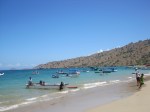
We were soon back to the jetty and the lovely beach nearby where there were a few kids wanting to have their photos taken. We walked on the beach for a while. Plenty of small boats were moored close by. Martin walked a bit further towards the village and saw 2 more dragons right by some houses. I chatted to some of the guides. They were going back to the neighbouring island Flores, a journey of 4 hours in a local boat.

Is this the smallest boat ever? Komodo Island

Is this the smallest boat ever? Komodo Island

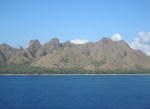
Later that day and the next day we sailed past Flores which has some wonderful volcanic scenery.

Dili, East Timor

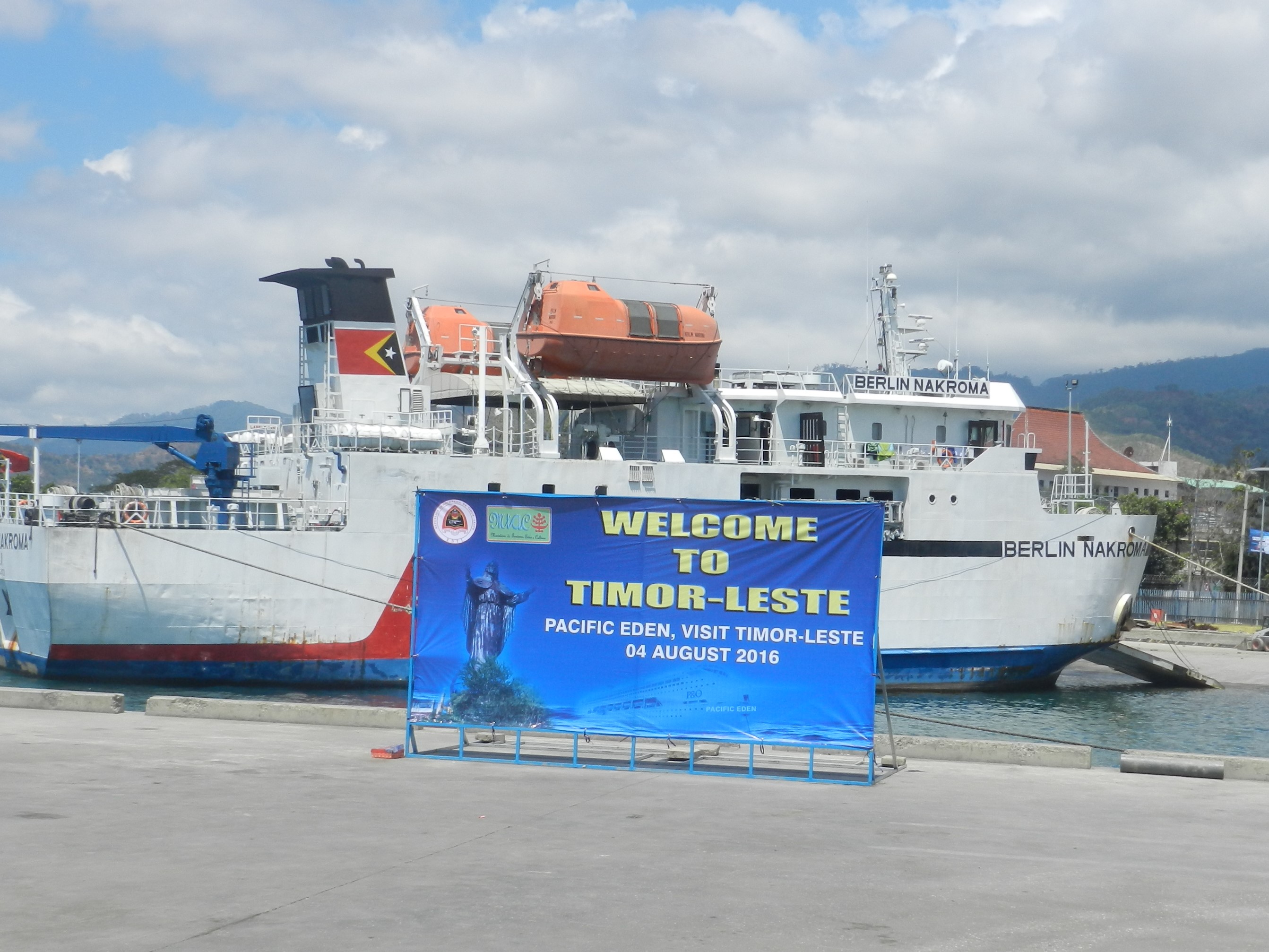
This was our last port of call. Getting off the ship was another tender, and we arrived at what seemed like a small container terminal by the centre of the town. We decided to do our own thing in spite of P&O not recommending local taxis. The ship’s tour was very expensive and another passenger had told us that he knew somebody who went to Dili on business and that it was safe.

Not many cruise ships in Dili

Not many cruise ships in Dili

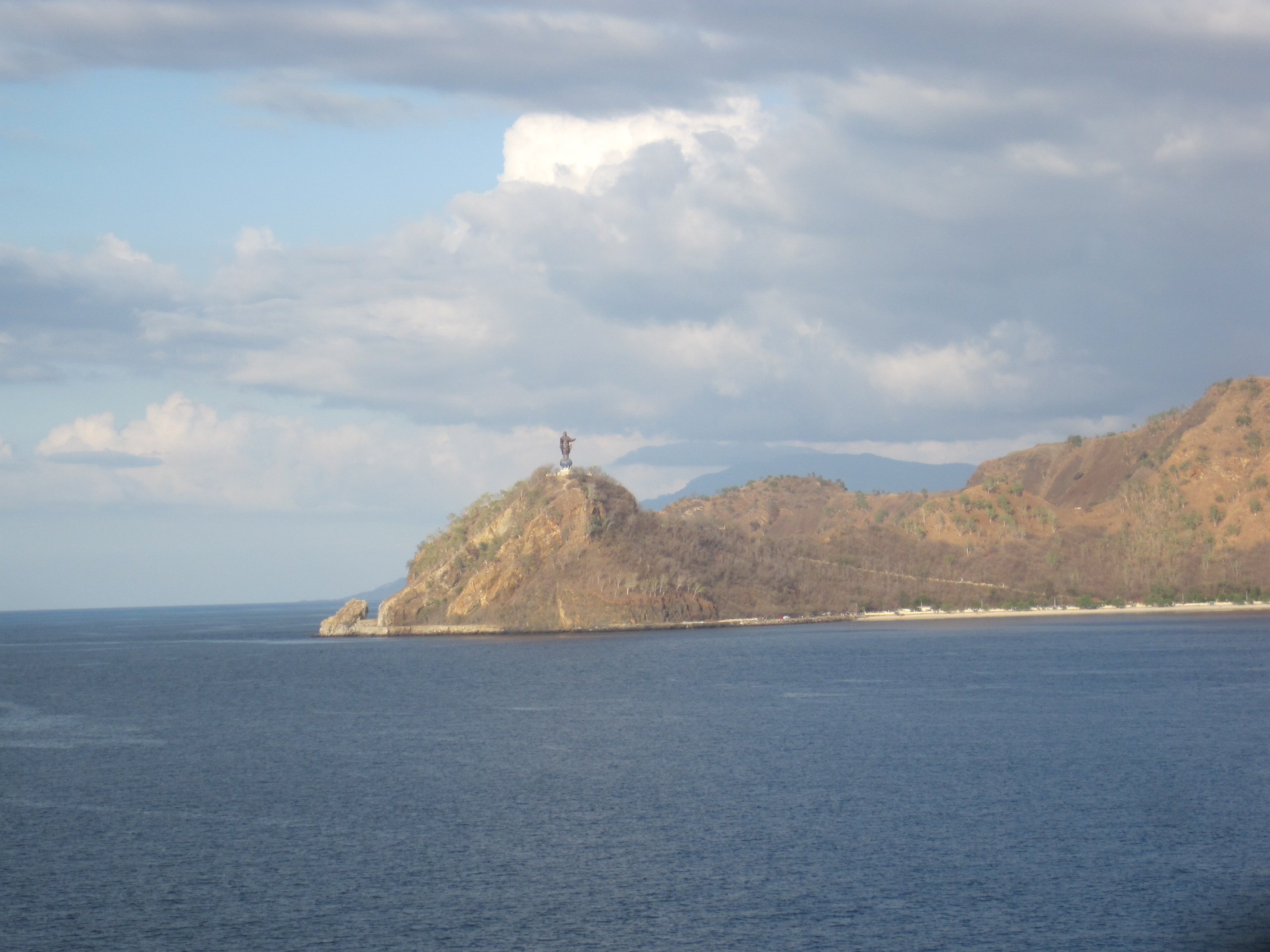
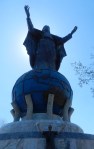
The only sight is Cristo Rei, a statue of Christ on top of a peninsula about 7 km from the town. We shared a taxi there with an Australian couple. Martin walked all the way to the top and one of our companions went most of the way up. Apparently there are well over 500 steps. I kept seeing the tour buses arriving at the base of the walk but they just turned round and went back. The taxi driver got rather agitated when we were there so long but he did wait to take us back.

Cristo Rei as we left Dili

Cristo Rei as we left Dili

The Australians decided to go back to the ship but we walked round for a bit. It was a Sunday and most things were closed. Plenty of people were sitting and/or playing in a park by the dock. They didn’t seem very interested in us. Most shops were closed and nobody tried to sell us anything.

Dili was something of a contrast from the towns we had seen in Indonesia. There were a lot of concrete buildings and fairly wide streets. It is a long thin place backed by mountains. More locals emerged by lunch time and we saw some small but brightly coloured buses, some with conductors hanging out looking for passengers.

After spending about 4 hours ashore I decided that this country falls into the ‘been there, tick it off the list’ category. At least they use US dollars and so we didn’t have to find an ATM.

Getting back on to the ship via the tender was a bit dodgy here as the sea wasn’t calm and we had to get on to the tender from a floating pontoon. The tender missed the small pontoon on the side of the ship the first time it tried to dock but the second attempt was fine. People had to be helped off.

Arriving in Australia

We had been on the ship almost a week before we discovered through our conversation with the Food and Beverage Director that 30 people were leaving the cruise at Darwin. Had we started this trend or were P&O just being difficult with Brits?

We had been wondering what would happen with Australian immigration but then found out that 3 Australian immigration officers were on a free trip to Dili and were doing immigration on the ship as it sailed to Darwin. There was no queue.

However, we were more than a little annoyed to be told that we must vacate our cabin by 7am and leave the ship by 8.30, when the ship was going to be docked at Darwin until early evening and we couldn’t check into our hotel until after lunch.

When we did get off, our baggage wasn’t where we were expecting it to be. When we did find it, we had to go through customs and quarantine. Fortunately the officer didn’t fancy spending too much time looking through a lot of dirty laundry.

Finally we had arrived in Australia. It was two weeks after we had left home and we had been on the ship for 10 nights (9 full days).


Posted in Uncategorized | Tagged , , , , , , , , , , , | Leave a comment

Kuala Lumpur and Singapore

This is the first of several blog posts describing our round the world trip whch began on Tuesday 23 August 2016. The main reason for this trip was to see a lot more of Australia than we had done on our two previous visits, but we decided to start in a new country for us, Malaysia.

Go here for a picture gallery

Getting to Kuala Lumpur

Our flight from Manchester to Kuala Lumpur (KL) via Abu Dhabi on Etihad was uneventful (two legs of approximately 7 hours each, the first being overnight). We had not used this airline before but found clean modern planes, good food and plenty of choice on the entertainment system.

The downside was that Etihad have outgrown their base. The airport at Abu Dhabi is a building site and every gate is a bus. The terminal was very crowded with long queues for food and the facilities. We could see a new terminal building taking shape at the other side of the runways. I think we’ll wait for it to be finished before taking Etihad again.

The Malaysians seem to have copied US Immigration as we had to wait for some time and then endure thumbprints and photos. The airport is 45 kms from the city centre, but there is a train to town. We needed to get some cash for the train ticket and a taxi. Non-functioning ATMs caused us to just miss one train and we had to wait 30 minutes for the 12.30 am train to KL Sentral station.

It was pretty dark but we passed a large number of tall apartment blocks some of which did look a bit jerry-built. It was a fairly short taxi ride to the Holiday Inn Express on Jalan Raja Chulan where we were given a very nice room on the 17th floor. We got to bed at 1.30am Malaysian time, 7 hours ahead of the UK.

An eventful first morning in KL

The next day we only just managed to get up in time for the hotel’s breakfast. We had our first taste of getting about in KL when a lady at the hotel reception gave us a map but she didn’t really know where we were on the map. She pointed us to the monorail just round the corner, but said that we could walk to some places.

We were just getting ready to go out when the alarm system went off and we had to run down 17 flights of stairs – not a great start to the day for jetlagged sightseers. The alarm turned out to be a test. It delayed us for only about 30 minutes but the stairs didn’t do my legs any good.

We took the monorail to KL Sentral to be sure where we needed to be for the train tomorrow. With all the tall buldings it seemed like Manhattan with wiggly streets. Then we soon found out that Kuala Lumpur is not a walking place, especially in the high 30sC. After a false start we gave up trying to walk to the Islamic Art Museum, which appeared to be nearby on the map, and found a taxi.

Islamic Art Museum

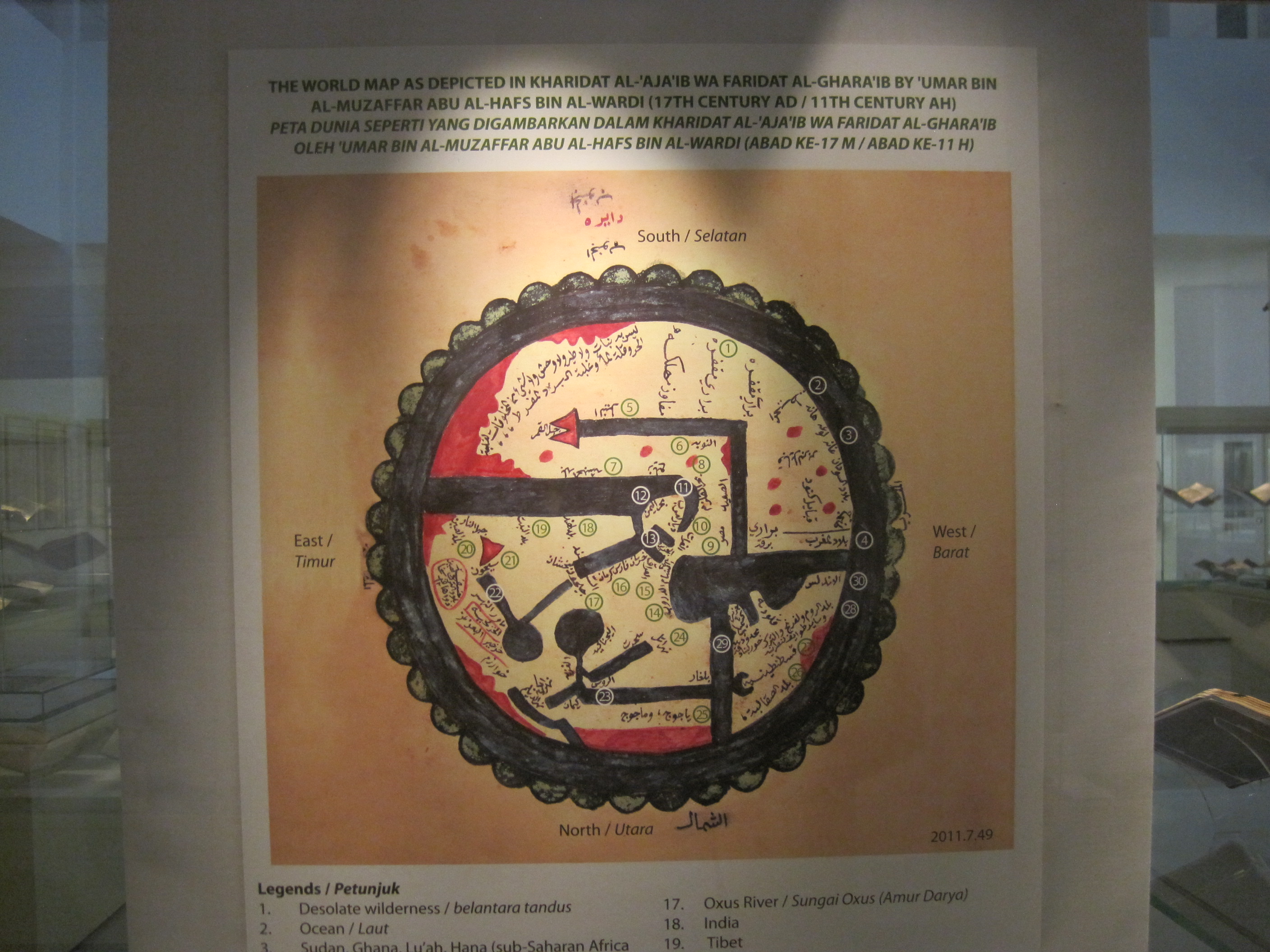
We were very impressed with the museum. There was an exhibition of Korans, large and small, in several different styles of Arabic script, models of major mosques around the world, and beautiful textiles and woodwork some of which were decorated with Arabic script.

World Map, Islamic Art Museum, Kuala Lumpur

World Map, Islamic Art Museum, Kuala Lumpur

The museum cafe was described as a Middle Eastern restaurant. We really only wanted a light lunch, but it turned out to be a rather smart and expensive fixed price buffet serving a sort of Turkish food including keşkül, our favourite Turkish pudding.

If we hadn’t been at the start of our trip we would have bought a lot of things in the excellent gift shop which had no other customers.

Beautiful Arabic script in the Islamic Art Museum, Kuala Lumpur

Beautiful Arabic script in the Islamic Art Museum, Kuala Lumpur

Back to the hotel

Outside we really began to notice that we were in a Muslim country. The National Mosque of Malaysia is nearby and we saw lots of schoolgirls in pale blue trousers and tops, and wearing headscarves.

It was only a short walk to the old station, which was built in Moorish style architecture in 1910 and is supposedly one of the sights in KL. It must once have been quite a splendid building, but now it’s rundown and the inside was covered with dirt. It does still have some trains.

The old station, Kuala Lumpur

The old station, Kuala Lumpur

The first taxi we took back to the hotel broke down after about 300 yards and we had to wait some time for another one, finding out in the process that blue taxis are more expensive and more reliable.

Petronas Towers

Our planned afternoon rest had evaporated. There was just time for a quick cup of tea before we took a taxi to the Petronas Towers which were the tallest building in the world from 1998 to 2004. Our allotted time was 6pm and we were told to arrive at 5.30. We were very glad we had booked online before we left home as people just turning up were told that it was fully booked for the next 48 hours.

The towers are above a huge multi-storey shopping area and it took a while to find the entrance. After that the visit was well organized. There are groups of 20 people every 15 minutes and we were all given a coloured lanyard for our group. The safety briefing was curiously displayed into thin air on a non-existent screen, something I had never seen before.

First our group took a lift to the 41st floor where you can walk on the bridge between the two towers. This wasn’t as scary as it looks.

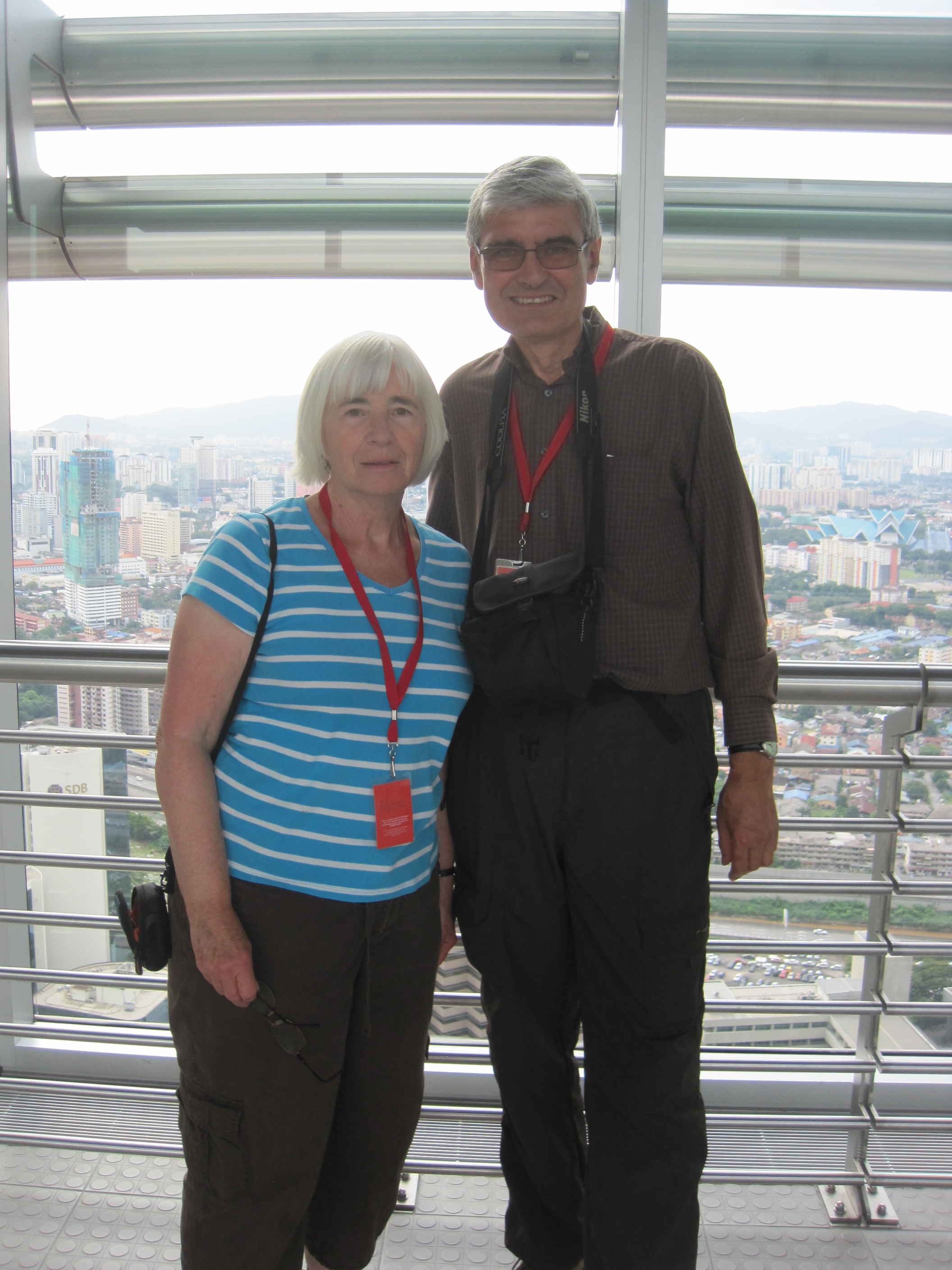
On the 41st floor bridge, Petronas Towers

On the 41st floor bridge, Petronas Towers

Then it was up to the 83rd floor and another 3 floors to the observation deck where we had a good view of the sunset. This area has more models of the towers, but we were most entertained by the video screens which have a web cam. You can point the QR code on your ticket to it and the screen shows a picture of yourself apparently holding up the towers.

Holding up the Petronas Towers via their webcam

Holding up the Petronas Towers via their webcam

The lift took us straight to the bottom where we found a Chinese meal in a crowded food court where everybody was fiddling with large iPhones.

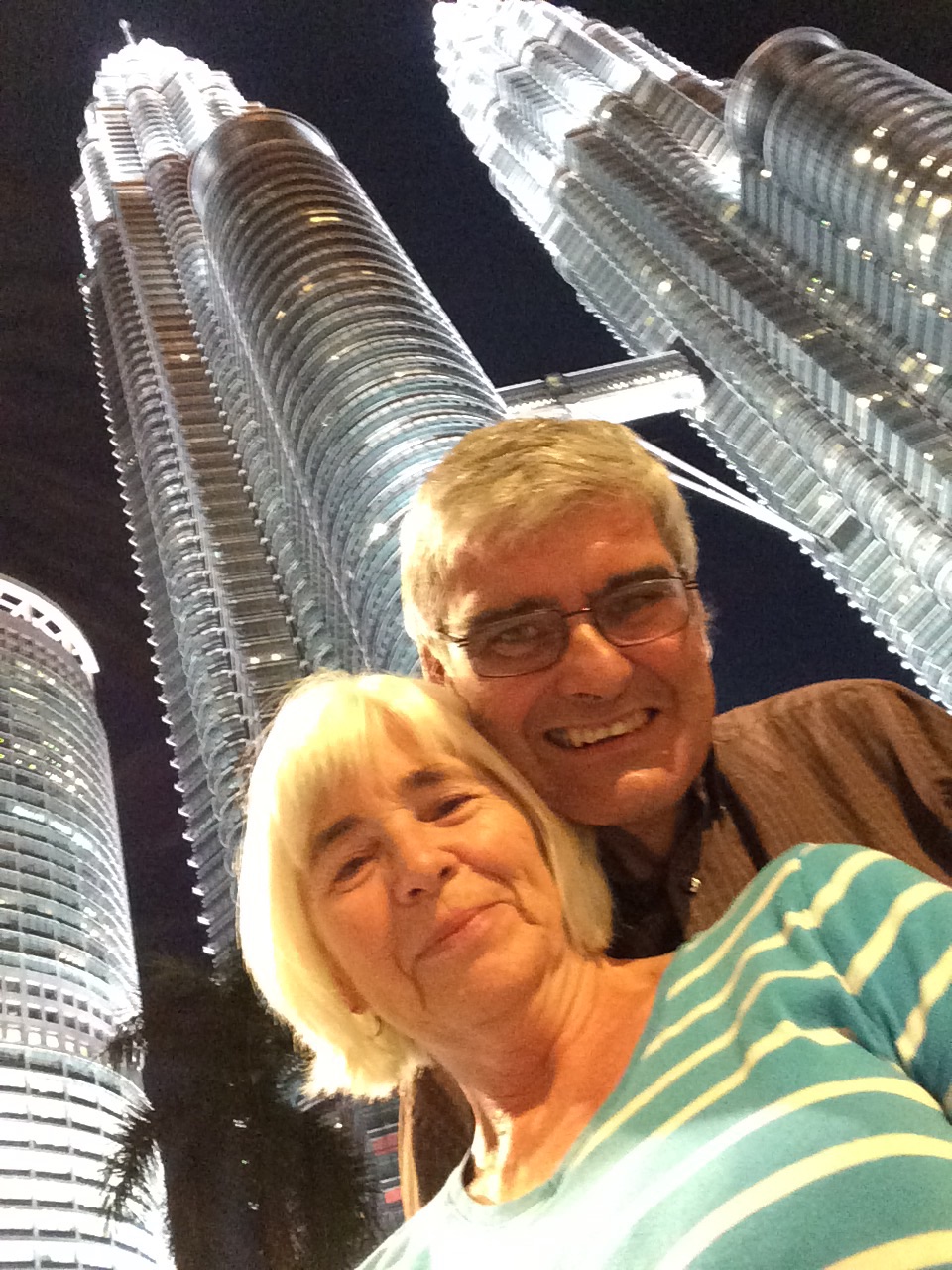
We had some fun with a selfie stick and the illuminated towers outside.

Finally a successful selfie, at the Petronas Towers

Finally a successful selfie, at the Petronas Towers

We then attempted to find a taxi back to the hotel. There were traffic jams everywhere and a taxi driver told us it would be quicker to walk. We did walk and it took about 30 minutes. It was a fairly exhausting first day, but we had done the Petronas Towers which was our main reason for going to KL, and the Islamic Art Museum was an added bonus.

An eventful Malaysian train journey

The next day (Friday) was our train journey to Singapore. We had decided to take the train in order to see a bit more of Malaysia. With the help of seat61.com, we had booked the fast train leaving at 12 noon. The Malaysians are electrifying their railway and introducing smart modern trains. They have only done part of the way to Johor Bahru which is at the border with Singapore.

The first train was like a UK Intercity one, but the seats were narrower and the aisle wider. We had numbered seats and it was not very full.

Malaysian Intercity - this one didn't break down

Malaysian Intercity train – this one didn’t break down

We had bought some sandwiches for lunch at KL Sentral and so did not need to investigate the train’s catering. After we left KL the scenery became green with hills in the distance. The towns and villages began to look more like the developing world.

It was 2 hours 10 minutes to Gemas where the electric line finished. A diesel train was waiting at Gemas where we also had numbered seats. Again there was nowhere to put our luggage. On this part of the journey the train stopped a lot of times, sometimes at new stations but more often at a grotty platform with a dirty sign. The scenery remained very green. We saw lots of palm trees, some cows and fields.

At Kulai not long before Johor Bahru the train stopped for a long time. There were rumours that it had broken down and the word was that the driver was under the engine trying to fix something. After 38 minutes we got going again.

To get to Singapore you have to take a shuttle train across the causeway to Woodlands station. We began to worry about our connecting shuttle at 7pm. The train was due at Johor Bahru at 6.40. It speeded up and arrived there at 7.01 pm, but the shuttle had left. We were told that the next one was at 9 and that we should take the bus.

A bus to Singapore

We had a long walk and various escalators to the exit immigration for Malaysia and then another long walk to the bus. We soon found out that very many people cross between Johor Bahru and Woodlands every day – prices in Singapore are about 3 times those in Malaysia. The bus was crowded with people standing and we had to rely on other passengers to keep an eye on our luggage. There was an enormous traffic jam and the bus took about 45 minutes to get across the causeway which is only about 2 km. No wonder a lot of people were walking. Most people got off the bus just before it reached Woodlands and we had to do the same.

There was a 45 minute queue at Singapore immigration where we had more fingerprints and photos. Finally we were in Singapore but there were no taxis at the bus terminal and we had no Singapore money. We couldn’t find an ATM but somebody told us that their taxis take credit cards. It was another long walk to the taxis.

Then we were soon at the Holiday Inn Express just off the middle of Orchard Road which is the Oxford Street of Singapore. We had a great welcome as IHG priority members – it was just a pity that it was 10.45pm and we were too hungry to have the free drink. A short walk out brought us to an international food alley at Somerset Place where we got a nice Chinese meal. There were crowds of people still about at 11pm, most of them fiddling with large iPhones.

Sightseeing in Singapore

The next morning we had catch up with email etc as we were starting our cruise to Darwin in the evening and did not know when we would have the Internet again. After a sandwich lunch (at Costa) we decided that the best way to see some of Singapore was to take the hop-on hop-off bus. This was not cheap but it does have 6 routes, of which we had time to do 2. For the commentary they give you some little red earbuds which can be used on any of the buses.

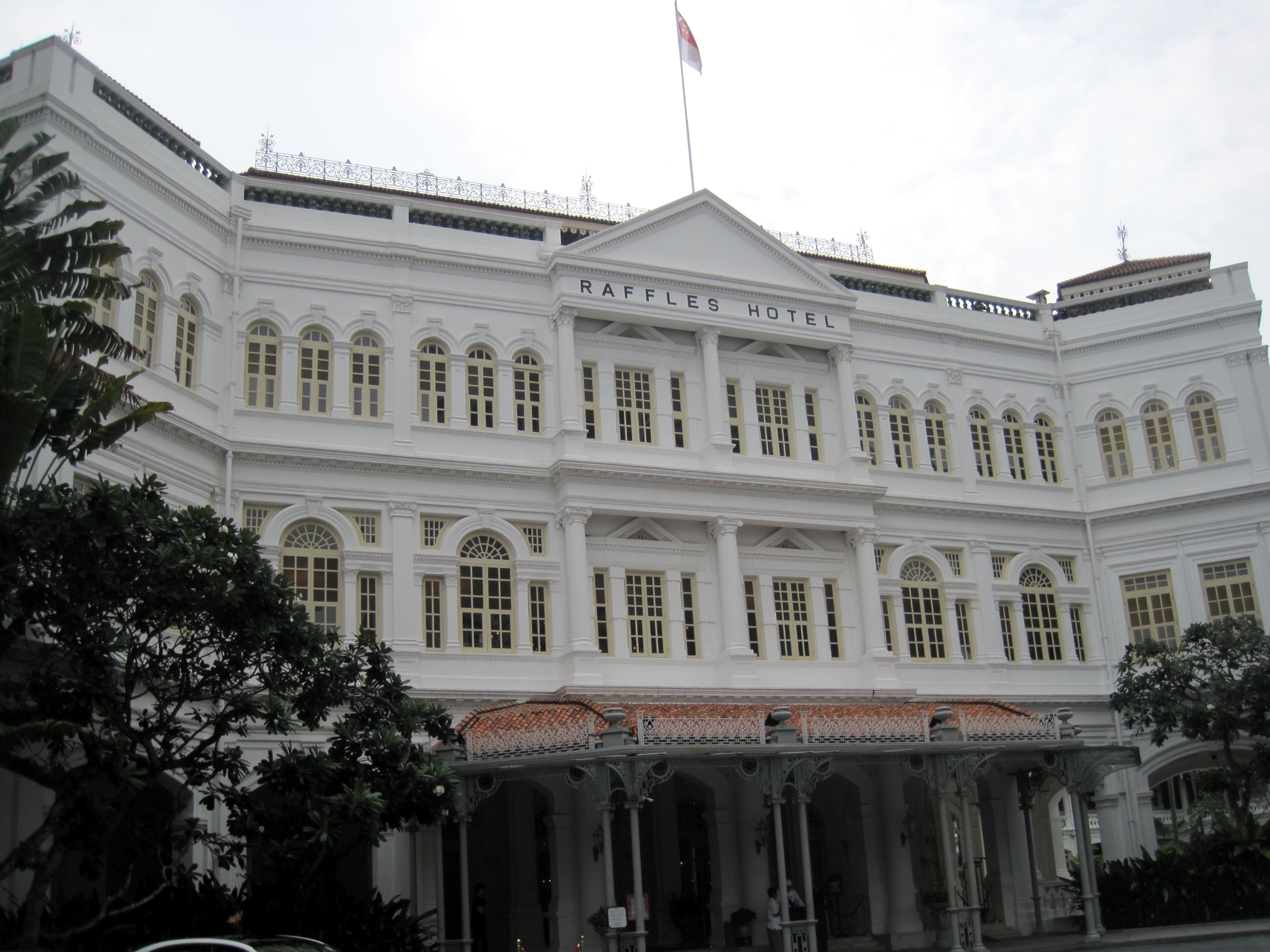
We had last been to Singapore in 1980 but did not recognise any of it. We learned that a large area of land had been reclaimed from the sea and now housed many more skyscrapers. We first hopped off the yellow bus at the Raffles Hotel built in 1887 and named after a Brit named Sir Thomas Stamford Raffles who was the founder of Singapore. This is still a major landmark and is not completely overshadowed by skyscrapers.

Raffles  Hotel

Raffles Hotel, Singapore

Many celebrities including Somerset Maugham frequented the famous Long Bar where the Singapore Sling was invented. We didn’t have one as it was early afternoon and very hot. We didn’t see much evidence of anybody staying in the hotel but there were plenty of tourist sightseers like us.

It was a short walk to the bus exchange where we took the red bus which went first around the Chinese, Malay and Indian enclaves. Here there were fewer skyscrapers, and mainly two-storey rather ornate wooden buildings painted in yellows, greens and browns with the occasional blue colour.

Chinatown, Singapore, from the bus

Chinatown, Singapore, from the bus

After that we really discovered that shopping is the national pastime – there were malls everywhere and many people around them. The red bus continued round the reclaimed area where the most striking building was the Marina Bay Sands Resort which is actually three buildings linked across the top floor.

Marina Bay Sands Resort, Singapore

Marina Bay Sands Resort, Singapore

After we finished the red bus circuit, we did the rest of the yellow bus tour which goes round the smarter area by the botanic gardens and past many embassies including ours. We will have to wait for another visit to see this area properly, especially the botanic garden which must have many interesting tropical plants. The whole area looked very lush and neat and tidy.

We were back at the hotel in time to take a taxi through a traffic jam to the cruise terminal. We were almost last to board the ship. There was no queue but plenty of form filling.

Impressions of Malaysia and Singapore

We only saw a very small part of Malaysia but the scenery from the train was enough to make me want to see more. KL is a big city – we had just about mastered getting about when we left. We saw the main sights and might not spend too much time there again. I could do the Petronas Towers again – we might have more success with the web cams and screens on the observation deck. We might just take the plane next time.

We obviously didn’t have time to do justice to Singapore but overall I was very impressed. Helped by its location, it built its wealth on trade and has now cleverly diversified into many other areas. It’s amazing what they have built on what was previously an island covered in tropical forest. Everywhere is clean and tidy and well organized and I got a sense that the economy is booming. It was a pity we could not stay longer, but we had already bought our tickets to KL when we discovered that we could take a cruise ship from Singapore to Darwin.


Posted in Uncategorized | Tagged , , , , , , | Leave a comment

10 Hot Days in Turkey

Go here for a picture gallery.

In early May, when it looked like it might rain for ever, we decided it was time for some sun. We really like the Eastern Mediterranean. As we had spent 2 weeks in our favourite country Greece last year it was Turkey’s turn this time. The Holiday Property Bond have a relatively new site Physkos in Turunç which is a village not far from Marmaris in the south-west.

We booked a studio for a week starting on 20 June. Turunç is 2 hours drive from Dalaman airport and not much further from Bodrum. The flights from Leeds were all arriving late at night. We didn’t fancy driving too far in the dark especially as we had read that the last 20 minutes to Turunç was over a twisty mountain road. As we’d been to Dalaman before, we decided to give ourselves 3 extra days and booked a flight to Bodrum on 17 June.

Bodrum

We had booked 2 nights at the Manastir hotel which is on a hill with a spectacular view overlooking the bay. We managed to find it at 11.30pm with the aid of a Google map and Martin’s Turkish.

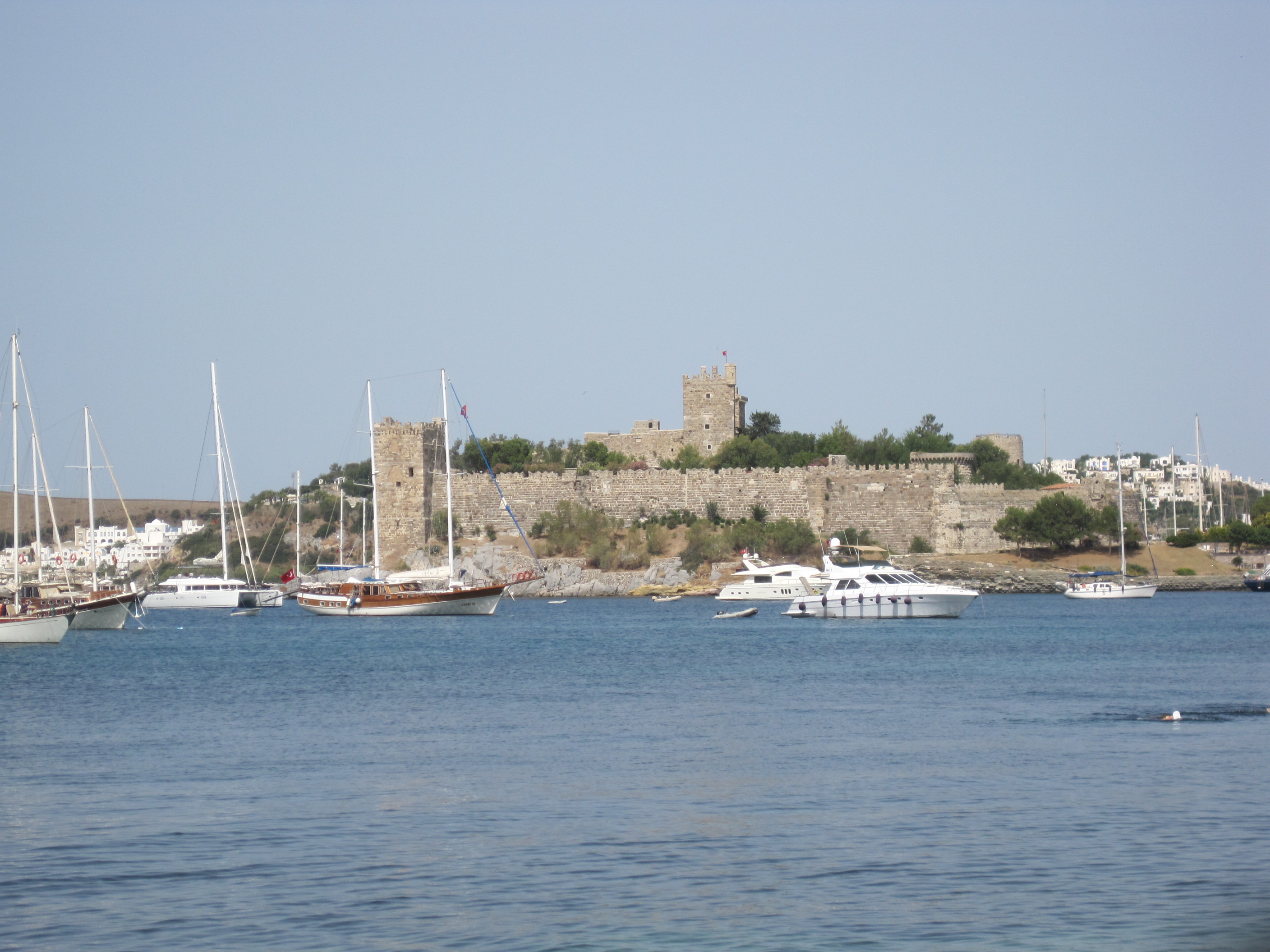
Bodrum  Castle

Bodrum Castle

Next day it was very hot, approaching 40C, but, after a wonderful breakfast, we ventured out on foot down the hill and walked along the sea front. After a tea stop we tackled the castle which is on a promontory by the sea. It’s really a collection of different buildings with a long history beginning in 1404. Some murals caught my eye in the first courtyard, but I didn’t manage to find out who painted them.

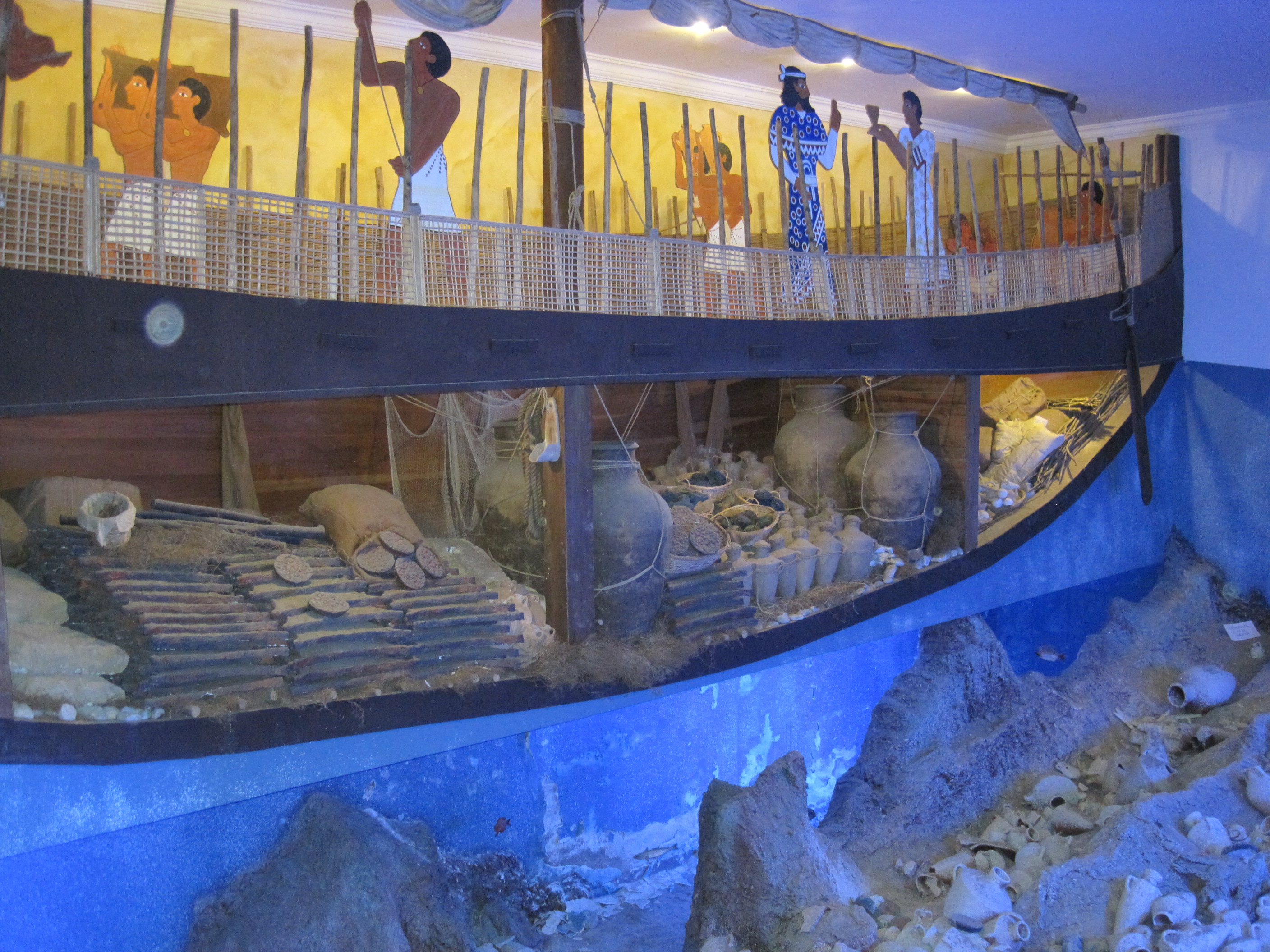
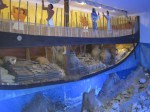
There’s a chapel which became a mosque, and various towers but the main feature is that it now houses an excellent museum of underwater archaeology with large displays of amphorae in the hulls of ships.

Underwater archaeology in Bodrum Castle

Underwater archaeology in Bodrum Castle

I took a picture of a huge photo showing the archaeologists at work. Fortunately the interior rooms were well air-conditioned.

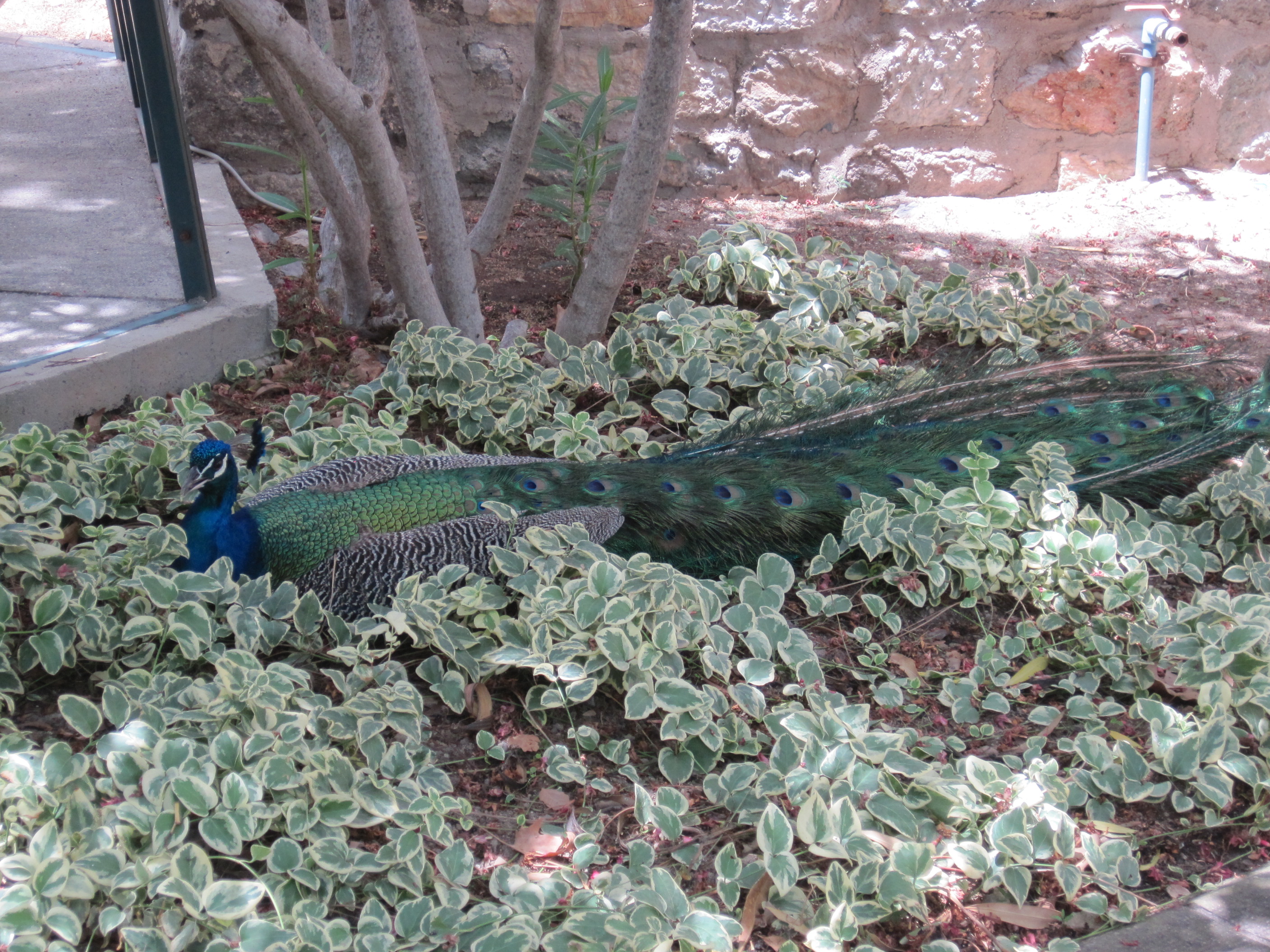
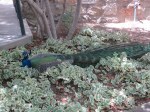
The castle’s only inhabitants now appeared to be some peacocks one of whom was having a snooze among the plants.

Modern inhabitant of Bodrum Castle

Modern inhabitant of Bodrum Castle

After a cheap and cheerful Turkish lunch we took at taxi back to the hotel. In the evening (still very hot) we walked back down to the waterfront and, forgetting that restaurant fish is priced by weight, had an expensive fish dinner accompanied by a very elegant salad.

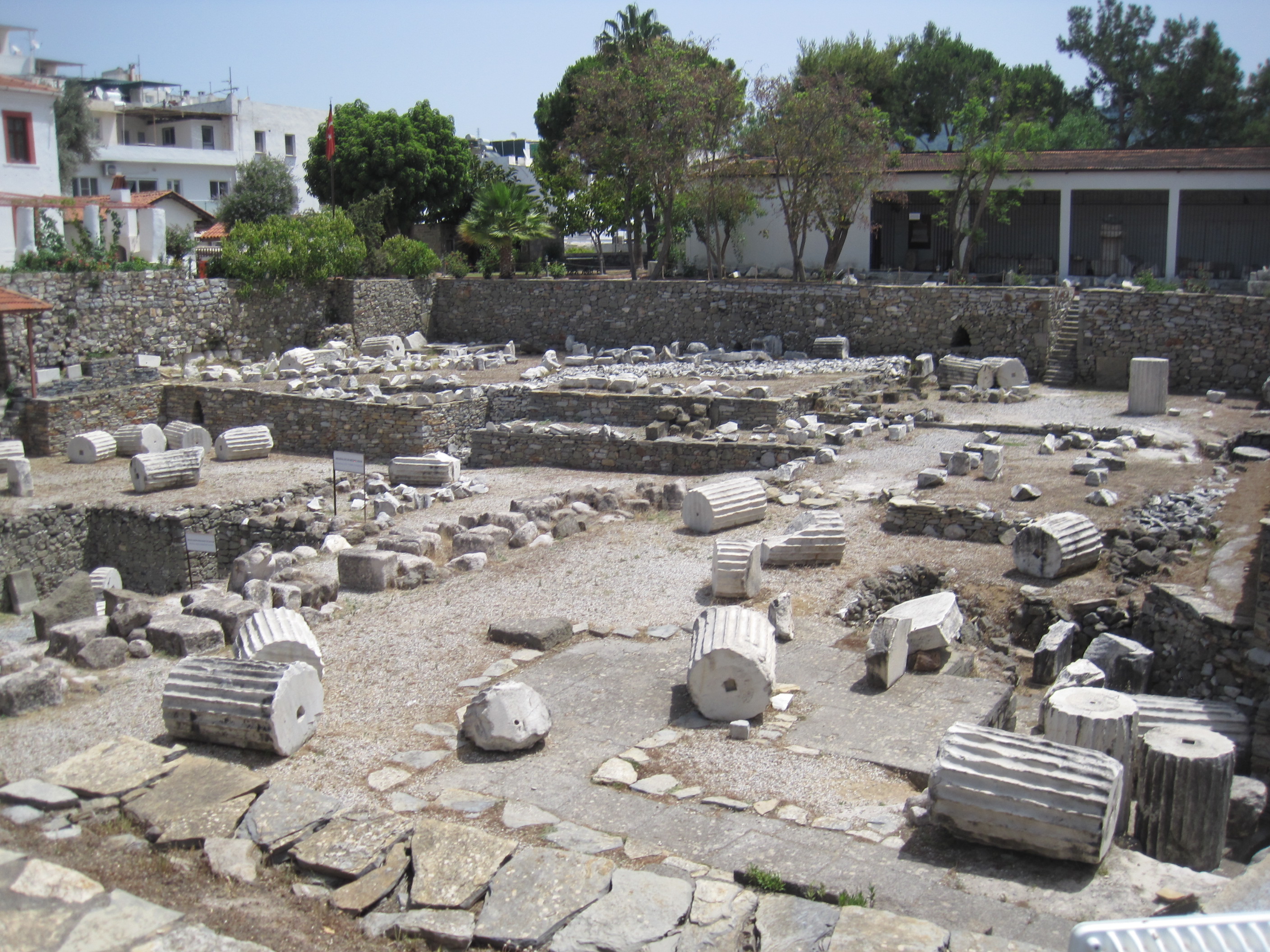
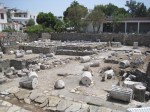
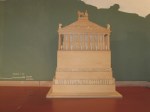
Bodrum is the site of ancient Halicarnassus where Herodotus the “Father of History” was born. It’s also the location of the original mausoleum, the tomb of Mausolus of Caria built around 350BC and one of the Seven Wonders of the Ancient World. We stopped by there on our way out of Bodrum, but there’s very little of it left now – just piles of stones and a few columns in the middle of some suburban streets. The museum there has a model, based on descriptions by some ancient writers, which shows how big it was.

The original Mausoleum (in Bodrum)

The original Mausoleum (in Bodrum)

On to Pamukkale

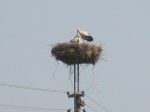
It’s about 250km from Bodrum north-east to Pamukkale (“cotton castle”) where there is a huge area of white terraces and pools. We took a cross-country route and passed through one village with a lot of storks’ nests with young ones. Rather foolishly we had set off without any food. Getting more and more hungry we came to an area with a lot of marble quarries and just one restaurant where, fortunately, the owner spoke very good English. We had a good lunch there. He told us that he used to work in Turunç and gave us some restaurant recommendations.

Finding our hotel in Pamukkale was a little interesting but we got there in the end.

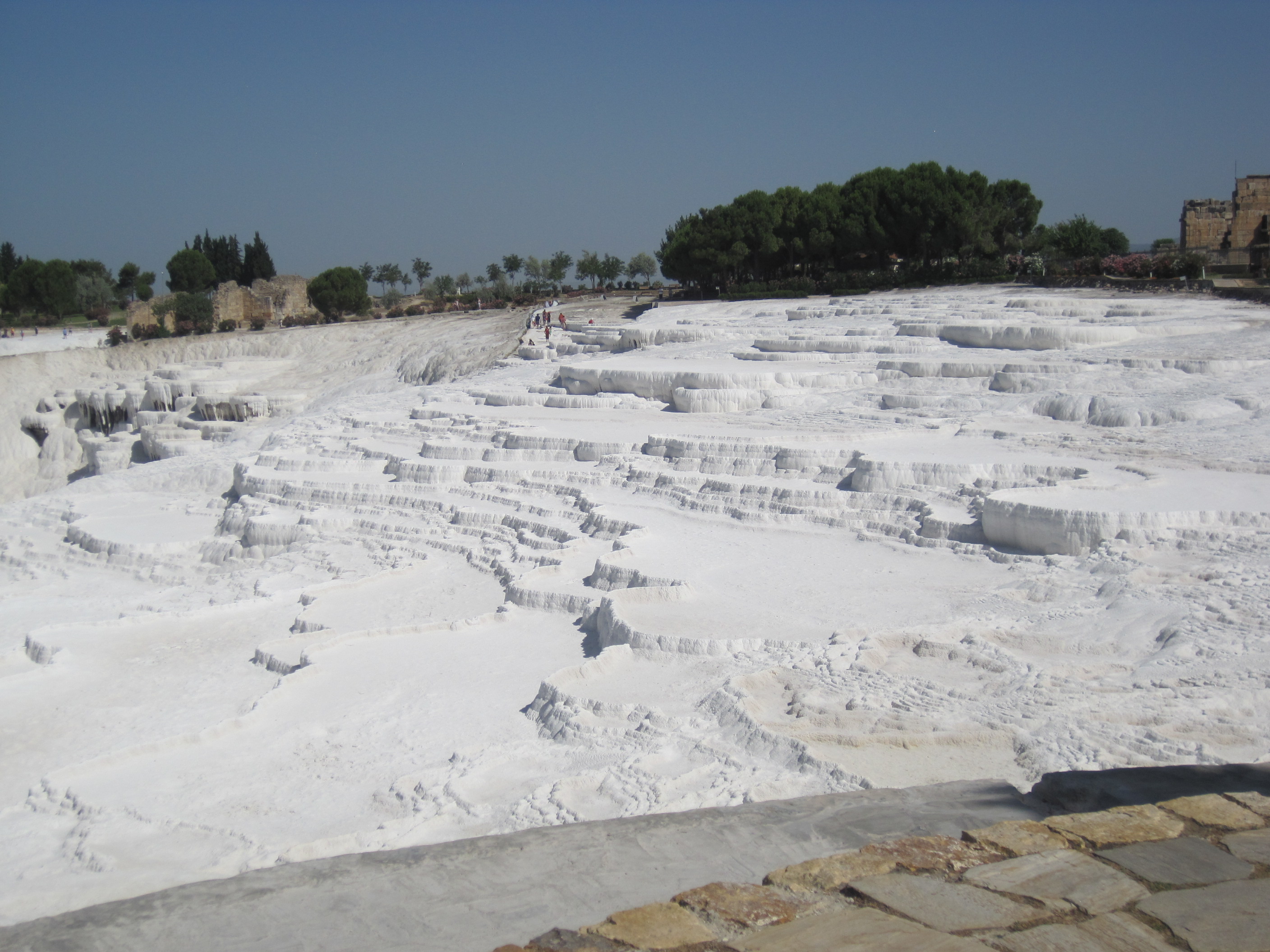
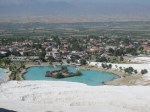
It’s well worth the trip to see the white travertine terraces and warm pools. We were last there almost 40 years ago when we stayed in a small hotel overlooking the terraces with our own private mineral water pool where we could bathe. All that is no more. It’s now a UNESCO World Heritage Centre. The town at the top has been replaced by nice landscaping and a new town has been built at the bottom of the hill. Very many Japanese tourists were trudging up the hill in 40+C and bright sunlight.

Travertines at Pamukkale

Travertines at Pamukkale

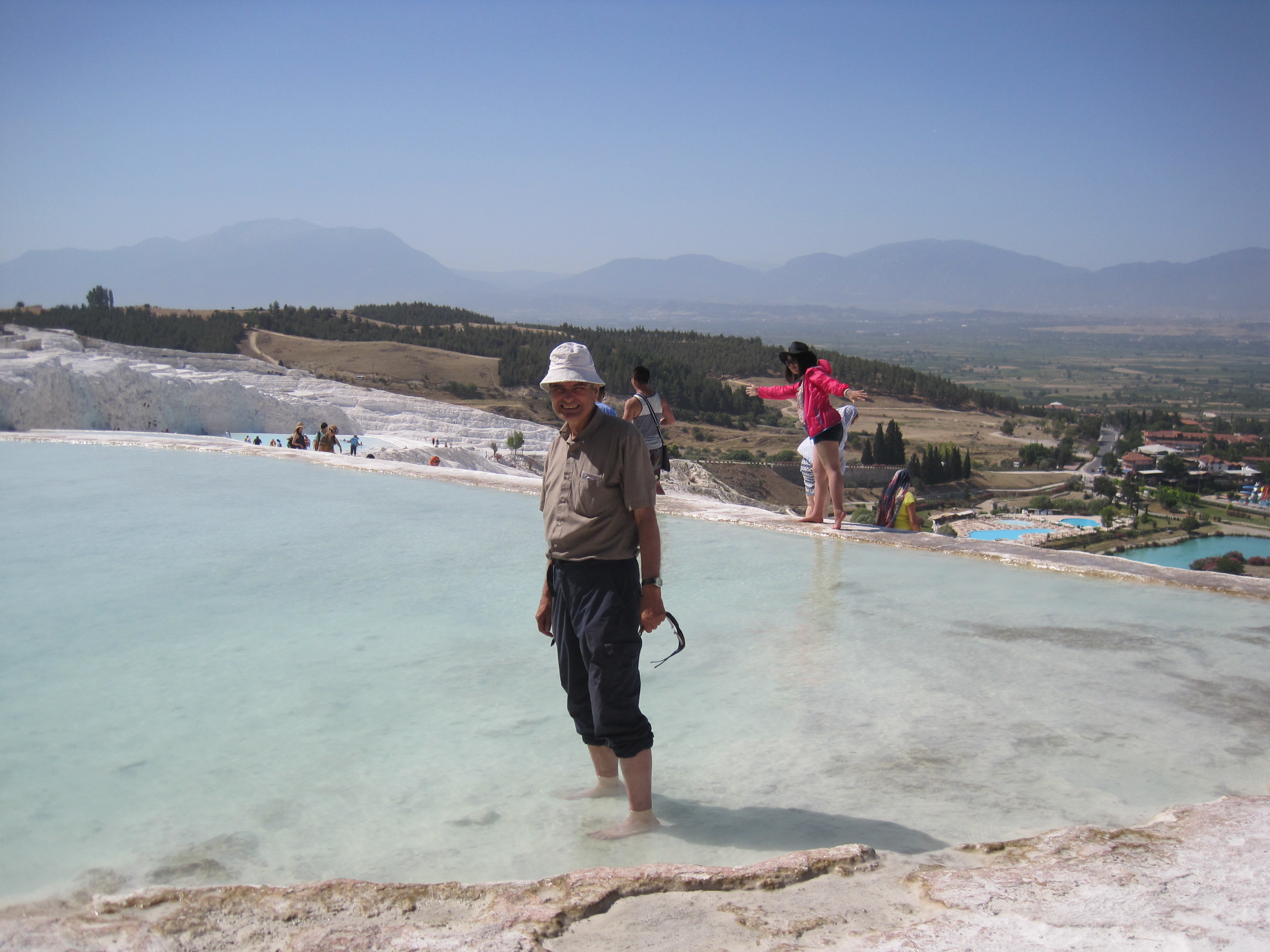
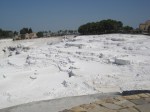
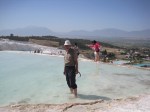
At least we only had to walk about 500m from the car park. The travertines are a big area and you can walk on some of it, only in bare feet to prevent any more damage to terraces. Tourist officials were very vigilant with a whistle if they saw a transgressor. We both paddled a little – it was quite slippery. There are also plenty of remains of ancient Hierapolis nearby, but it was a bit too hot to explore far – thank goodness for my umbrella in the bright sun.

The paddler at Pamukkale

A paddler at Pamukkale

Aphrodisias

It’s another 200km to Turunç from Pamukkale but we took a 35km detour across relatively flat land to the site of Aphrodisias which is named after Aphrodite the Greek goddess of love. This is a huge site a long way from any sizeable town. When we got to the turnoff close by the site there was one small tourist shop and a rather grotty looking hotel. Hungry again – why hadn’t we taken food? The hotel owner produced a couple of pides (a kind of pizza) which we ate outside, declining to look at the dusty interior. We had to leave the car there and were taken to the site in a trolley attached to an ancient tractor. There did not appear to be anybody else there. The new museum was a welcome relief not only for the air-conditioning but also for the many excellent statues and other carvings.

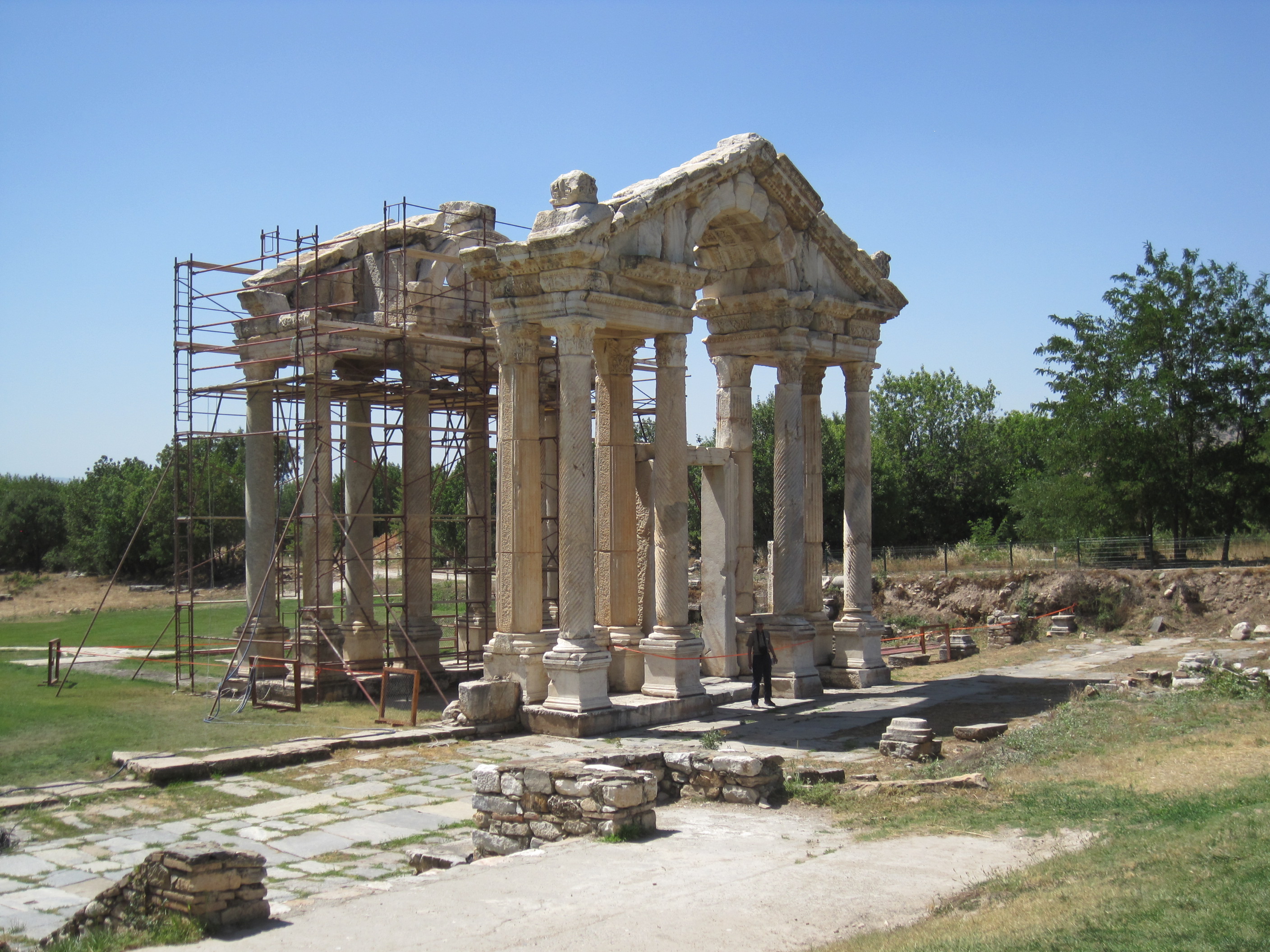
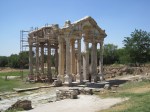
Reconstructed temple at Aphrodisias

Reconstructed temple at Aphrodisias

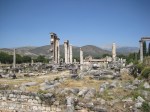
We took a walk round some of the site (map wrong again) and got a sense of the huge size. If you are into Ancient Greek remains, this site is well worth a visit, but preferably when it’s not so hot. The tea shop was open and the dodgy tractor was waiting for us by the gate. We saw three other young tourists there and far more staff in the museum. The temperature reached 43C that day.

HPB Physkos

We got to Turunç about 7.30pm to find one of the HPB hosts waiting for us. The route took us through Marmaris (endless bars and tourist shops) and Içmeler (better looking hotels) and then the mountain road (48 bends) which was fine.

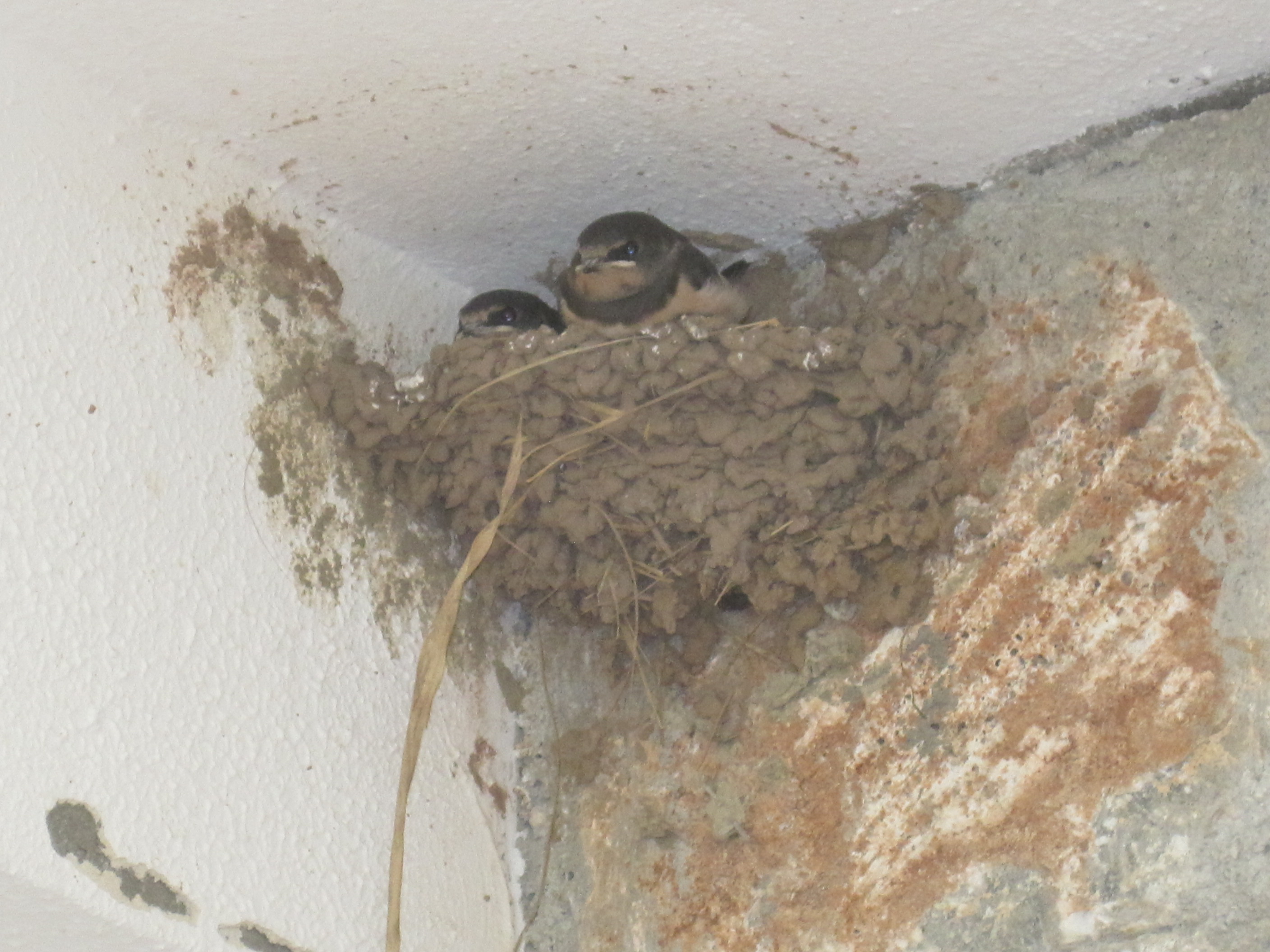
We had a top-floor studio with a small kitchen kitted out with IKEA pots and pans and (thank goodness) BBC World on the TV. Our staircase had some more inhabitants – house martins with two nests with little ones.

Two more residents of HPB Physkos

Two more residents of HPB Physkos

It’s a good 10 minute walk to the main street and sea where most of the restaurants are. We had an excellent meal at Yakamoz, one of the recommendations from our new friend from yesterday. It was very quiet.

A Heat Wave in Turunç

We only did the HPB welcome meeting and the supermarket on the first day. Walking about in 42C is not really a very good idea.

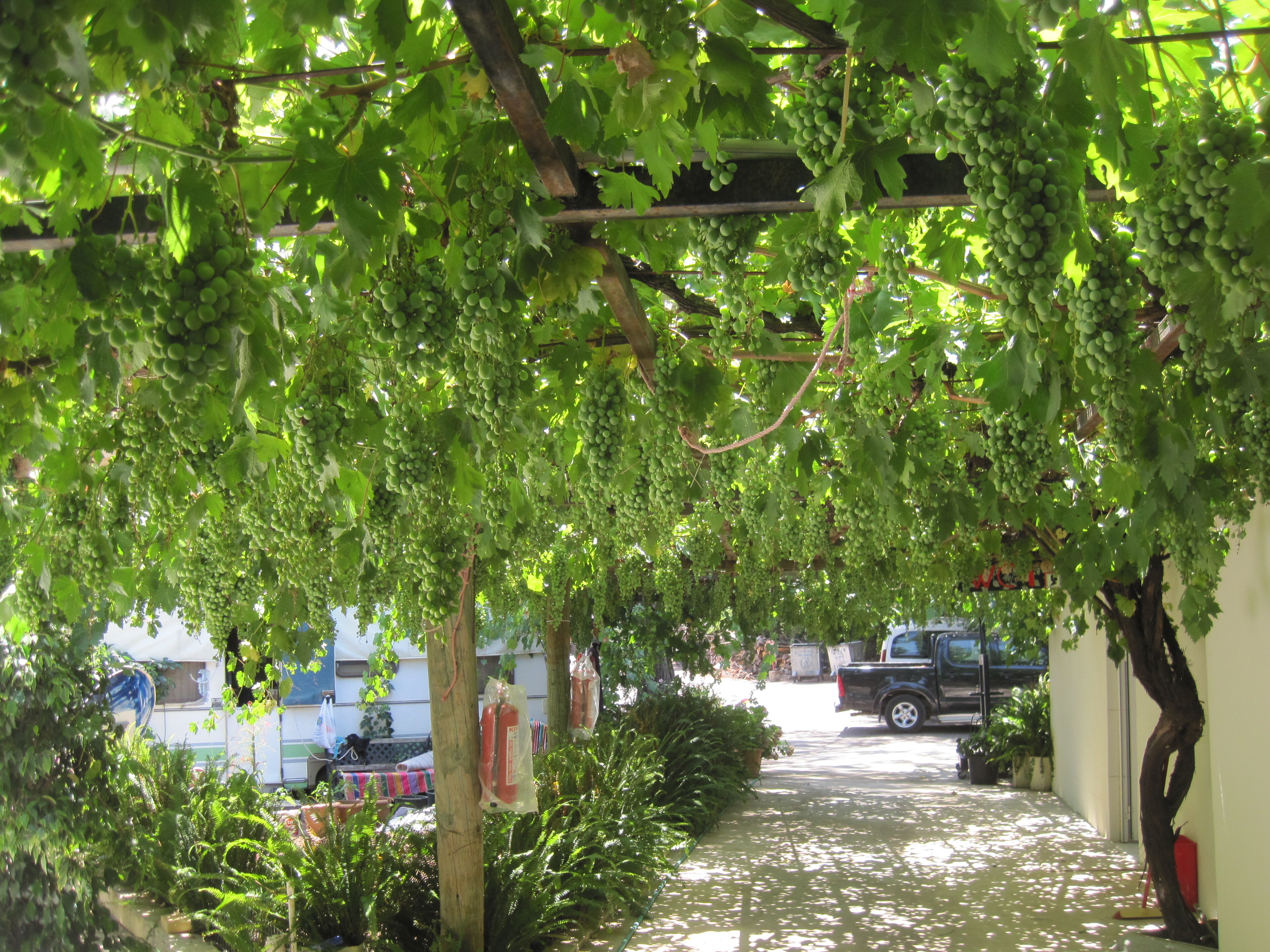
On the second day we ventured out in the car only as far as the next two bays. Martin walked around the ancient site at Amos for about 30 minutes but I decided against the heat. We had some tea at the furthest bay Kumlubuk, then an excellent lunch by the sea at Amos in a restaurant with a grape vine which had more bunches of grapes than I had ever seen before.

Grape vine at the restaurant at Amos

Grape vine at the restaurant at Amos

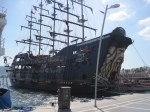
A large pseudo-pirate ship was moored there obviously on a day trip from Marmaris. This part of the Turkish coast is riddled with inlets and bays and is much favoured by yachties who are the only people who can get to some of the beaches. The real pirates are long gone, I think.

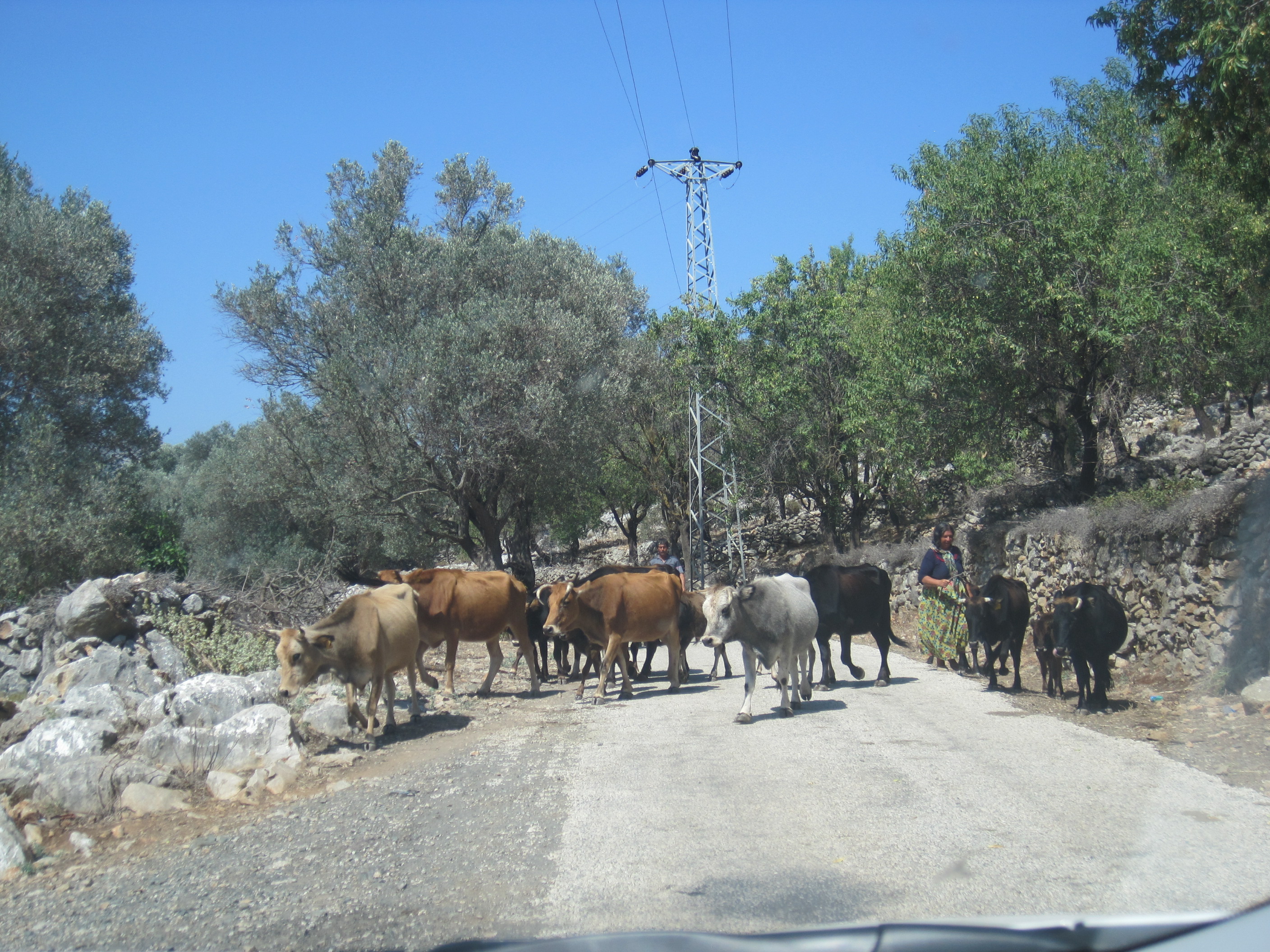
Our third day at Turunç was referendum day but we had already voted by post. We did a longer day trip around the Bozburun peninsula. The further we got along the peninsula the more rural it became. We had lunch at a very quiet village and then were definitely in the old Turkey. Near the end of the road we saw goats and donkeys and several fishermen were taking a siesta in their boats. On the way back we came face to face with some cows on the move just like in Nidderdale except that the lady with them was in Turkish dress. We took a different route for some of the way back – more of somebody’s favourite roads – and were last arriving for the HPB barbecue.

Hold up on the road on the Bozburun peninsula

Hold up on the road on the Bozburun peninsula

On the Friday we woke up to the referendum result. Turkey is 2 hours ahead of the UK and David Dimbleby was just announcing the result as I switched the TV on. We could barely believe this and spent most of the morning watching the news unfold. Eventually we decided cheer ourselves up with another trip out, this time to the Datça peninsula. Part of the route was on a very good road then it became very twisty and there was plenty of wet tar because of the heat.

We ate lunch in a Turkish tourist village called Palamut which is one of the few Turkish words I remembered from my previous visits as it’s the name of a fish.

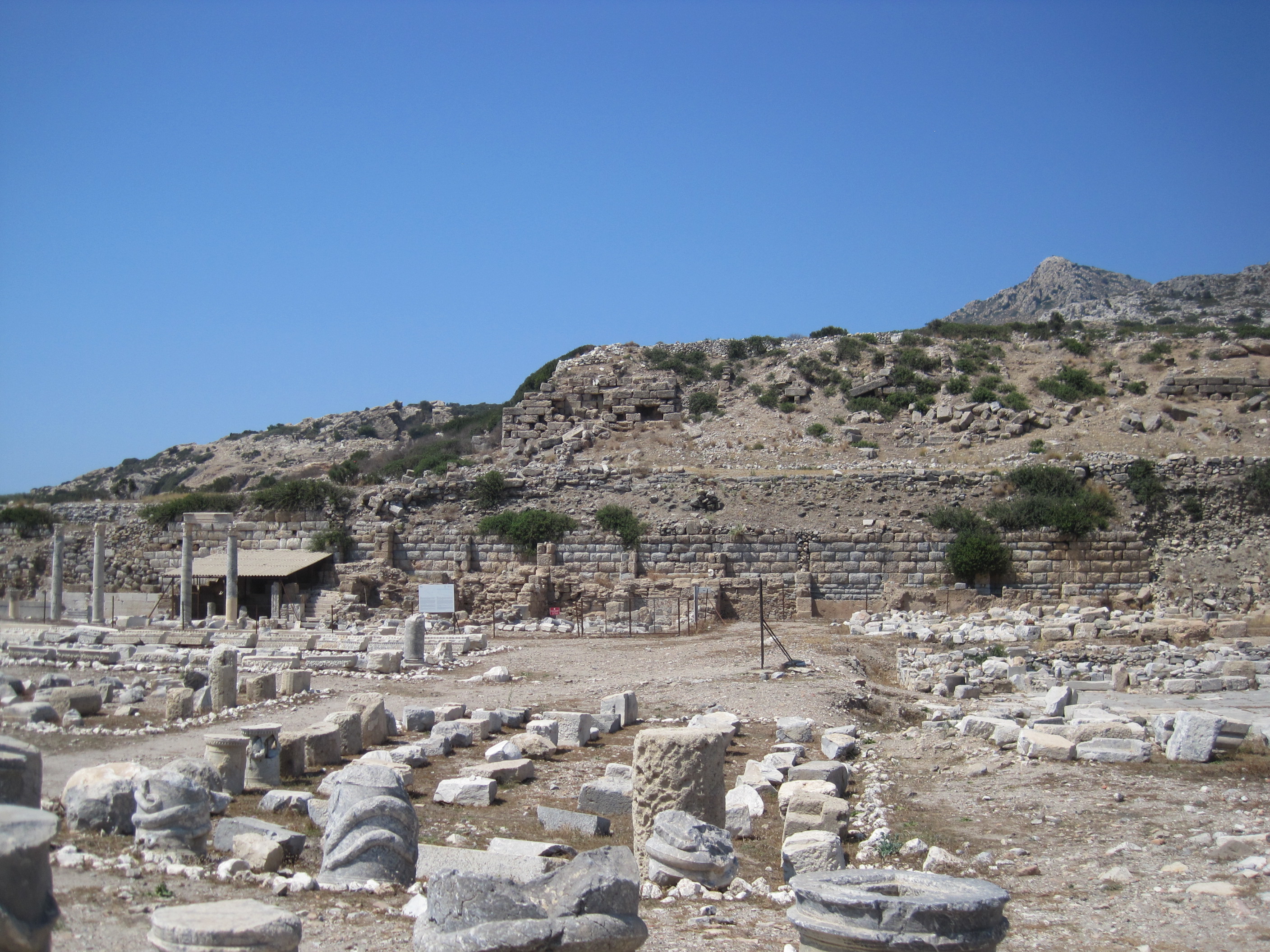
Our main objective today was to visit the ancient site of Cnidos which is on the sea almost at the end of the peninsula and close to Kos in Greece.

Ancient Cnidos

Ancient Cnidos

This is another fairly large site, with a well-preserved theatre, fortunately only a short walk from the gate. There’s no clear path round this site, not ideal for those visitors who were wearing heeled sandals or flipflops. It was still very hot and I sat under a stone while Martin walked round more of it. We were rather late back and even later going to dinner as Martin attempted not very successfully to clean some of the tar which had stuck to the car.

Not Quite Such a Heat Wave in Turunç

By Saturday the temperature had returned to the mid 30s. We had a quieter day watching the fallout from the referendum. How can all these politicians just vanish when there’s news they don’t like?

On our last day in Turunç we took the water taxi to Marmaris, a trip of about 45 minutes. On the boat we got talking to somebody who was obviously a leave voter. He said something about European passports and then his face just fell when I said that we could now end up in the “anyone else line” at passport control. It had obviously not occurred to him.

The HPB host had suggested turning right when we got off the boat to go into the old town, thus avoiding most of the noisy tourist bars and shops. We found ourselves in the bazaar and had lunch sitting out at a local place in an alleyway.

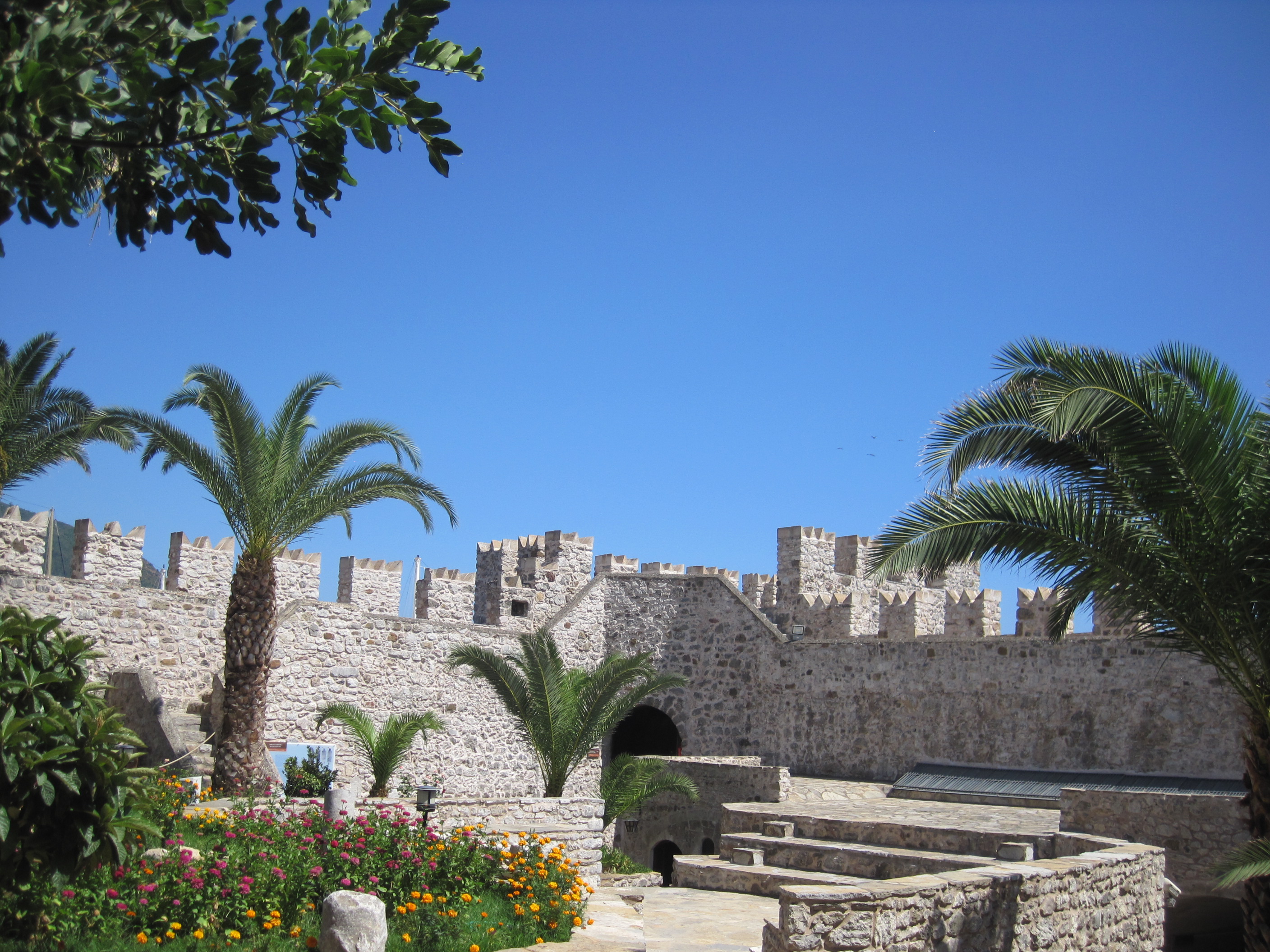
The castle at Marmaris is much smaller than the one at Bodrum, but well worth a visit. It’s well kept and has a pretty courtyard and a small museum with more underwater archaeology exhibits.

The castle at Marmaris

The castle at Marmaris

Walking back along the sea front we saw the “pirate” ship which we had seen at Amos. It really looked like a bit of Disney in Turkey.

Back to Bodrum and Home

Our flight back was late in the evening and so we had plenty of time to drive back to Bodrum. Our first stop was the car wash at Içmeler where a man with a very powerful hose spent 20 minutes cleaning the tar off the car. We then drove on to Yatağan where we had a typical Turkish lunch in a typical Turkish town

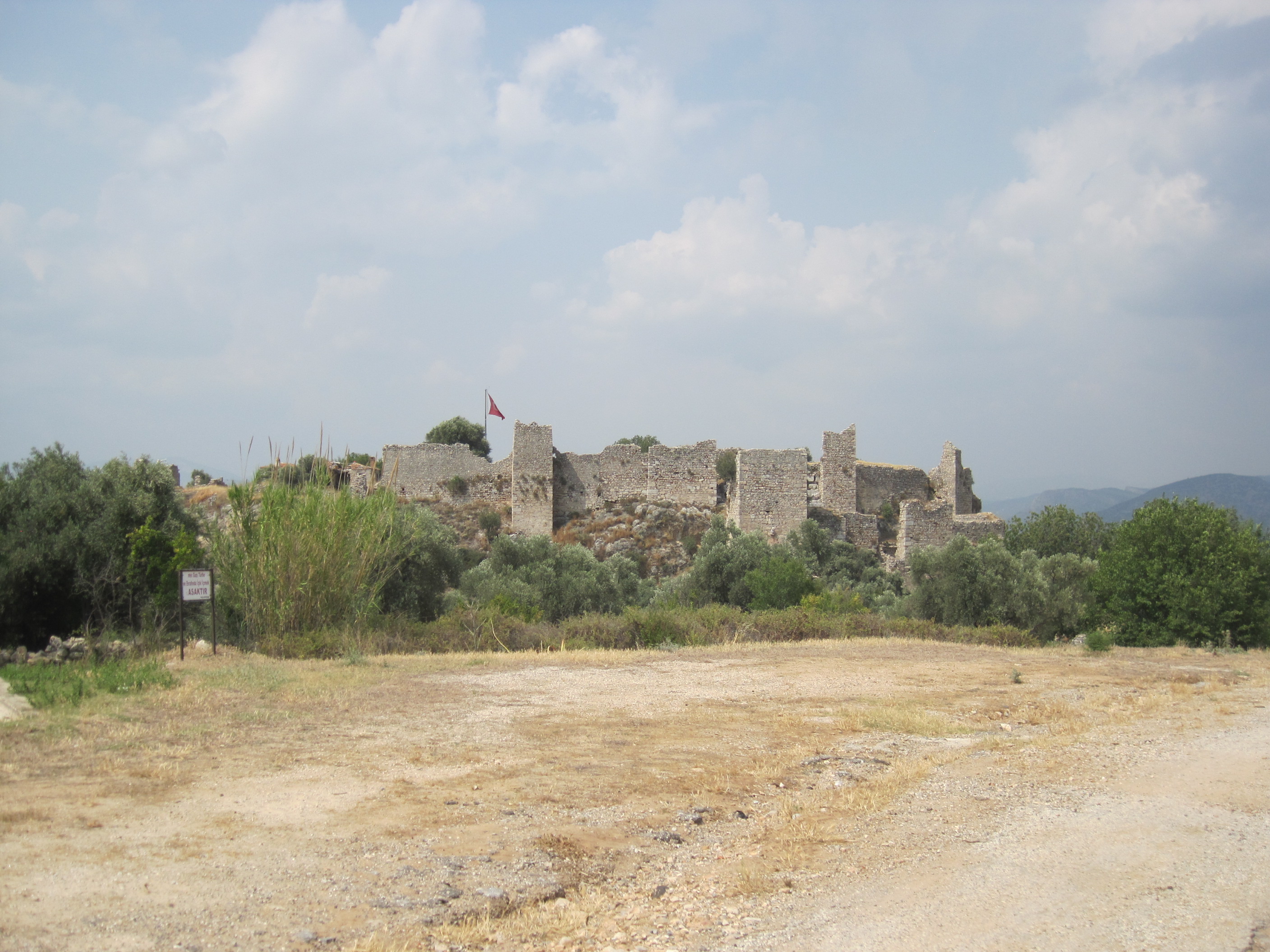
With time to spare we took a brief detour near Milas to visit the castle at Beçin. We drove up the road to it and found a barrier across the road and what appeared to be a brand new car park and new building. All looked deserted but eventually somebody came out of the building, moved the barrier and said we could drive right inside the site. This saved us a walk uphill. The castle was originally Byzantine and later became Ottoman. There are ruins of several other buildings there – and the map was accurate. There were no other visitors there, only some locals driving through fast in a pickup truck, but it’s worth a detour.

The hilltop castle at Beçin

The hilltop castle at Beçin

We had our last tea in Iasos, a real local village with a few fishing boats, before heading back to the airport.

Practicalities

Since we moved to Nidderdale we have had less choice for flights. The nearest airport Leeds/Bradford (LBA) is just over an hour away and has cheap long-term parking only 5 minutes from the terminal. Jet2 was the obvious choice to Turkey from LBA. They are one of the better cheap airlines. Of course you have to pay for baggage but you get 22kg per bag and we find that one bag is enough for 2 people for a week. We ordered a hot meal which, curiously, was provided in a box, not on a tray.

Some downsides. Their seats don’t recline and there’s no room in the seat back pocket even for a small book. LBA seems to have only 1 real jetway which, as far as I can tell, is only used by British Airways and so you have to walk out to the plane and climb the steps which can’t be great in the middle of a Yorkshire winter. Our flight was on time but another one had been delayed and the lounge, if you can call it that, was jam-packed with nowhere to sit down and a lot of noisy people drinking.

Bodrum airport is about 35 km from Bodrum and much nearer Milas. Finding the car at the airport was interesting as they’d only just opened a new terminal for international flights and there were no car rental desks there. Neither was there any sign of an agent from the car rental company we had booked. We walked the short distance to the domestic terminal, found the desk there and then had to wait for the agent to come with the car. All was fine after that except that we really wanted a small car with manual transmission – much better for twisty mountain roads – but we got a larger automatic.

I liked that fact that there was additional security going into the terminal building where all persons and all baggage were screened.

Driving in Turkey was no problem except for melting tar on some roads. The main roads have been improved a lot since we were last there. The road signs are excellent on the main road and not bad on minor roads.

We had a road map from our last visit a few years ago and we looked at some other maps. None of them were entirely truthful, but were enough to get around. We had the latest version of the Rough Guide which was very useful, also the Sunflower Turkish Coast Bodrum to Marmaris. We have several of the Sunflower books and have used them for walking. It was too hot to walk far on this trip but the walks in this volume looked more ambitious than those in the some of the others.

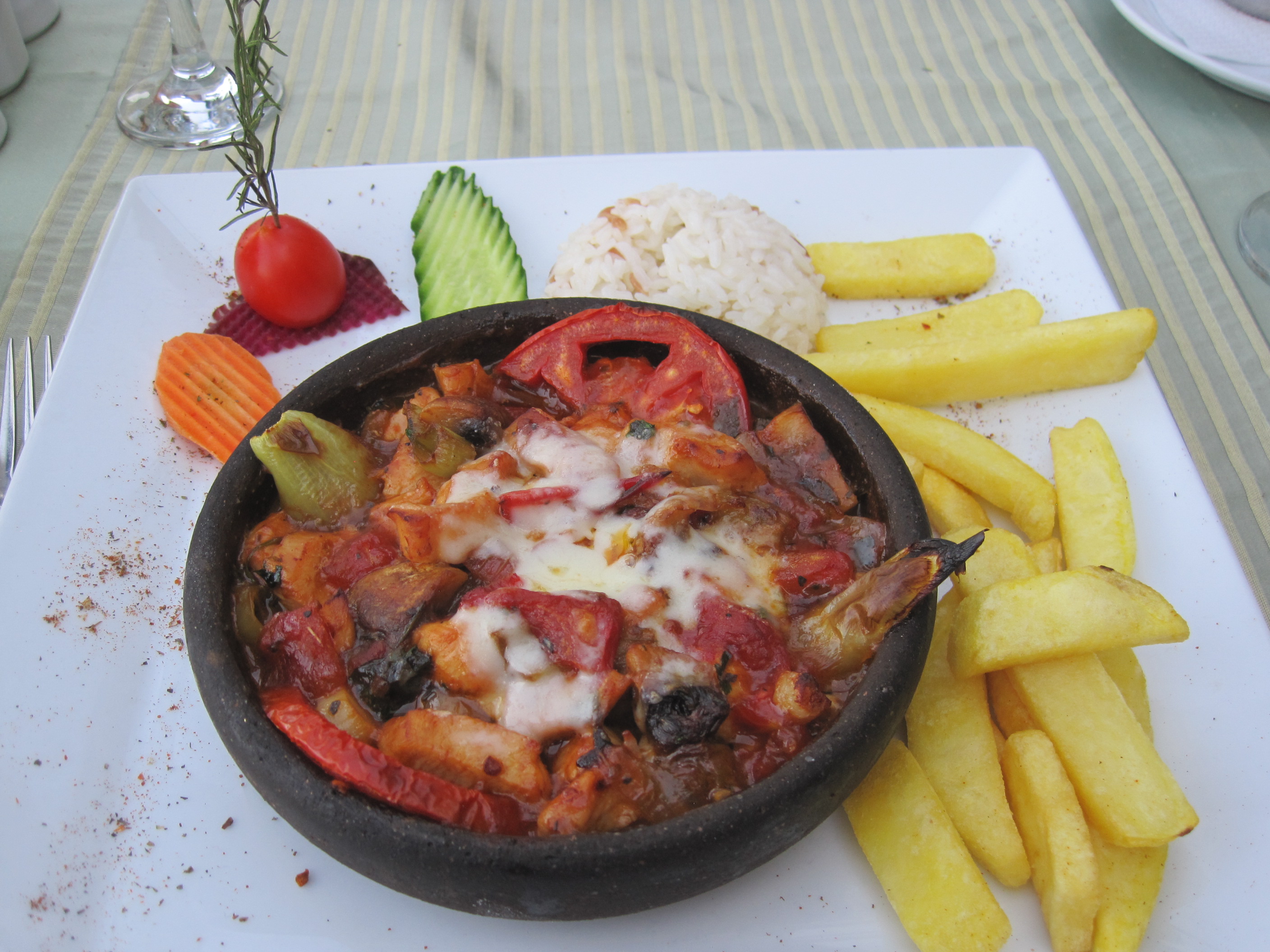
The food was wonderful. Breakfast was huge in the two hotels we stayed at with cheese, yoghurt, eggs, salads and fruit as well as all kinds of cereal and bread. We ate very well in a lot of restaurants. One night I had a whole seabass grilled with herbs and rice and chips for about 5 pounds. We had some excellent guveç which is an oven-based stew with mediterranean vegetables cooked in a clay pot, and a variety of meze of which my favourite is patlıcan (aubergine salad). A Turkish cookery book has arrived from Amazon since we got home. We also really like Turkish tea which they serve in little curved glasses, although some of the glasses had grown since our previous visit.

Guveç - I love this cuisine

Guveç – I love this cuisine

Turkish is one of those languages where you don’t recognise a single word. Everybody we met spoke English, but they were very pleased to find that Martin could speak a little Turkish and even I recognised some of the food vocabulary.

Last Words – the Attempted Coup

Turkey is one of our very favourite countries. The failed coup happened not long after we got back. We would have been safe at Physkos, but something like this can be unnerving. I felt most sorry for all the people who make a living out of tourism. Business was slack in the restaurants when we were there and I can’t see it getting better any time soon. Let’s hope they sort themselves out quickly.

Picture Gallery: 10 Hot Days in Turkey

Posted in Uncategorized | Tagged , , , , , , , , | Leave a comment

10 Fine Days in Scotland

For more pictures from this trip, go here.

Top of the agenda when our American friend Nancy came to stay in late May was a visit to Scotland.

But first we had to see more of Yorkshire. After a very early start via Manchester airport we spent the first afternoon in the Nidderdale Museum in Pateley Bridge. Don’t miss this if you are ever in the area. It’s a wonderful example of what you can do with lots of enthusiasm and very little money.

Before Scotland

We went to York on a not so nice day, and visited the Minster where they were getting ready for the Mystery Plays (don’t miss this either but it’s only every 4 years) and the Richard III Experience. We had tea at Bettys and saw The Merry Wives of Windsor at York Theatre Royal.

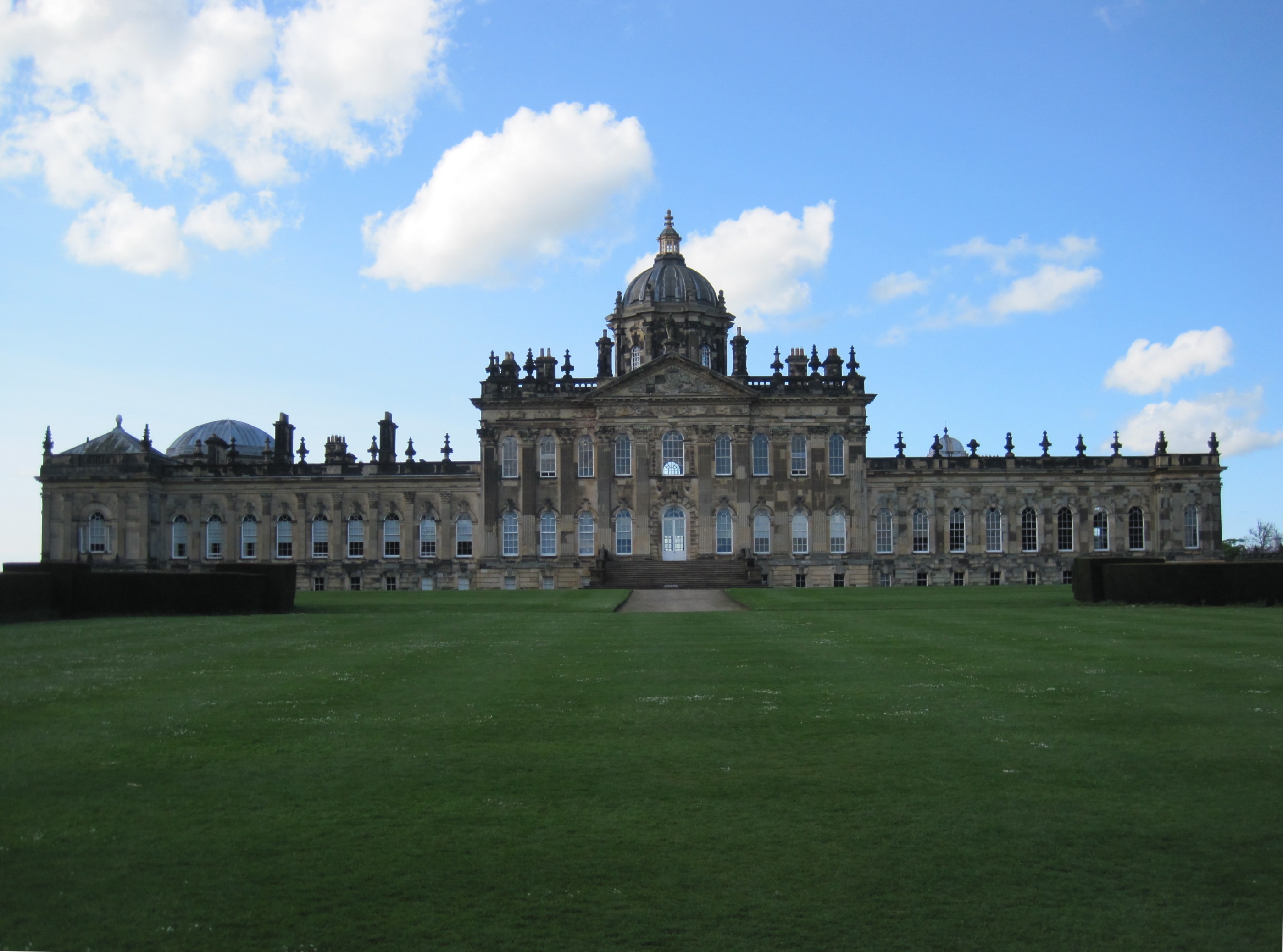
We took in plenty of castles during Nancy’s visit. Another day we took a drive from home round Wensleydale via Middleham Castle, then on to Wensleydale Creamery (of the cheese, but they do have good ice cream too), over the top to Wharfedale and finishing with dinner at Linton near Grassington. We began the next day at Helmsley Castle on the edge of the North York Moors. I finally dug out my camera when we went on to Castle Howard (definitely a place for Brideshead aficionados), then looked at the Anglo-Saxon Church at Kirkdale and had dinner at the Lion Inn on the top of the North York Moors. And we visited our local castle at Ripley.

Castle Howard

Castle Howard

Hadrian’s Wall was also on the agenda. After a stop at the 7th century Anglo-Saxon Church at Escomb we braved the cold wind to climb up to the Housesteads Roman Fort. Then the rain came for almost 24 hours. This didn’t stop us going to Holy Island, but it was too wet to do anything except tour the castle.

Would the Scottish Weather be Kind to Us?

I had been put off Scotland by my first visit years ago when it poured down and even snowed in Edinburgh in March. After the rain on the way there in Northumberland, had we made a mistake in attempting to show off this part of the UK to a visitor from New York where it’s always fine, warm and sunny in May?

Tigh Mor

Edinburgh was a must for Scotland but accommodation was in very short supply. Suddenly I thought of the Holiday Property Bond place Tigh Mor in the Trossachs, looked at the map and realised we could get to Edinburgh in just over an hour from there. Miraculously they had one 2-bed apartment which we grabbed online.

HPB Tigh Mor, Trossachs

HPB Tigh Mor, Trossachs

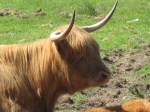
Tigh Mor is in a lovely setting and there was a lot to see close by like these neighbouring inhabitants.

There were plenty of these around

There were plenty of these around.

Stirling and Edinburgh

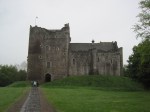
The sun came out as we arrived on the Thursday evening. It rained again on the next morning when we went to Doune Castle – well remembered by addicts of Monty Python and the Holy Grail – but then the sun really started to shine after lunch.

Doune Castle, near Stirling

Doune Castle, near Stirling

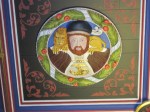
The next castle was Stirling which I liked the best. There are some wonderful wall and ceiling paintings and the life-size models showing what life was like in the kitchens are very realistic. I began to realise how little I knew about Scottish history.

We were advised that Edinburgh was best tackled via the park and ride tram which was quite quick but meant a walk uphill from Princes Street. We started at the National Museum of Scotland with the special exhibition on the Celts (well worth seeing) and then joined the huge throngs visiting the castle.

It was a bit busy at Edinburgh Castle

It was a bit busy at Edinburgh Castle

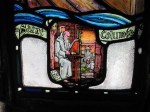
There is really too much there. I liked the stained glass in the small St Margaret’s Chapel but I didn’t fancy a stay in the underground prison area. The dog cemetery was a nice human touch, but it was all very crowded. After the castle we walked down the Royal Mile and inspected the outside of the futuristic Scottish Parliament building, then took a rather slow bus ride back to the park and ride and had a nice Mediterranean dinner in Stirling on the way back to Tigh Mor.

The Highlands, Loch Leven and Posh Fish and Chips

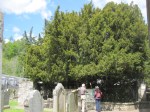
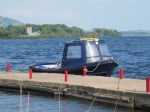
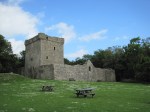
On another sunny day we took a drive round the Highlands with a stop by the Fortingall Yew tree, which is thought to be about 3000 years old, and had a nice lunch outdoors in Aberfeldy. Our main destination that day was Loch Leven Castle which is on an island in the middle of the loch. We had to take the “wee boat” to get there. We were the last people of the day and the “wee boat” made a special trip to fetch us back.

The "wee boat" to Lochleven Castle

The “wee boat” to Loch Leven Castle

Then it was on to the Antonine Wall which was the northernmost frontier of the Roman Empire. The sights included a tourist notice in Latin, a few humps on the ground at Rough Castle and a herd of curious cows in the next field.

Our own curiosity led us to have a look at Andy Murray’s Cromlix House Hotel just north of Dunblane on the way back. More curiosity led us inside where we ended up having the most elegant fish chips I have ever eaten, in a very elegant lounge.

Fish and chips at Andy Murray's Cromlix House

Fish and chips at Andy Murray’s Cromlix House

Culross and the Rev A Q Morton

Nancy left next day and so after an early start to Edinburgh airport (which has the most expensive airport parking I have ever come across), we crossed the Forth Bridge and drove west to Culross which is an important pilgrimage for historians of digital humanities. The Rev Andrew Q Morton lived in the Abbey Manse for many years and it was there that he worked on his computer-based analyses of St Paul’s Epistles in the 1960s. It was reading about his work that first got me interested in computing for the humanities.

Culross Abbey, Fife

Culross Abbey, Fife

In the Abbey Manse tea shop we met some Americans who knew Andrew and learned that there were people in Culross who remembered him. Anecdotes about him abound, but the one I remember best is his response when he was asked what visual aids he needed for a conference talk. His answer: “A single piece of chalk”.

It was hot and sunny again as we walked round Culross.

Loch Lomond

For our last day at Tigh Mor we took a trip to the Bonnie Banks of Loch Lomond. The northern part of the east side around Inversnaid was relatively quiet except for all the people trudging along the West Highland Way. We did a short hike to lovely view but didn’t stay too long at the southern end which was very crowded. The sun continued to shine, mostly.

On "The Bonnie Banks o' Loch Lomond"

On “The Bonnie Banks o’ Loch Lomond”

Mull and Iona

The weather was so nice that we decided to stay another three days in Scotland. Neither of us had ever been to Mull and so we booked place to stay for 2 nights at Pennyghael. We eschewed the main ferry from Oban, instead driving through Glencoe and taking the smaller boat from Lochaline to Fishnish. There’s no need to book. You just turn up and we were on the boat within 30 minutes for the short crossing.

We spent the rest of the day driving round the southern part of Mull. It was more mountainous than I expected and there were some spectacular views across to Staffa. Sea eagles were rumoured to be present in the mountains and plenty of people with large telescopes were definitely present. It was warm enough to have a drink outside before dinner.

I always thought Mull was flat

I always thought Mull was flat

On the next day we took the short ferry crossing to Iona and walked to the Abbey which is in a lovely setting. I particularly liked the Celtic crosses which we had learned all about at the exhibition in Edinburgh. The Abbey was founded by St Columba who came from Ireland in the 6th century AD. It also has an important burial ground for many Scottish kings including Macbeth, as well as the Labour leader John Smith. In spite of all the visitors, I really got a sense of tranquillity there.

Iona Abbey

Iona Abbey

On the way back to Pennyghael we had a quick stop at the Isle of Mull Weavers at Ardalanish where they use Victorian looms to make a variety of products. It was almost closing time but one of the ladies there stayed behind to explain the whole process to us – without the noise of the looms working. I bought some wool for a hat. It is still waiting to be knitted up.

From Mull to Glenuig

The hotel at Pennyghael was full for the next night, as the rest of Mull also appeared to be, according to our online searches. We decided to try our luck in the largest town Tobermory with its pretty coloured houses by the water.

Tobermory, Mull

Tobermory, Mull

The person in the visitor centre at Tobermory suggested the Ariundle Centre on the mainland. We phoned there and were able to book a room. With that worry out of the way we drove round more of the north of Mull visiting the original Calgary which is a beautiful beach whose name is Cala Ghearraidh in Gaelic, meaning Beach of the Meadow.

We took the other short ferry crossing from Tobermory to Kilchoan on the mainland. He who likes to go to the end of everywhere couldn’t miss Ardnamurchan Point and so we diverted to this westermost point on the British mainland. It was still sunny and we could clearly see across to Skye.

Ardnamurchan, the  most westerly point on the British mainland

Ardnamurchan, the most westerly point on the British mainland

It was getting late when we turned up at Ariundle to find that it was not quite what we were expecting. What to do on a Saturday evening at 7pm? The Rough Guide came to our rescue with its recommendation of the Glenuig Inn on the Sound of Arisaig. They said they could offer us beds in the bunkhouse which had no other occupants. It turned out to be a 5-star bunkhouse room with 9 real beds (no bunks) with beautiful matching linen, spotless bathrooms and kitchen. The bar food reflected the hotel’s green credentials and both dinner and breakfast made a change from the standard B&B fare.

It was still sunny when we drove home through Glencoe, Glasgow and Penrith, a drive only marred by listening to Andy Murray’s defeat by Novak Djokovic in the French Open Final.

Picture Gallery: 10 Fine Days in Scotland

Posted in Uncategorized | Tagged , , , , , | 1 Comment

Thoughts on the Brexiterendum

Not since the Iraq War have I felt so enraged about the actions of our politicians and so I’ve put together some thoughts on the Brexiterendum and the mess it has got us into.

The First Mistake

This referendum should never been held at all. John Major succeeded in keeping the right-wing Eurosceptics in his party at bay. Why couldn’t Cameron do the same? And what made it worse was setting a simple majority. Surely a threshold of say 60% is more sense for a decision which potentially affects the country for ever. In the event only 37% of the total electorate voted for Leave.

The Remain Campaign

Remain brought out every financial organization you can think of: the IMF, Bank of England, etc. Obama gave them his support and they even wheeled out David Beckham, but their arguments seemed to fall on deaf ears. I think that Remain ran a poor campaign and that they were somewhat complacent about winning. They did not seriously address many of the points made by Leave and they did not press their case hard enough in terms that everyone could understand.

The Leave Campaign

Leave focused on immigration, which was not the subject of the question on the ballot paper. They were aided by the popular press especially The Sun whose owner Rupert Murdoch doesn’t have a vote here, and, if we were like the USA, would not even be allowed to own media outlets here. Leave made wild promises, like an extra £350m per week for the NHS. They parroted the mantra of “take back control” but they had no plan for what would happen if they won. They never said who was going to take back control and for what.

Why Did So Many People Vote Leave?

I fully accept that some Leave voters were well informed and weighed up the pros and cons, but it seems that many others did not really understand what they were voting for. In the end I have come to the conclusion that our education system is partly responsible for this. There were plenty of people who seemed ill-equipped to make their own critical assessment and informed judgement of the situation. I even read about people thinking they were voting against Muslims, and plenty may not have realized that their holiday on the Med would cost a lot more.

What Happened to the Leave Leaders?

The absence of the Leave leaders in the weekend after the vote surely shows that they did not think they would win. Boris played cricket, fiddling while Rome burned. Gove finally surfaced after a few days. It was two weeks after the vote before I saw any sign of Gisela Stuart and, after vanishing for a while, Andrea Leadsom, who is not even in the Cabinet and who three years ago said that leaving the EU would be a disaster, put herself forward as a candidate for Prime Minister.

Financial Uncertainty

As Remain predicted, the pound has fallen and businesses are in limbo, unwilling to invest and to create new jobs. Some banks are contemplating moving to Frankfurt and Dublin, taking their higher-rate tax paying employees with them. This has not only affected the UK, but around the world. Markets everywhere have fallen and, with a period of instability, will continue to be volatile. Falling shares don’t just affect businesses and their direct shareholders, but also occupational pension funds. There are now also some problems with major investments in property funds held by some insurers, and uncertainty in the housing market is becoming apparent.

Immigration

There is no doubt that the size of the UK population is growing. Last year there were more migrants to the UK from outside the EU than from the EU. Leave are proposing an Australian style points system for immigrants. If, say, the rate of immigration from outside the EU remains the same at roughly 50%, the rate of EU immigration could be halved to about 25% of the total through the points system because we still need to fill jobs in the health service, academia and the like. I strongly suspect that there will not be an overall reduction in the population size because plenty of the British people living abroad in Spain etc will return if they no longer have access to benefit increases and the EHIC EU health care system.

The Single Market and Free Movement of People

It seems that the EU leaders will not budge on the single market and the free movement of people. If we want to trade with the EU without tariffs we have to accept immigration. Norway chose to go their own way to stay in the single market, but not to be full members of the EU because they did not want to be subject to EU regulations for fishing, their main industry. They still pay into the EU (at a lower rate) and still have free movement of people, but they do not have any say in how the money is spent. I don’t see how this model could work as well for the UK as our main business is now financial and other services. Norway’s fishing industry is local, but our main business depends so much on global links and can operate anywhere.

Leave Views on Trade

They don’t seem to have a unified view, but I heard one Leave leader say that we should be building up trade relationships with South Korea, Brazil, Australia and New Zealand. This does not make sense to me. Why incur the costs of transporting goods halfway round the world when they can be taken on a 90 minute boat ride across the channel on a truck which can travel in all EU countries? This is not a trivial amount as over 5000 trucks pass through Dover every day. These costs will inevitably end up with the consumer. But we should be wary of TTIP where the Americans want to bring their own less regulated businesses into Europe.

Breakup of the Union

Full marks to Nicola Sturgeon who had got her cabinet together and come out with an action plan by lunchtime on the Saturday after the vote, when all other politicians appeared to be in hiding. She was in Brussels 3 days later pressing her case for Scotland to remain in the EU. There are indications that enough people would switch to Scottish independence in another referendum to make it happen. Will we then be in the “any other country” immigration line when we get to Gretna? And, set to leave, what will happen on our only land border with the EU between Northern Ireland and the Republic of Ireland. Northern Ireland voted to remain. Perhaps they will leave the Union as well.

The Young People

I have a lot of sympathy for the young people of our country who have come off worst in this. It is their future and most of them voted Remain. They are already worse off than the older generation because of student fees and housing costs. Now they will have to foot the bill for the cost of all of this in extra taxes and a higher cost of living. They will have to suffer the effects of a decision which was not of their making but could affect their lives for ever.

The Effect on Universities

The UK has some of the best universities in the world which are in a position to attract the brightest minds, but universities will be one of the biggest losers in this disaster. The EU supports about 10% of UK research. This is mostly in partner projects where all the partners in different countries get the benefit of the knowhow generated. There is already some evidence that UK partners are not wanted in the next round of funding bids which has a deadline in August. Free movement of people is essential for cross-fertilization of ideas and there are EU schemes which promote exchanges for students and for researchers. Losing all of this will diminish our standing and make it more difficult to give an outward looking education to the next generation of young people.

Why People Really Voted Leave

Some of the people who voted Leave seem to have similar sentiments to those who are propelling Donald Trump in the USA. It was more of a protest vote. The Referendum became a vehicle for expressing disaffection. People were not really voting about the EU, but about the divisions in the UK. They feel left behind as the UK shifts further from a manufacturing to a service economy. They feel distant from London and the other multicultural metropolitan centres, especially those with a high proportion of graduates. Some of the older ones also seem to have been harking back to the past. The anti-immigration sentiment was high in some areas of the country which have very few immigrants, but London, the city with most diversity, voted strongly to Remain. Moreover, there is something wrong when Cornwall and Wales, which are the areas of the country which have received most EU development support, voted Leave.

A Brexit Government Agenda

If the Leave leaders manage to take charge of the next government, I fear that they will promote a very right-wing agenda. They could roll back EU regulations which protect workers’ rights and maternity leave, and those which safeguard our environment. Some of them have already written about dismantling the NHS and allowing American healthcare companies into the UK. When I lived in the USA I saw the effects of a society with minimal welfare benefits, and of oil drilling on areas of spectacular scenery and I have since heard about the contamination of water supplies by fracking. Fortunately I didn’t get seriously ill there, but I saw how much individuals have to pay for health insurance and how insurance companies determine what treatment patients can have. I also saw how much paperwork is involved in insurance claims with deductibles, co-payments etc, which is not want you want to deal with when you are ill. And life expectancy in the USA is lower than that in the UK.

What the Government Should Do

The Government needs to address the fears of the Leave votes. There should be special investment in areas of the country where high numbers of immigrants have put pressure on the NHS and schools. Austerity has contributed to the disaffection. Investment in public services will create more jobs and get more people contributing to the economy and paying taxes. Something, possibly using popular culture figures, needs to be done to ensure that people begin understand the benefits of being in the EU.

Our Next Prime Minister

What we need is somebody who can bring the country together. I was just about post this blog when I heard that Andrea Leadsom had withdrawn. What a relief. She has an inflated CV, and very little experience in government. I suspect that she joined Leave to promote herself. She gained the support of Boris Johnson, who was positioning himself again, thinking that she wouldn’t last long as Prime Minister. As soon as Cameron announced his resignation I felt that Teresa May was the obvious choice. She always appears calm and in control and has plenty of experience. Fortunately she has the support of the much of the popular press.

Making a Brexit Deal

Some Leave leaders appear to think that we can leave the EU and still belong to the single market without free movement of people. There would need to be a serious change of direction in Brussels for this to happen. Some other EU countries have Eurosceptic parties and would want to put a lid on anything happening with the UK which helps these other parties. It seems clear to me that the EU leaders are fed up with the UK and might want to drive as hard a bargain as possible. On the other hand the UK is a large economy and the rest of the EU might want to continue a trade relationship with us. There is a lot of negotiating to be done and we need the right people to do it.

A Change of Heart

A recent poll has indicated that over a million people now regret voting Leave. This number is very likely to grow as the fall in the value of the pound kicks in with higher food and fuel prices and a fall in the housing market. It will get worse towards winter when the UK needs to import more fresh fruit and vegetables. It will get worse again when people begin to lose their jobs as businesses move away or their markets shrink. And somebody has to pay for the unemployment benefit for all those who will lose their jobs.

Can We Get Out of This?

The door is not closed. Cameron made a smart move when he said that he would not trigger Article 50 immediately. More people will have felt the financial effects by the autumn and over 4 million people have signed the petition for another referendum. But in any case the referendum is not legally binding. Since we don’t have a written constitution, the constitutional situation is unclear, but it seems that Parliament has to vote on this. At present the majority of MPs appear to be in the Remain camp. We need to be sure that Remain MPs in areas which voted Leave don’t switch sides in fear of being deselected The lawyers are now involved. I understand that at present the final arbiter could be the European Court. Interesting.

A General Election

Although more difficult than before the Coalition agreement, an election can be held outside the 5-year period of Parliament. Leaving the EU is such a momentous decision that I think it should be put to the country in a general election and that the best outcome from this would be another coalition government. In spite of his support throughout the country, Labour seem unelectable as long as Corbyn is leader and cannot find enough support among the Parliamentary Party to fill his shadow cabinet. The Conservatives are still divided. UKIP have one MP who is not their leader and who is at odds with Nigel Farage, and the SNP want to stay in the EU. As for me, I’ll be voting for the party that wants the UK to rejoin the EU and that’s the LibDems.

Last But Not Least

The UK has a history of stable government and a reputation for tolerance. At present we have lost both of these. I just hope that we can get them back as soon as possible.

Posted in Politics | Tagged , | Leave a comment

A Cruise to the Western Caribbean

More pictures are here – gallery revised on 1 November 2018

We’re not long back from 7 weeks in our house in Florida. In the last week of February we took a one-week cruise to the Western Caribbean on the Norwegian Star. You can read all about this ship on the Norwegian Cruise Line (NCL) web site or Wikipedia.

The Norwegian Star

The ship left from Tampa which is much easier from Florida Breeze Villa than the 4 hour drive to Miami. We set sail on time at 4pm and enjoyed the slow journey through Tampa Bay from the top deck. We reached the Sunshine Skyway Bridge just at sunset and many more people came up on deck to see the ship just squeeze under the bridge.

Approaching the Sunshine Skyway

The first full day was “at sea”. We found plenty to do, looking round the ship, reading up about the excursions and attending a lecture on the ports of call, which, thankfully, did not just advertise the ship’s excursions and shopping. Not many of the other activities really appealed to us except a quiz on outline maps of countries where we came first out of about 15 teams.

By dint of having just 1 point courtesy of 4 days in the Bahamas in 2009, we were at Bronze level in the Norwegian Cruise Line “frequent cruisers” club, and found ourselves invited to a drinks party hosted by the Captain, a Greek who beamed when I told him that Greece was our favourite country.

Roatan Island, Honduras

This was our first port of call and Honduras was a new country for us. Roatan is an island about 60km long and 8km wide. It runs from north-east to south-west with most of the development in the south-west. We had not booked any excursion, but just walked off the ship, went round the many tourist booths on the dock and arranged a taxi to take us to what is euphemistically called the “iguana farm”.

At the “iguana farm”, Roatan

This wasn’t really a farm at all, but a feeding area where a lot of iguanas were fighting over some big leaves whch you could buy to feed them.

Iguanas fighting over a leaf

Some of the iguanas were several feet long and you could just walk about among them.

The iguanas don’t mind a tourist among them

We shared the taxi with a nice American couple and were delighted to hear that they had also been to Tuktoyaktuk on the Canadian Arctic Ocean. They were the only other people we have met who had ever been there. The Americans decided to go back to the ship after the iguanas, and we hired the taxi to take us on a tour of the southern part of the island.

Typical scenery on Roatan – near the “iguana farm”

The scenery was pleasant jungle in low hills and we passed one nice but narrow beach with plenty of trees. Otherwise there wasn’t too much to see, except some brave people on a zip line across the harbour.

Belize City

The next port of call was Belize City which we had last visited (by bus) in 1978. Big ships can’t dock there and so we anchored some way out in a line with other cruise ships and were transported to the dock by a very fast tender.

Cruise ships anchored off Belize City – ours is second from left

We had originally used our on-board credit to book one of the ship’s excursions to the Maya site of Altun Ha, but, after reading up a bit more, we managed to change this to go to Lamanai. This was an excellent decision as the Lamanai site is a lot bigger, and it is a longer and more interesting journey to get there.

We started with a 90-minute bus journey, then boarded a boat for a one-hour river trip. The guide pointed out various birds and an iguana hanging in a tree, but perhaps the most interesting thing for me was to see one of the Amish tending his garden.

An Amish working in his garden – from the boat to Lamanai

I had no idea there were Amish in Belize and he was dressed just like the ones in Pennsylvania.

There are several pyramid temples at Lamanai and we walked about a mile round the site from one to another, along paths through the jungle. Now you are only allowed to climb up one pyramid, and then via a wooden stairway at the back, a bit different from when we went to Chichen Itza, Uxmal and Tikal in 1978 when you could almost climb anywhere.

The Jaguar Temple at Lamanai

Then it was back on the boat for a faster journey back to the bus (no slowing down for wildlife). Lunch was chicken, rice and beans under a thatched roof before going back to Belize City on the bus. We had hoped to look round the town a bit to find where we stayed before, but there wasn’t time.

Later we learned that NCL will not be going to Belize City after this year because they are developing a private island in Belize instead. We were very glad that we had gone to Lamanai.

Costa Maya

The next day we were in Mexico in a totally artificial port called Costa Maya which has been built just for cruise ships and consists almost entirely of shops. We had booked our own trip here, Mayan Experience with NativeChoice tours. This was excellent and much cheaper than what the ship was charging for something similar, and we were only 13 in the group.

We first went by bus across totally flat terrain to the Mayan site of Chacchoben and had a guided tour of the ruins, where, among other things, we could just see the remains of the bright red paint which was once on the pyramids.

Mayan pyramid temple at Chacchoben, Mexico

Apparently they were all brightly painted and the guide showed us a picture of what it might have looked like. We could climb up some steps here to another grass platform with another pyramid on the top.

Then we were taken to the village of Chacchoben for a Mayan lunch which was excellent, much better than the one we had had in Belize. We were introduced to all the ladies who had prepared it.

Our cooks in Chacchoben village with Jasmine the guide

We even finished with flan (crème caramel) which is our favourite dessert in Spain. The restaurant was in a lovely garden where I particularly liked the multi-coloured bougainvillea.

Before lunch we had a lesson in making tortillas and we all made our own.

Someone’s learning to cook: making our tortillas at Chacchoben village

The shopping centre at Costa Maya had free wifi (a big bonus) and so we spent some time there before getting back on the ship.

Cozumel

Our final port was at San Miguel on the island of Cozumel off the coast of Mexico. We had arranged a rental car for the day from Alamo who have an office in the cruise port shopping area. We drove south first along some of the coast road, then to the village of El Cedral where there is a tiny and inconspicuous Mayan ruin, but also a lovely small church.

Inside the church at El Cedral

Without any real advance planning we turned off at the southern tip of the island to the Parque Punta Sur, which is an ecological area with some lagoons as well as a lovely beaches.

Parque Punta Sur, Cozumel

This was a good choice. We stopped at one of the lagoons where there’s a viewing tower for bird watching, then went to the southern tip of the park where Martin went up the lighthouse while I visited the excellent historical museum where there are some lovely illustrations.

We drove on to the end of the road and walked the board walk to another lagoon where there was no sign of any crocodiles in spite of a large warning notice.

Where are the crocs? – at Parque Punta Sur

After lunch on the beach we headed back and stopped at a small Mayan ruin called El Caracol.

El Caracol Mayan ruin at Parque Punta Sur – spot the iguanas

We eventually spotted two iguanas by the ruin, both the grey colour of the stone.

Iguanas to the left and below the ruin

We then drove north along the eastern coast road where it was definitely more windy and where there were some nice beach stops. We avoided being pestered too much by a man carrying an iguana who was charging people to have their photo taken with it on their shoulders.

We had to drive back fairly quickly along the road across the middle of the island. We had seen half of Cozumel and the areas where most people live. Some time it would be nice to go north but you definitely need a 4×4 for that. I would go to Cozumel again on a cruise ship one-day stop, but it didn’t really appeal to us for a longer holiday.

Last Day at Sea

The last day at sea passed fairly quickly. With no intentions of booking another cruise now, we went to the future cruise lecture, which was very well presented by a lady from Bermuda. We came second in another geography quiz which was about on the ports that NCL use. It became too cold and windy for us to sit outside, although most of the guests
seemed to think it was still sunbathing weather.

Disembarkation in Tampa went well even though there were almost 2000 people to get off the ship. There was some chaos around the shuttle to where we had left the car and so Martin simply walked the 300 yards to the car park and drove back to fetch me and our bags.

Impressions

We liked the ship and we very much liked NCL’s “anytime dining” where you don’t have to eat at a specific table at a specific time. The food was generally very good. We ate breakfast in the smart dining room on the days when we didn’t have to get off the ship early. The environment was better than the self-service cafe, but I would have preferred a buffet for breakfast as the menu tended to concentrate on American-style cooked main dishes. I did want to thank the maître d’ who went out of his way to find me some multigrain bread instead of the standard and rather dull sliced bread they were serving.

Otherwise the food was imaginative and very well presented. There was a huge amount of food in the self-service buffet, where we had lunch or a late snack on most days, and they made a serious attempt to make it interesting with themed dinners.

Our cabin was spotless – it was cleaned twice a day – and, amazingly, our TV had BBC World.

Parting gift from our cabin steward

We didn’t really join in other activities on the ship, except to go to some of the entertainment in the huge theatre. The ship had its own band, singers and dance troupe, but we liked the acrobat high up on a hoop the best.

It was only warm enough to go in one of the jacuzzis three times, as we like to do this just before dinner.

The Norwegian Star was big enough, but cruise ships are getting bigger still, as we saw when the Norwegian Getaway was docked next to us at Cozumel. This ship can take almost 4000 passengers.

Norwegian Star with the mega-ship Norwegian Getaway at Costa Maya

I’d like to try one of these mega-ships some time but they can’t get under the Sunshine Skyway at the entrance to Tampa Bay and mostly go from Fort Lauderdale. Their size does limit which ports of call they can go to.

As on the previous cruises we have taken from Florida, most of the other passengers were Americans. There were some Canadians – we met several doing the quizzes – and very few other British people. There was therefore some tendency for presenters to address Americans all the time, but not like the elderly lecturer on a cruise we went on several years ago who seemed convinced he was the only person on the ship who had been to Cuba, in spite of plenty of Canadians and ourselves in the audience.

We met some interesting people, but most of them seemed only ever to holiday on a cruise ship. They had been to a lot of places, but only those you can get to on a day trip from a port.

It was close to Super Tuesday. We didn’t get too embroiled in conversations about the American election, but those conversations we did have really showed how polarised American politics have become.

All in all it was a good cruise. I would recommend NCL and highly recommend NativeChoice whose tour we took in Costa Maya. We had a good time, we learned a lot and it didn’t rain at all, at least during the day.

The down side: in spite of watching what I ate, I put on 7 pounds in the week, which was then not helped by some visits to Webbs Candy after we got back. Their ice creams are huge, and highly recommended if you stay at Florida Breeze Villa.

Picture gallery: A Cruise to the Western Caribbean February 2016

Click to enlarge

Revised 1 November 2018

Posted in Uncategorized | Leave a comment

A Trip to Florida’s Forgotten Coast

If you just want to see pictures from this trip, go here.

We’re just back from 5 weeks at our house in Florida. Finally we got to take a trip we had planned for years, up to the Forgotten Coast. This is the area at the north-east of the Gulf of Mexico, just at the start of the Florida Panhandle. This trip really showed how wild much of Florida is. It was over 300 miles to Apalachicola, where we stayed first, and once we were off the Interstate near Gainesville, the roads were empty and we passed either farmland – yes there are lots of cattle in Florida – or forest and swamp. When we got near our destination, there were plenty of road signs for bears, even right by the sea.

Coombs Inn and Suites, Apalachicola

Coombs Inn and Suites, Apalachicola

We stayed for two nights at the Coombs Inn in Apalachicola. This was a lovely Victorian building (3 buildings in fact) built in 1905 by an entrepreneur who came down to Florida from Maine to build up his logging and sawmill business. We had a room with a large four-poster and a private jacuzzi.

The Coombs Inn serves tea and cake in the afternoon, which was very welcome after a long drive. It is a bed and breakfast, but rather different from a British B&B. (If you want a “full English”, although it’s not called that, in the US, you have to go to the diner, where you will probably also be given very weak coffee.)

Breakfast was very elegant at the Coombs, with excellent coffee. However on the first day the hot breakfast was French toast, which we had to politely refuse as it’s one of the very few dishes in the US that we can’t manage. If you haven’t come across it, it’s bread dipped in egg and then fried, often sprinkled with icing sugar and usually served with maple syrup. Too sweet for us. The second day we had what was described as “casserole” which was turned out to be a very deep and delicious quiche.

We couldn’t work out whether they were celebrating Halloween or Thanksgiving.

Halloween or Thanksgiving? At the entrance to the Coombs Inn, Apalachicola

Halloween or Thanksgiving? At the entrance to the Coombs Inn, Apalachicola

Apalachicola was rather deserted the first evening. We learned that their seafood festival had finished the day before. Many restaurants were closed but we did finally find somewhere to eat, having walked around in drizzle. We soon realised we were in the deep south. Most people in Central Florida have come from somewhere else in the US, but here we were constantly addressed as “y’all” and the service, at least in this restaurant, was not quite what you get in Central Florida.

Barrier Islands

On our first full day we drove over the 5-mile causeway to St George Island, one of the many barrier islands off the coast of Florida. All of the eastern end is a state park and it was almost deserted. We walked on the beach and had our first encounter with a wading bird called a willet. It was definitely colder than in central Florida and the sea was not calm, but we could see miles and miles of white sandy beach.

An (almost) empty beach on St George Island State Park, Florida

An (almost) empty beach on St George Island State Park, Florida

In the afternoon we went to St Joseph, which is just joined on to the mainland and so is technically a peninsula state park, west of Apalachicola. This was even quieter and the hiking trails were shorter, but we saw some Monarch butterflies and, on our way back, some great white pelicans, which we had only ever seen once before. There was an alligator warning sign which was a bit odd as it was next to saltwater.

Monarch butterfly on St Joseph Peninsula State Park

Monarch butterfly on St Joseph Peninsula State Park

There was bit more choice for dinner on our second night and we had some good seafood in a local cafe.

Apalachicola was once the third largest port in the Gulf, but now it’s more of a sleepy backwater with plenty of old houses. Oysters and seafood are now its main business. The oysters are picked up from the sea bed by long tongs held by men standing up in small boats. There are piles of oyster shells everywhere. It’s well worth a visit.

Wakulla Springs

The next day we drove past plenty more bear road signs through the forest on our way to Wakulla Springs State Park. This park is one of the many areas in Florida where there is underwater limestone karst scenery with water coming up through the aquifers. We did the boat trip and saw lots of birds.

Anhinga at Wakulla Springs

Anhinga at Wakulla Springs


There were plenty of alligators as well.

Alligator at Wakulla Springs

Alligator at Wakulla Springs

But the highlight was seeing some manatees. I managed to get one good photo.

Manatee at Wakulla Springs

Manatee at Wakulla Springs

The reflections were pretty good as well.

Reflection in the water at Wakulla Springs

Reflection in the water at Wakulla Springs

The boat trip was excellent, but we did some of the nature walk too.

There’s an old lodge at Wakulla with the body of an 11ft alligator called Old Joe which was murdered by somebody on 1 August 1966. They never found the killer. It would have been a nice place to stay but we had already planned to make our first visit to Tallahassee, the state capital of Florida.

Tallahassee

Our main objective in Tallahassee was to visit the Museum of the History of Florida, but we took a small detour first to Lake Jackson Mounds Archaeological State Park – yes there is archaeology in Florida. You can visit and climb up two temple mounds which date back to about 1100-1200 AD. They were very overgrown but we had an interesting conversation with a ranger who was supervising some volunteers who were clearing undergrowth.

A temple mound from 1100-1200AD at Lake Jackson Mounds  Archaeological State Park, near Tallahassee

A temple mound from 1100-1200AD at Lake Jackson Mounds
Archaeological State Park, near Tallahassee

The History Museum was superb and we stayed much longer than we intended. There are a lot of displays about Florida as it was before the arrival of tourists, citrus groves and Disney.

It was Veterans’ Day and the centre of Tallahassee was very quiet for the holiday once the parades had finished. It’s quite hilly and the old State Capitol is at the top of a hill. It’s a beautiful building, now a museum of the political history of Florida. The new capitol was closed for the holiday. It’s a huge and rather hideous building – I suppose some of our taxes are paying for it.

It was a long drive back again and it was getting dark when we had our last rest stop at Branford, “Down by the Suwannee River”.

Rest stop, "Down by the Suwanee River", Branford, Florida

Rest stop, “Down by the Suwanee River”, Branford, Florida

Forgotten Florida

A few days after we got home, the WUSF TV station on PBS showed a one hour film called “Forgotten Coast: Return to Wild Florida” in which three young people travel overland on foot, by bike and canoe, from somewhere in Polk County (where our house is) to Pensacola at the very west of the Panhandle. The photography is fantastic. Don’t miss it, if you ever get a chance to see it. It really shows how much of Florida is wild scenery. You can soon get away from theme parks, shopping centres, fast food outlets and strip malls.

And just to see a nice view nearer civilization, this is the golf course at the back of our Florida home on a misty, dewy morning. It’s my favourite place to eat breakfast outside, watching the sun rise.

A misty, dewy morning on the golf course at the back of Florida Breeze Villa, our Florida home.

A misty, dewy morning on the golf course at the back of Florida Breeze Villa, our Florida home.

Florida Breeze Villa

You can see alligators, birds and other wildlife within a short drive from Florida Breeze Villa, our Florida home. Please get in touch via this website if you would like to know how you can stay there.

You can find out more about the places we visited on the Florida State Parks website. There are several parks within an hour’s drive of Florida Breeze Villa.

Go here to see all the pictures from this trip.

Posted in Uncategorized | 1 Comment

Practicalities for Pensionable Roadtrippers

Finding the way

The RAC Routeplanner was very useful to get some idea of distances even though we rarely kept exactly to the routes it suggested. We used a 4-year old detailed road atlas of France and a less detailed 6-year old road atlas of Europe which we already had.

We also had maps of some of the other countries, but bought a new one of the Benelux countries in the first hypermarket we went to in France – they always have plenty of maps at a good price. We bought a map of Puglia before we left, then bought some other detailed maps of parts of Greece and of Bulgaria (with Cyrillic script) on the way.

We have a rather old Tomtom satnav which we still use because it has so many maps (for Europe and North America), but it doesn’t have Greece and eastern Europe. At the time of the trip we didn’t have a phone with good GPS. It might have been helpful.

Getting tourist information

Before we left we bought the latest edition of the Rough Guide to Italy and the new Bradt Guide to Bulgaria. Otherwise we just used the guide books we already had, mostly left from our trip to Romania in 2009. We used the Internet a lot to find out about opening hours, parking information etc for places we wanted to see, for example the caves in Italy.

English was spoken very widely, mostly by the younger people. We had hardly any language problems except in the cave tours in Bulgaria where most of the time we had no clue what the guide was saying.

Money

We didn’t have any trouble getting euros out of the ATM and also got cash this way in Bulgaria (leva), Hungary (forints), and the Czech Republic (crowns). In any case we found that we could use euros everywhere we went.

We used a credit card which doesn’t make a charge for foreign currency wherever we could. We mostly needed cash for entry fees to museums, caves etc. We tried to avoid bringing home any spare leva, crowns or forints as some of the ones left from the last trip were no longer usable. We just used them up on diesel or a bit of food.

Car

This trip would have been possible in an ordinary car – years ago we went to Morocco and to Eastern Europe in a mini – but we were glad to have a 4×4. It misbehaved only once (see the trip blog part 1), and we didn’t have any trouble getting it fixed.

We filled up with diesel only at reputable petrol stations (BP, Shell, OMV). We always have some spare oil in the car, although it barely needed any.

Accommodation

Mostly we reserved accommodation a day or two in advance. We found booking.com to be the best site. The reviews were quite helpful, provided you don’t believe everything they say.

We stayed mainly in small hotels or B&Bs. We had a bit of trouble finding some of them until we started to leave their booking.com map open on our iPad when we left the previous place.

We didn’t have any problem finding anywhere to stay on the few days we hadn’t booked accommodation. Perhaps this was because we took our tent and airbed as a precaution. This tent has still never been used.

Almost everywhere we stayed had free wifi for guests. It tended to be better in the smaller places but it worked well enough for our needs almost all the time.

Eating

Most of the places we stayed at included breakfast, which was a change from our previous road trips when breakfast was often an extra. The breakfasts were very good. They were usually a buffet with ham, cheese, eggs, lots of different breads and very often juice and cereal as well.

If they were serving meals in the hotel, we ate dinner there. Otherwise we just went to a local restaurant.

When we are travelling we usually have picnic food for lunch. We have a coolbox which plugs into an electric socket in the car. Many of the places we stayed in had a fridge and so we could put our perishable food there for the night. We also have an adapter to connect the coolbox to the mains, but it does tend to get very hot if it’s left on all night and so we didn’t use it much.

Having our own lunch food in the car meant that we could eat it anywhere, usually out in the country in the middle of nowhere (our preferred choice). We found plenty of picnic tables with shade over them, and also had our own chairs as well. A small picnic table might have been useful, but when we’ve taken one before we’ve never found a good place for it in the car. We ate lunch in a restaurant when we were in some towns.

There are Lidl stores all over Europe and we mostly shopped there for cheese, ham, fruit, salad and bread. In Greece they all had origano crisps which we like a lot – 4 large packets came home with us. The Lidl stores are all almost the same, with just some local food. We saw signs to Tesco in the Czech Republic. We didn’t go there, although it might have been interesting to see. In Greece we couldn’t miss having some tiropites for lunch and we did once succumb to the zaharoplasteio (cake shop).

Most hotels on mainland Europe do not provide an electric kettle and tea as in Britain. We took an electric kettle with a European plug which we bought in Greece on a road trip 10 years ago. With our own kettle we could make a hot drink when we arrived somewhere. We also make sure we make a flask of strong coffee each day in case we get tired when we are in the middle of nowhere a long way away from a café.

Clothes

We took too many clothes but this was partly because we when we set off we weren’t sure where we were going and it might have been cold in the Alps. As we have done before, we took one large suitcase which we left in the car and a small bag of clothes to take into the hotel. We swapped the clothes round between the suitcase and the small bag every 5 days or so. It was lucky that we could wash everything in Coreggia as I don’t remember seeing a single laundry or laundromat anywhere after that.

Posted in Uncategorized | Leave a comment